👻 HAUNTED PLACE · EXP. Nº9476
ACTIVE
Althorp
Althorp, the Spencers' Northamptonshire seat since 1508 and Diana's burial place since 1997, has one Victorian ghost story: a dead groom on his night rounds, printed by John Henry Ingram in 1886.
Where is Althorp?
- Location
- Northamptonshire, England, United Kingdom
- Type
- House / mansion
- Coordinates
- 52.28, -1.002
- Last updated
LOCATION
Why is Althorp said to be haunted?
His guest, "Mr. (afterwards Archdeacon) Drury", woke to a stable-man with a bull's-eye lantern at the foot of his bed; Lady Lyttelton told him he had described her father's favourite groom, dead a fortnight, whose duty was to enter any room where a light still burned. Her published letters never mention it. Charles Spencer, the 9th Earl, has retold it twice with a different guest and a different earl, and has written that he has never seen a ghost, at Althorp or anywhere else.
What is the history of Althorp?
Althorp is not primarily a ghost story; it is one of the best-documented private houses in England, and the paranormal material attached to it is small, late and traceable to a handful of printed pages.
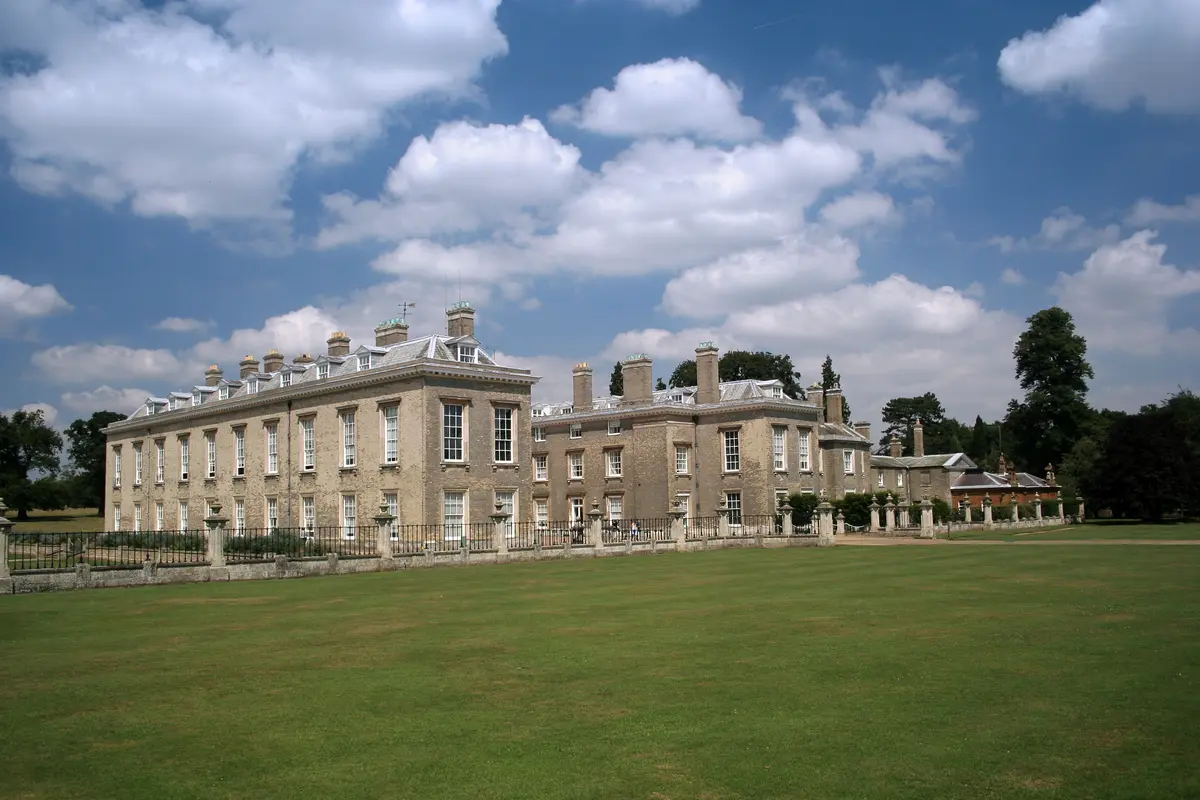
The Spencers arrived in 1508, when John Spencer, a Warwickshire grazier, bought the estate with money made from sheep. In 1512 he obtained licences to crenellate and to make a park, and built a new house on a new site. Historic England's list entry dates the fabric to c.1508 and records the main later enlargements: the 1630s; the years after 1666, when the mason-architect Anthony Ellis transformed the house for Robert Spencer, 2nd Earl of Sunderland; the remodelling of 1787-90 by Henry Holland for George John, 2nd Earl Spencer; and further work in the 1870s. Holland's is the face Althorp still wears: a severe two-storey block clad in pale buff mathematical tiles (tiles made to look like bricks), with four large Corinthian pilasters carrying a pediment. The house is listed Grade I; the surrounding park, some 250 hectares, is separately registered Grade II*.
The Picture Gallery, in the western range, is the room the ghost stories keep returning to. It is 17th-century work with restored bolection panelling, and Thomas Frognall Dibdin measured it in 1822 for 'Aedes Althorpianae', the catalogue he compiled as the 2nd Earl's librarian: one hundred and fifteen feet long, twenty and a half wide, nineteen high. Dibdin opened his chapter on it with Horace Walpole's line from the 'Anecdotes of Painting' (1765): "the Gallery at Althorp, one of those enchanted scenes which a thousand circumstances of history and art endear to a pensive spectator." He also noted, dryly, that the dado of the Gallery had been shelved to hold the books for which there was no room in the library below. That library was the 2nd Earl's obsession and one of the largest private collections in Europe; in 1892 John Poyntz Spencer, the 5th Earl, sold the greater part of it to Enriqueta Rylands for the library she was building in Manchester.
Selling has been part of Althorp's history ever since. In the 1930s Albert Edward John Spencer, 7th Earl — "Jack" to his family — sold a small Hans Holbein portrait of Henry VIII for £10,000; it is now in the Thyssen-Bornemisza in Madrid. Jack was nonetheless the house's great connoisseur: a trustee of the Wallace Collection and, from 1961 to 1969, chairman of the Victoria and Albert Museum's advisory council. He opened the estate to the public in 1953. After his death in 1975 the house passed to his son Edward John, 8th Earl, during whose ownership roughly a fifth of the contents was sold — eleven Van Dycks and almost every religious painting among them — a divestment that drew heavy public criticism, including from his heir.
The ghost stories are three, and each has a name attached to it.
The oldest was printed in 1886 by John Henry Ingram in "The Haunted Homes and Family Traditions of Great Britain", whose Althorp chapter opens by observing that a house of this antiquity having a ghost "is nothing unusual". Ingram's witness is "Mr. (afterwards Archdeacon) Drury", taken to Althorp by Lord and Lady Lyttelton to visit "Earl Spencer, the lady's father". After a late game of billiards a servant asked the two men to put the lights out themselves, because Lord Spencer "was always uneasy about fire". Drury was woken by light on his face and saw at the foot of the bed a man dressed as a stable-man, in striped shirt and flat cap, holding a bull's-eye lantern turned full on him. Getting no answer to his questions, he told the man to get out; the figure lowered the lantern and walked into the dressing room, which had no other exit, and Drury went back to sleep. At breakfast he mentioned it to Lady Lyttelton, who turned pale: "You have described my father's favourite groom, who died a fortnight ago, and whose duty it was to go round the house after everyone had gone to bed, to see that the lights were extinguished, and with strict orders to enter any room where one was seen burning." Ingram adds that he does not know whether the figure was ever seen again.
The second story is a phrase rather than a sighting. In "Althorp: The Story of an English House" (1998) Charles Spencer, 9th Earl, writes that a little door in the Picture Gallery "will always be the home of 'the girl with the grey slippers'". The door is real: a small opening cut into the oak between Van Dyck's "War and Peace" and Lely's "Windsor Beauties", giving on to a staircase and a guest bedroom. The English-language Wikipedia article on Althorp, citing that page, attaches the only name the story has ever carried — Lady Margaret Douglas-Home (1906-1996), daughter of the 6th Earl and sister of Jack, who according to the same article lived at Althorp from 1910 and for whom the Gallery was a favourite room.
The third is recent. Joan Forman devoted part of "Haunted Royal Homes" (1987) to Jack Spencer, the 7th Earl, and wrote that "the Althorp haunting is unusual in that the ghost was of a person very recently dead, who made an appearance not to warn or to say farewell (both common motives for immediate post-death apparitions) but to carry out duties which had been highly meaningful to him in life." John and Anne Spencer's "The Ghost Handbook" (1998) reports that the figure "smiled by way of response" and that "shortly afterwards a workman in Althorp also saw the same ghost". Nigel Dempster, in "Behind Palace Doors" (1993), went further: the family, he wrote, "became convinced that the ghost of the seventh Earl was somehow to blame when the eighth Earl's condition inexplicably began to deteriorate".
Timeline: the documented record of Althorp
- 1508 John Spencer, a Warwickshire grazier, buys Althorp; in 1512 he obtains licences to crenellate and to make a park and builds a new house on a new site.
- 1742 The traveller John Loveday describes at Althorp 'a round basin of water having an ait in the middle' — the earliest clear description of the pool and island where Diana would be buried 255 years later.
- 1822 Thomas Frognall Dibdin, librarian to the 2nd Earl Spencer, publishes 'Aedes Althorpianae' and measures the Picture Gallery at 115 feet by 20 feet 6 inches by 19 feet, noting that its dado had been shelved to hold the library's overflow.
- 1828-1834 The only window into which Ingram's groom story can fall on his own wording: Sarah Spencer's husband becomes Lord Lyttelton in 1828 and her father, the 2nd Earl Spencer, dies in November 1834. Ingram gives no date himself.
- 1886 John Henry Ingram prints the earliest datable telling of the Althorp ghost: 'Mr. (afterwards Archdeacon) Drury' wakes to a man dressed as a stable-man with a bull's-eye lantern, and Lady Lyttelton tells him next morning that he has described her father's favourite groom, dead a fortnight.
- 1912 Sarah, Lady Lyttelton's letters are published as her 'Correspondence, 1787-1870'. The volume contains no occurrence of the name Drury and no Althorp ghost story (controls in the same file: 'Althorp' 251 times, 'Spencer' 341, 'Lyttelton' 423).
- 1953 Albert Edward John Spencer, 7th Earl, opens the estate to the public for the first time, largely to mitigate taxation.
- 2 November 1954 Althorp House is listed Grade I (National Heritage List entry 1356626). The park and gardens follow on 25 June 1984, registered Grade II* over some 250 hectares.
- 1975 Death of Albert Edward John Spencer, 7th Earl Spencer — 'Jack' — aged eighty-three. He is the man later reported as an apparition; he was not a neighbour but the owner of the house and Diana's grandfather.
- 1987 Joan Forman publishes 'Haunted Royal Homes', reporting the 7th Earl's apparition as one 'of a person very recently dead' who returned 'to carry out duties which had been highly meaningful to him in life'. She gives no date, place or witness.
- 1996 and 1998 Charles Spencer, 9th Earl, tells the groom story twice in two years and differently each time: in 'Ghostly Encounters' the guest is a bishop, the earl the 5th and the light a lantern; in 'Althorp' the guest is the Dean of Lincoln and the light is candles. In the same book he writes that he has never seen a ghost.
- September 1997 Diana, Princess of Wales, is buried on the island in the Oval; a plinth and memorial urn are placed at its south-west end, and in 1997-98 the late 18th-century temple on the bank — brought from the Admiralty garden in London by the 5th Earl — is furnished with memorials to her.
- 2013 The exhibition about Diana's life, installed in the stable block in 1998, closes permanently. The house and grounds continue to open for a summer season only — 1 July to 31 August in 2026.
Is there a rational explanation for Althorp?
The most useful sceptic on this page is the owner. In the same book that gives the grey slippers their name, Charles Spencer writes, on page 30: "I have never seen a ghost; not at Althorp, nor elsewhere." Althorp opens to visitors for two summer months a year and does not sell itself on hauntings: on 28 September 2026 a search of althorp.com for "ghost" returned no pages, while the same search for "Diana" returned three.
The groom story is worth dating rather than believing. Ingram printed it in 1886 without a date and with no source beyond the assurance that it was "related to us on such good authority" that it deserved recording. His own wording narrows it down. Lady Lyttelton, the woman who identifies the ghost, can only be Sarah Spencer (1787-1870), daughter of George John, 2nd Earl Spencer; her husband did not become Lord Lyttelton until 1828, and her father died in November 1834. On Ingram's account — the guests are "Lord and Lady Lyttelton", the host is "the lady's father" — the episode falls inside those six years, under the 2nd Earl. Joan Forman made the same identification in "Haunted Royal Homes" (1987), where the groom is the favourite of "George John, the 2nd Earl Spencer, father of Sarah Lyttelton". Charles Spencer's own two retellings disagree with Ingram and with each other. In "Ghostly Encounters" (1996) he describes finding the tale in a press cutting headed "The Ghostly Groom", "probably dating from the 1940s", among clippings he was going through while researching his maiden speech in the House of Lords; there the guest is a bishop, the figure wears "a long red cloak" and carries a lantern, and it is "the favourite groom of the fifth earl Spencer". In "Althorp" (1998) the guest has become the Dean of Lincoln and the lantern has become candles, which the figure checks are "properly snuffed out" around the bed. The English-language Wikipedia article, summarising that page, adds two further specifics — that the host was Frederick, 4th Earl Spencer, and that the groom had served the 3rd Earl — which move the story to the 1840s or 1850s, a generation after the window Ingram's wording allows.
One test is available and gives a clean answer. Sarah, Lady Lyttelton's letters were published in 1912 as "Correspondence of Sarah Spencer, Lady Lyttelton, 1787-1870". A full-text search of that volume returns no occurrence at all of the name Drury, and no ghost story of any kind connected with Althorp. As a control on the same file, "Althorp" appears 251 times, "Spencer" 341 and "Lyttelton" 423, so the text is genuinely searchable. The one person who, in the story, supplies its punchline never wrote it down.
There is also a mundane reading that the story supplies itself. The groom's actual job, as Lady Lyttelton describes it, was to walk the house after everyone had gone to bed and enter any room where a light was still burning. A man doing exactly that, lantern in hand, was an ordinary sight at Althorp; and Lord Spencer, the same page tells us, was "always uneasy about fire". A guest woken in an unfamiliar house by a servant on his rounds, and told a fortnight later that the servant was dead, has all the material for the story without anything unexplained taking place. Whether that is what happened cannot now be established either way.
The girl with the grey slippers is thinner still. What Charles Spencer records is the name of a door: the little door in the Picture Gallery "will always be the home of 'the girl with the grey slippers'", and he describes no sighting. The only person the story has been attached to comes from the Wikipedia summary, which says that Lady Margaret Douglas-Home "professed to being aware of" the figure. The dating sometimes given, "just before the First World War", follows from her having come to live in the house as a small child in 1910; no reported event carries that date. The detail that the doorway is too small for an adult describes the little door itself, which was cut into the panelling to reach a staircase and a guest bedroom.
The 7th Earl's ghost has more witnesses in print than the other two, all of them identified by their place in the household. Forman describes more than one appearance; of one of them she writes that "'Jack' once again had merely smiled and made no reply". Karen Farrington's "History of the Supernatural" (2000) says that the ghost of the seventh earl "who died in June 1975 aged 83 was seen by staff and guests at the house as well as residents", names one of them only as "the old housekeeper", and reports that Raine Spencer was convinced the spirit contributed to her husband's illness. "The Ghost Handbook" adds that "a workman in Althorp also saw the same ghost". Forman's framing is interpretative: she reads the apparition as a man continuing the work he loved. Dempster's claim that the family blamed the ghost for the 8th Earl's decline is reported here as his; Farrington attributes the same belief to the 8th Earl's wife.
Finally, a caution about how confident detail accretes around this house. Guidebooks and encyclopaedia articles routinely state that André Le Nôtre laid out the park in the 1660s. Historic England's register entry calls that "an unsupported tradition". The same process that turns a tradition into an attribution turns a Victorian anecdote into a dated haunting.
Can you visit Althorp?
Althorp is the Spencer family's private house and opens to the public for a summer season. On 24 September 2026 the estate's visitor page read: "Althorp House is now closed. We look forward to welcoming you in 2027."
The estate's travel page, last revised in September 2024, gives two entrances. Visitors use the West Gate, postcode NN7 4HQ, where parking is free and the ticket office sells tickets on the day; the page gives the car park's GPS position as 52.277380, -1.010271. The East Gate, postcode NN7 4HE, is on the A428 and takes coaches and minibuses, and cars that arrive there are sent round to the West Gate. The same page lists the approaches from junction 18 of the M1 and from junction 1 of the A14, trains to Long Buckby or to Northampton with a taxi from either station, and the estate telephone, 01604 770006. Althorp Park station, on the Northampton loop line, closed in 1960.
The booking page captured on 11 May 2026 set the rules for that season. Photography was allowed in the grounds but not in the house, and drones were not permitted on the estate. Dogs were not admitted apart from guide and assistance dogs. The walking route through the grounds was described as fully accessible to wheelchair users but with large sections of gravel, and since the house had no wheelchair access to the first floor, visitors with limited mobility saw the ground floor only. Prams, pushchairs and large bags were not allowed inside. The page put the house at a 15-minute walk from the West Gate car park and the Princess of Wales memorial at the Oval at about 30 minutes, and it recorded that the "Diana: A Celebration" exhibition closed in August 2013.
Diana, Princess of Wales, was buried in 1997 on the island in the Oval, which Historic England's register entry describes as a 150 m long, shallow, tree-fringed pool whose island already appears on the 1778 plan; a plinth with a memorial urn stands at the island's south-west end. On the bank at the north-east end is a late 18th-century temple with a portico of four columns, brought from the garden of the Admiralty in London by the 5th Earl and furnished in 1997-98 with inscriptions and memorials to the Princess. The estate's walking route leads to the memorial on the bank; the island in the middle of the water holds her grave.
Sources consulted
- John Henry Ingram, «The Haunted Homes and Family Traditions of Great Britain (Second Series, chapter 'Althorp')» — W. H. Allen & Co., London (Second Series, 1886); the linked copy is the Gibbings & Co. illustrated edition of 1897, which reprints both series, 1886 book
- Thomas Frognall Dibdin, «Aedes Althorpianae; or, An Account of the Mansion, Books, and Pictures at Althorp» — Shakspeare Press, London, 1822 book
- Historic England, «Althorp House — National Heritage List for England, entry 1356626 (Grade I, first listed 2 November 1954)» — National Heritage List for England, 1954 report
- Historic England, «Althorp — National Heritage List for England, entry 1001023 (Register of Parks and Gardens, Grade II*, registered 25 June 1984)» — National Heritage List for England, 1984 report
- Charles Spencer, 9th Earl Spencer, «Althorp: The Story of an English House» — Viking, 1998 book
- Astrid St Aubyn, «Ghostly Encounters: True Tales of the Ghouls, Spooks and Spectres in the Lives of the Famous (Earl Spencer / The Althorp Estate)» — Robson Books, London, 1996 book
- Joan Forman, «Haunted Royal Homes (Althorp Park)» — Harrap, London; the linked copy is the Jarrold Publishing edition of 1993, 1987 book
- John Spencer and Anne Spencer, «The Ghost Handbook (Althorp Park entry)» — Boxtree, London, 1998 book
- Hon. Mrs Hugh Wyndham (ed.), «Correspondence of Sarah Spencer, Lady Lyttelton, 1787-1870» — John Murray, London, 1912 book
- Althorp Estate, «Visit Us, Book Tickets and FAQs (2026 season)» — althorp.com, 2026 web
- Nigel Dempster and Peter Evans, «Behind Palace Doors» — Orion, London, 1993 book
- Wikipedia contributors, «Althorp — 'Haunting' section (the text our earlier entry paraphrased)» — English Wikipedia, 2026 web
- Karen Farrington, «History of the Supernatural: A Thematic Comparison — from Primal Chaos to the End of the World (the 7th Earl Spencer's ghost, p. 72)» — Bounty Books, London, 2000 book
Reviewed by V. Serrano on 2026-08-11 · How we verify our content
💬 Field testimonies (0)
No testimonies yet. Add the first.
Add your testimony
🔒 Log in to add a testimony