👻 HAUNTED PLACE · EXP. Nº9476
ACTIVE
Appuldurcombe House
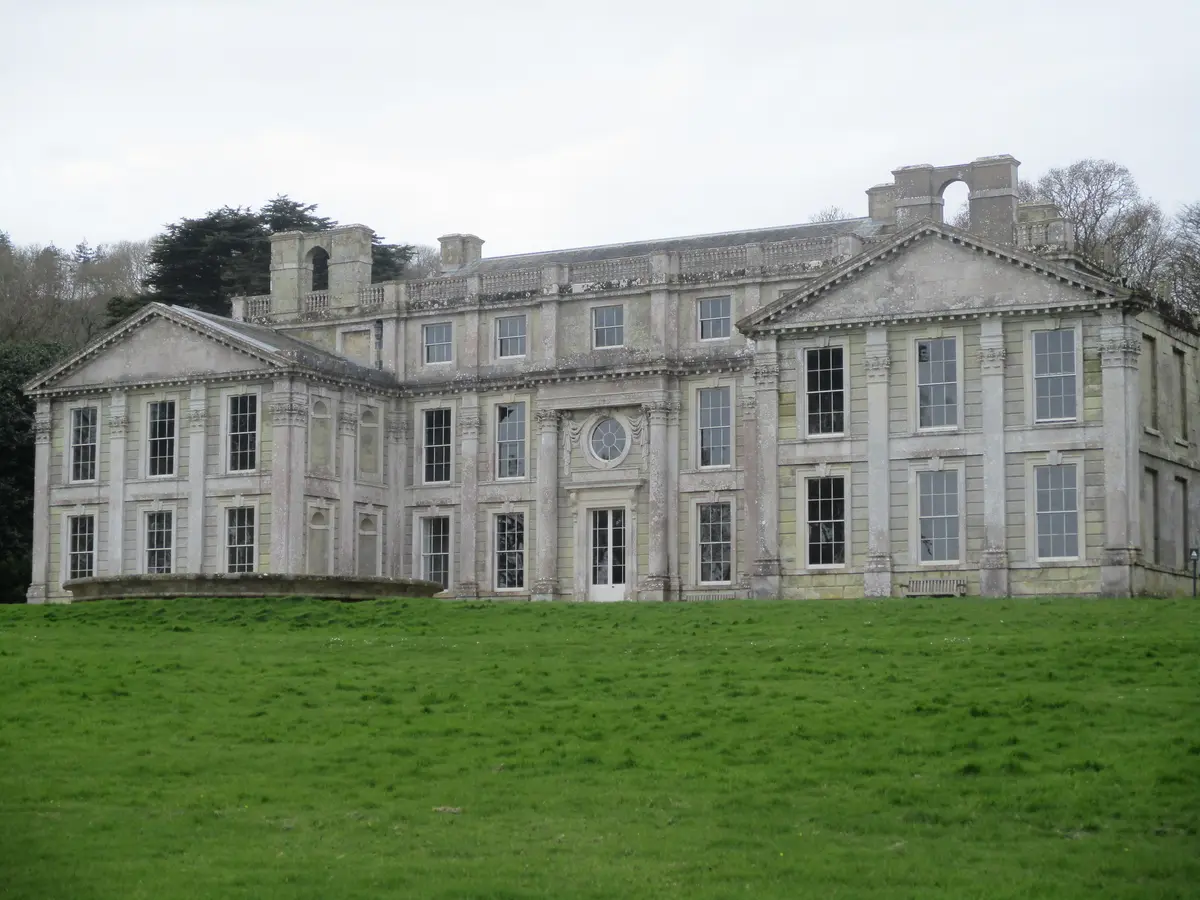
Appuldurcombe House is the roofless shell of an English Baroque mansion above Wroxall, on the Isle of Wight, built for the Worsley family from 1702 and gutted by a German parachute mine in 1943.
Where is Appuldurcombe House?
- Location
- Isle of Wight, England, United Kingdom
- Type
- House / mansion
- Coordinates
- 50.617, -1.234
- Last updated
LOCATION
Why is Appuldurcombe House said to be haunted?
Its best-known ghost story is older than the building it is told about: in 1567 two Worsley boys, John and George, were killed by an explosion of gunpowder at Appuldurcombe, in the Tudor house that Sir Robert Worsley later demolished so completely that he boasted of not leaving one stone standing. The boys' father had been dead two years; their mother had just married Sir Francis Walsingham. The ghosts came much later. Victorian and Edwardian guides describe the house at length and record nothing supernatural; the monk seen in the cellars has a documented ancestor in the hundred Benedictines of Solesmes who lived here from 1901 to 1907; and the reputation of the most haunted place on the island cannot be traced back beyond the ghost-tourism and television of the 2000s. English Heritage now cares for the shell, and admission is free.
What is the history of Appuldurcombe House?
Appuldurcombe is not mentioned in Domesday, but in 1090 Richard de Redvers gave the manor to the Norman abbey of Montebourg, and in 1100 a cell of that abbey was founded on the site. The alien priory was suppressed during the French wars and the manor passed to the Minoresses without Aldgate, who leased it in 1498 to Sir John Leigh. Leigh's daughter Anne married Sir James Worsley, and in 1527 the abbess leased the manor to him; the Victoria County History notes that the wording of that grant shows the tenants had already been building on to the priory buildings and meant to build more. Sir James, a younger son who had risen at court as a groom of the wardrobe to Henry VIII, was made Captain of the Wight and Keeper of Carisbrooke Castle; the Worsleys would hold Appuldurcombe for three hundred years.
Sir James died in 1538. His son Richard Worsley, in his turn Captain of the Wight, is said to have received Henry VIII and Thomas Cromwell at Appuldurcombe that same year. When Richard died in 1565 an inventory was taken of the Tudor house, and it is the best portrait of the vanished building that survives: a hall, great and little chambers, six principal bedrooms with names -- Paradise, The Broad, Sir John's, The Porch, Mr Richard Worsley's and My Lady's Chamber -- then "two smaller, occupied by the children", and beyond them a chapel, the maidens' room, a stillitory, two kitchens, wet and dry larders, brewhouse, malthouse, dairy, servants' bedrooms and the stable.
Two years later those two children were dead. The Victoria County History states flatly that "Richard Worsley died in 1565 and his two sons John and George were both killed in an explosion of gunpowder at Appuldurcombe in 1567", and footnotes the statement to Sir Richard Worsley's own History of the Isle of Wight of 1781 and to two inquisitions post mortem, one Chancery and one Exchequer. Their father had been dead for two years when it happened. Their mother, Richard Worsley's widow, had already remarried: the same volume records, while correcting a different claim of Worsley's, that Sir Francis Walsingham -- later Elizabeth I's principal secretary -- obtained a leasehold at Godshill "by his marriage with Richard Worsley's widow". The boys' uncle John Worsley succeeded, and died in 1580.
The house those boys died beside no longer exists. In 1690 the estate came to Sir Robert Worsley, 4th Baronet, who pulled the Tudor house down and wrote under his own sketch of it, in a memorandum signed in 1720 and reproduced in the 1781 History, that it was "Appuldurcombe as I found it in 1690 & of which I have not left one stone standing". The present English Baroque mansion was begun in 1702 to designs by John James. Sir Robert died on 29 July 1747 without seeing it finished; the obelisk on Stenbury Down was raised to his memory. His great-nephew Sir Richard Worsley, 7th Baronet, extended the house in the 1770s, commissioned Lancelot 'Capability' Brown to lay out the grounds in 1779, filled the rooms with the collection published as the Museum Worsleianum, and attracted the notoriety of the 1782 court case in which his wife Seymour admitted to twenty-seven lovers. He died in 1805 and the estate passed through his niece to the Earls of Yarborough.
By about 1850 Brannon's guide was telling visitors that "strangers desirous of visiting Appuldurcombe must provide themselves with tickets at the office of the stewards, Messrs. Sewell, Solicitors, Newport", on Tuesdays and Fridays between eleven and four. The estate was sold in 1855; a hotel venture failed and the house became a boys' school. Then, between 1901 and 1907, about a hundred Benedictine monks driven out of Solesmes by the French anti-congregation laws lived in it while their new abbey at Quarr was built. A Jarrold picture-guide of about 1905 captions its plate "Appuldurcombe Abbey" and reports that the house "is now occupied by Benedictine monks". The Victoria County History, writing in 1912, says simply that it "has been vacant since 1909".
Troops were billeted in the house in both world wars. On the night of 7 February 1943 a Luftwaffe Dornier Do 217 on a mine-laying sortie turned inland, dropped its last mine close to the house and crashed on St Martin's Down; the blast blew in the windows and brought down part of the roof. The hole was never repaired, and after the war most of what was left of the roof and the interiors was taken out and sold. In 1952 the Ministry of Public Buildings and Works took the wreck into state guardianship -- during the negotiations the remaining timber, lead and plaster ceilings were stripped out, the ceilings going into store at Fort Brockhurst -- and consolidated the shell as a ruin. Walter Roberts, writing in the Island magazine Wight Life, recorded that it took the Ministry's men twelve years, and that the public were admitted for the first time in 1964. The front section has since been re-roofed and glazed.
Timeline: the documented record of Appuldurcombe House
- 1100 A cell of the Norman abbey of Montebourg is founded at Appuldurcombe on land Richard de Redvers had given the abbey ten years earlier. It is the first recorded occupation of the site, and the only medieval monastic presence there.
- 1527 The abbess of the Minoresses without Aldgate leases the manor to Sir James Worsley, who had married Anne, daughter of the previous lessee Sir John Leigh. The Worsleys will hold Appuldurcombe for three centuries.
- 1565 Richard Worsley, Captain of the Wight, dies. The inventory taken at his death lists the rooms of the Tudor house one by one, including six named principal bedrooms and “two smaller, occupied by the children”.
- 1567 John and George Worsley, the children of that inventory, are killed by an explosion of gunpowder at Appuldurcombe. The Victoria County History footnotes the fact to Sir Richard Worsley's History of 1781 and to two inquisitions post mortem. Their father had been dead two years; their mother had married Sir Francis Walsingham.
- 1702 Sir Robert Worsley, who had written that of the Tudor house he had “not left one stone standing”, begins the present English Baroque mansion to designs by John James. He dies in 1747 without seeing it finished.
- 1779 Sir Richard Worsley, 7th Baronet, who has been extending the house since the 1770s, commissions Lancelot 'Capability' Brown to lay out the ornamental grounds.
- c. 1850 Brannon's guide tells tourists that Appuldurcombe can be seen on Tuesdays and Fridays between eleven and four, with tickets from the stewards' office in Newport. In some 41,800 words it names the house fifteen times and tells no ghost story about it.
- 1901–1907 About a hundred Benedictine monks exiled from Solesmes live in the house while their abbey at Quarr is built. A Jarrold picture-guide of about 1905 captions its plate “Appuldurcombe Abbey” and reports that the house is now occupied by Benedictine monks.
- 1912 The Victoria County History of Hampshire prints its account of Godshill parish: twenty-two mentions of Appuldurcombe, eighty-five of Worsley, the gunpowder explosion, the church monuments, the note that the house “has been vacant since 1909” — and not one ghost.
- 7 February 1943 A Luftwaffe Dornier Do 217 on a mine-laying sortie turns inland, drops its last mine beside the house and crashes on St Martin's Down. The blast blows in the windows and collapses part of the roof, which is never repaired.
- 1952 The Ministry of Public Buildings and Works takes the derelict house into state guardianship and consolidates it as a ruin. The remaining timber, lead and plaster ceilings are stripped out; the ceilings go into store at Fort Brockhurst.
- 1964 After twelve years of Ministry work the site is opened to the public for the first time. Walter Roberts, writing in Wight Life, reports ten thousand visitors in a year, an official guidebook, and no ghosts at all.
- 7 June 2005 Most Haunted broadcasts its Appuldurcombe House investigation (series six, episode twelve) to 344,000 viewers, with Derek Acorah as medium. Four months later the Daily Mirror publishes the parapsychologist's account of feeding Acorah two invented spirits; Acorah leaves the programme after that series.
Is there a rational explanation for Appuldurcombe House?
Read against the sources, the popular account of Appuldurcombe splits cleanly in two: the historical half carries dates, and the ghost half carries none.
Start with the one date the ghost story does use. The tragedy is habitually placed in 1587 and attributed to "owner Richard Worsley". Both halves are wrong, and the arithmetic settles it without leaving the page: Richard Worsley died in 1565, so he could not have owned anything in 1587, and boys who were small children in the 1565 inventory would have been men of about thirty by 1587. The Victoria County History gives 1567, footnoted to Worsley's 1781 History and to two inquisitions post mortem. A third year, 1569, circulates on at least one heritage site. The fuller version -- powder laid out to dry, the gatehouse, boys of eight and nine -- rests on an inscription said to be on the Worsley monument in Godshill church; the wording repeats identically across many websites, but it could not be traced here to any published transcription, and so it is not quoted.
Then date the ghost stories themselves, which is cheaper than arguing with them. Three period accounts describe Appuldurcombe at length and record nothing supernatural. Brannon's guide of about 1850 names Appuldurcombe fifteen times across roughly 41,800 words and contains no instance of ghost, apparition, spectre, phantom, legend or superstition. A. R. Hope Moncrieff's Isle of Wight (Black, 1908) is not a sceptical book -- in about 49,900 words it retells the legend of the church that moved itself at Godshill, a devils-and-angels story on St Catherine's Down, the romance of Bevis of Hampton and the founding legend of Hurst Castle -- and about Appuldurcombe, which it mentions four times, it tells nothing. The Victoria County History account of Godshill parish (1912) names Appuldurcombe twenty-two times and Worsley eighty-five, describes the gunpowder explosion, itemises the monuments in the church, and returns zero for ghost, haunt, apparition, spectre, phantom, tradition and superstition. Later, the Island magazine Wight Life ran a long article on the house by Walter Roberts with no ghost in it, in a magazine whose contents list includes two ghost pieces about other Island places.
Some of the material has an ordinary explanation sitting in the record. The monk in the cellars needs no priory: about a hundred Benedictines from Solesmes actually lived in this building between 1901 and 1907, which the guidebooks of the day noted as a matter of fact. It is worth adding that the Benedictines who occupied the site in 1100 and again in 1901 are the order known in England as the Black Monks, whereas the ghost-tourism sites describe the phantom monks as wearing brown.
The famous television visit can be dated exactly: Most Haunted investigated Appuldurcombe in series six, episode twelve, first broadcast on 7 June 2005 to an audience of 344,000, with Derek Acorah as medium and Dr Ciaran O'Keeffe as parapsychologist. The programme's own credibility was already in public dispute that year -- the Daily Express ran "More mystery on Most Haunted" on 4 April 2005, and on 28 October 2005 the Daily Mirror published O'Keeffe's account of feeding Acorah two invented spirits, "Rik Eedles" and "Kreed Kafer", anagrams of "Derek Lies" and "Derek Faker". Acorah left the programme after that series.
Finally, the two claims that were presented in our own voice. The "shadow dancers" of the cellar are not a quotation from anybody: ghost-tourism pages phrase it as "the shadows of dancers have been seen on the walls of the cellar", with no witness, no date and no source. And the superlative -- the island's most haunted place -- has no owner. the only time the word ghost appears on English Heritage's page for the site is in the phrase "more than a ghost of its former dignity". The estate that runs the house today sells weddings, holiday cottages and Capability Brown's grounds on its website without mentioning a ghost at all: the page it once kept at the address /content/events/Spooky_ghost_walks.php still resolves, and as of 17 August 2026 it is empty, as is the events list it belonged to.
Can you visit Appuldurcombe House?
Appuldurcombe House stands on Appuldurcombe Road, Wroxall, Isle of Wight, PO38 3EW, about 3 km (2 miles) north-west of the centre of Ventnor; English Heritage gives the road access as half a mile from Wroxall, off the B3327. The house is in the care of English Heritage, and Appuldurcombe Farm, which shares the postcode, runs the self-catering cottages in the 13-acre Inner Park around it and the weddings held there.
On 24 September 2026 both websites gave free entry to the house and grounds from 1 April to 31 October, Sunday to Friday from 10am to 4pm. The farm's page adds that the site is "ALWAYS CLOSED SATURDAYS when Appuldurcombe becomes a unique wedding venue". English Heritage lists free parking about 150 metres from the house, a dirt path "the majority of which is suitable for wheelchairs and buggies", and dogs welcome on leads; there are no facilities at the house, and the nearest public toilets are in Godshill. Its directions page names Southern Vectis bus route 3 and Shanklin railway station, three and a half miles away.
The house is an English Baroque shell. The register entry, reproduced by Parks & Gardens UK, records that a landmine in 1943 damaged its roof and windows, that the Ministry of Public Buildings and Works took it into guardianship in 1952, and that English Heritage has partly re-roofed it in slate and refitted sashes on the east front since 1981. The farm describes the grounds as "Lancelot 'Capability' Brown's 11 acres of grounds", inside a park that the register says covered around 100 hectares at its largest. Freemantle Gate, the late eighteenth-century arch that was the original entrance to the park from Godshill, stands at the far end of it.
The house is listed Grade I (list entry 1218394, grid reference SZ 54319 79973, some ten metres from the pin on this file) and is also a scheduled monument, as are the Inner Park and Freemantle Gate, which is listed Grade II*. The park is registered at Grade II (list entry 1000926, register reference GD1923). On 24 September 2026 the events page of the farm's website returned a server error and listed no events.
Sources consulted
- William Page (ed.), «Parishes: Godshill» — The Victoria History of the County of Hampshire and the Isle of Wight, vol. 5, 1912 book
- George Brannon, «Brannon's Picture of the Isle of Wight; or, The Expeditious Traveller's Index to Its Prominent Beauties & Objects of Interest» — Printed and published by George Brannon, Wootton, Isle of Wight, 1850 book
- A. R. Hope Moncrieff, «Isle of Wight» — Adam and Charles Black, London, 1908 book
- Jarrold and Sons (ed.), «Pictures in Colour of the Isle of Wight» — Jarrold and Sons, 1905 book
- Wikipedia contributors, «Appuldurcombe House» — Wikipedia, 2026 web
- English Heritage, «Appuldurcombe House» — english-heritage.org.uk, 2026 web
- Parks & Gardens UK, «Appuldurcombe, Ventnor — Register of Parks and Gardens entry» — parksandgardens.org, 2026 report
- Walter Roberts, «Appuldurcombe: from mediaeval Priory to Tudor House to Palladian Mansion» — Wight Life, 1975 newspaper archive
- Wikipedia contributors, «List of Most Haunted episodes — Series 6 (2005)» — Wikipedia, 2026 web
- Appuldurcombe Farm, «Appuldurcombe House — official site of the Appuldurcombe Farm estate» — appuldurcombe.co.uk, 2026 web
- Wikipedia contributors, «Derek Acorah» — Wikipedia, 2026 web
- David Gill, «Appuldurcombe House: guidebooks» — heritagefutures.wordpress.com, 2018 web
- Invectis / Isle of Wight photographs, «Isle of Wight Nostalgia — Appuldurcombe House, Wroxall» — invectis.co.uk, 2026 web
- Historic England, «Appuldurcombe, Godshill: Historic England list entry 1218394, Grade I (listing NGR SZ 54319 79973), as reproduced by British Listed Buildings» — britishlistedbuildings.co.uk, 2026 archive
Reviewed by V. Serrano on 2026-08-17 · How we verify our content
💬 Field testimonies (0)
No testimonies yet. Add the first.
Add your testimony
🔒 Log in to add a testimony