👻 HAUNTED PLACE · EXP. Nº9476
ACTIVE
Ballechin House
Ballechin House stood near Grandtully in Perthshire until June 1963, when it was pulled down.
Where is Ballechin House?
- Location
- Perthshire, Scotland, United Kingdom
- Type
- House / mansion
- Coordinates
- 56.662, -3.739
- Last updated
LOCATION
Why is Ballechin House said to be haunted?
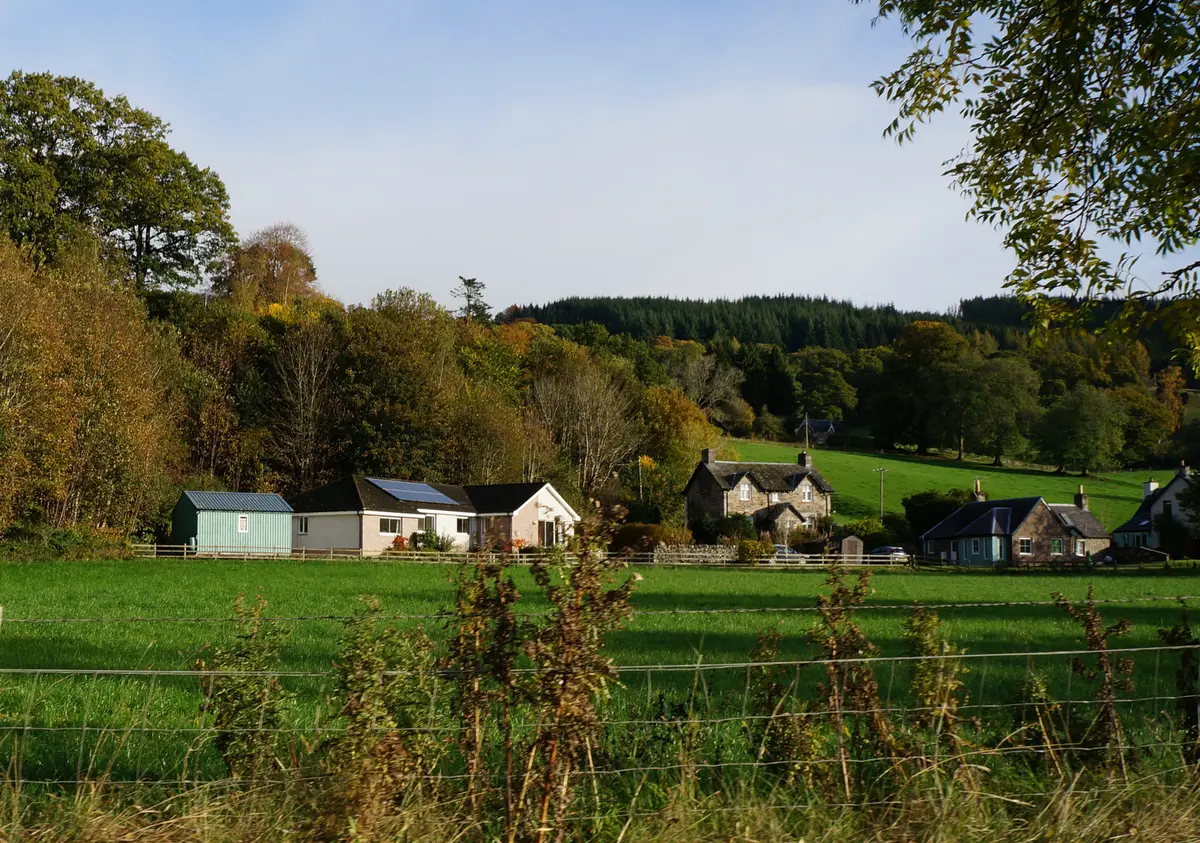
It is famous not because anything was ever proved there, but because the attempt to prove something turned into a public scandal. Major Robert Steuart, who inherited the estate in 1834 and died in April 1876, kept a great many dogs and told people he meant to enter the body of a particular black spaniel after his death; all fourteen of his dogs were killed once he was gone. Twenty years later, after a tenant family abandoned the house in 1896, the Marquess of Bute paid for a long tenancy — taken in Colonel Lemesurier Taylor's name, without telling the owners why — so that Ada Goodrich Freer could keep a journal of whatever happened. The Society for Psychical Research did not send her; it declined to publish the results. On 8 June 1897 an anonymous correspondent of The Times, who had stayed in the house as a guest, called the whole thing "an imposture of the most shallow and impudent kind", and the argument has never quite stopped. The site today is private farmland, with nothing to see.
What is the history of Ballechin House?
Ballechin House was built in 1806. A datestone over a first-floor window read 'H 1806 S' — the initials of the Steuart who raised it — and it was photographed, with the rest of the house, only weeks before the building came down. The family had held the ground since at least the sixteenth century: a stone carved with their arms and dated 1579, salvaged from the older mansion, was built into the wall of the new one.
Robert Steuart was born in January 1806, the year of the house. He entered the military service of the East India Company in 1825, inherited Ballechin on his father's death in 1834, and retired with the rank of Major in 1850 — "sixteen years after succeeding to the property", as the 1899 account of the case puts it. He never married. He kept a great many dogs.
He also held opinions his neighbours found alarming. He was, in the careful wording of the book, "a believer in spirit-return, and many witnesses have attested that he frequently spoke of his own return after death". More specifically, "he frequently intimated his intention of entering the body of a particular black spaniel which he possessed". A Dr Menzies, who called him "an old and dear friend", wrote to The Times in June 1897 that Steuart "created much scandal by saying to his gardener that he had better take care to keep up the garden properly, for when he was gone his soul would go into a mole and haunt the garden and him too".
Two deaths sit at the centre of everything that followed. The parish register of Logierait records the death, on 14 July 1873, of Sarah N——, housekeeper at Ballechin, unmarried, aged twenty-seven, after an illness of three days. Major Steuart died in April 1876 and was buried beside her — and beside an Indian manservant — in the middle of the parish churchyard: no monument, but a high enclosing wall. And, in the book's flat sentence, "the whole of his dogs, fourteen in number, including the spaniel already mentioned, were killed after his death".
Who ordered that, the 1899 book does not say. Later writers name the heir. It was not a brother: Steuart's two brothers died unmarried, and by a will of 1853 the estate went to his sister Mary's second son, John, who took the Steuart name on succeeding. The primary source names nobody.
The earliest datable written record of anything odd at Ballechin is not a ghost story at all. It is an entry in Lord Bute's own diary for Sunday 7 August 1892, made at Falkland in Fife, noting that a visiting Jesuit "gives us a long account of the psychical disturbances at B——; noises between his bed and the ceiling, like continuous explosion of petards, so that he could not hear himself speak".
In August 1896 the house was let with the shooting to J. R. Heaven and his family. They abandoned it after about seven weeks, forfeiting most of a year's rent paid in advance. That is what brought Bute back. He offered to pay for a long tenancy if someone else would sign the lease, and Colonel Lemesurier Taylor — retired Professor of Tactics at Sandhurst, a founder member of the London Spiritualist Alliance — agreed to be that someone. Ada Goodrich Freer, who published as "Miss X", arrived on 3 February 1897 with her friend Constance Moore and stayed, on and off, until May, keeping the journal that became the book. By her own count the household received "eleven ladies, twenty-one gentlemen, and The Times Correspondent".
Timeline: the documented record of Ballechin House
- 1806 The present Ballechin House is built, on a site different from the old mansion. A first-floor datestone reads 'H 1806 S'. Robert Steuart is born in January of the same year.
- 1834 Robert Steuart inherits Ballechin on his father's death, while still serving with the East India Company. He returns for good in 1850, on retiring with the rank of Major.
- 14 July 1873 The Logierait parish register records the death of Sarah N——, housekeeper at Ballechin, single, aged twenty-seven, after a three-day illness. The death is registered not by her parents nor by Major Steuart but by her uncle.
- April 1876 Major Robert Steuart dies and is buried beside Sarah and an Indian manservant, unmarked, inside a high enclosure in the parish churchyard. All fourteen of his dogs, including the black spaniel he had said he would enter, are killed after his death. The 1899 book names nobody as responsible; the estate passed to his nephew John, not to a brother.
- 7 August 1892 The earliest datable written record of the Ballechin noises: Lord Bute's diary at Falkland notes a Jesuit's account of "noises between his bed and the ceiling, like continuous explosion of petards". Bute writes to the owner suggesting a phonograph be used to test whether the sounds are objective; the owner refuses.
- August–September 1896 J. R. Heaven rents the house with the shooting for a year and abandons it after some seven weeks, forfeiting most of the rent paid in advance. The Times correspondent would later argue that Ballechin had no reputation for haunting before this tenancy.
- 3 February 1897 Ada Goodrich Freer arrives with Constance Moore. The lease is in Colonel Lemesurier Taylor's name; Lord Bute is paying. Neither the owners nor the local agents are told what the tenancy is for.
- 6 February 1897 A Ouija session in the library produces the name "Ishbel" and an instruction to go at dusk, in silence, to the glen by the burn. That evening Goodrich Freer reports seeing a nun there. Her two companions, both experienced psychical researchers, see nothing.
- 19 March 1897 Colonel Taylor writes to Lord Bute after five weeks in the house: the noises were much like those he had heard in other houses, and some witnesses gave them "undue prominence, under the influence of their own expectancy".
- 12–22 April 1897 Frederic Myers stays at Ballechin, preceded by the physicist Oliver Lodge. Lodge writes to Bute on 14 April: "I have not found anything here as yet at all suitable for physical experiments... Nothing whatever can be normally seen so far."
- 8 June 1897 The Times publishes "On the Trail of a Ghost", anonymous, calling the affair "an imposture of the most shallow and impudent kind". Myers writes the same day to deny that anything had been claimed on the SPR's behalf. Over the following ten days the tenant Heaven blames the hot-water pipes, and Mrs Steuart denounces in print "a deceit which I deeply resent".
- 15 March 1898 Myers writes privately to Lord Bute withdrawing his own Ballechin notes from publication: "I greatly doubt whether there was anything supernormal." Bute and Goodrich Freer print the sentence in the 1899 book.
- 1899 George Redway publishes The Alleged Haunting of B—— House, edited by Goodrich Freer and the Marquess of Bute. It anonymises the house throughout as "B——" — and lets the real name slip exactly once, on page 82, in a quoted letter.
- June 1963 Ballechin House is "in the process of demolition", according to the RCAHMS demolitions catalogue. That month the Scottish National Buildings Record photographs the house inside and out — the last survey ever made of it.
Is there a rational explanation for Ballechin House?
Ballechin is famous for the row, not for the evidence — and almost every useful sceptical observation was made at the time, by someone who was actually there.
The tenant. J. R. Heaven, whose family had fled the house in 1896 and whose "practical jokes" the press blamed for the whole affair, wrote to The Times on 10 June 1897 to deny the jokes and offer his own explanation: he "attributed the very remarkable noises heard to the hot-water pipes and the peculiar way in which the house is built. In fact, I have to confess I cannot believe in ghosts."
The man who signed the lease. Colonel Taylor wrote to Lord Bute on 19 March 1897, after five weeks living in the house: "I heard many noises in the night during my stay at B——, but they were of much the same sort I have been accustomed to hear at a similar time in other houses. I think that some of our witnesses may have given them undue prominence, under the influence of their own expectancy." Of the ghostly nun he added that "any amount of 'voices' could be read into the noises of the running stream, near where she is seen, by those who 'wished to hear'."
The order of events. That nun is the case's most quoted apparition, and the book itself records how she arrived. On the afternoon of 6 February 1897 the party worked a Ouija board; asked the name of an unlabelled portrait in the library, it spelled Ishbel. The board then instructed them to go at dusk, in silence, to the glen by the burn. They went. Goodrich Freer saw a nun on the far bank. The two men walking with her — both long-serving psychical researchers — saw nothing. The expectation was recorded, by the investigators, before the sighting.
The anonymous attack. On 8 June 1897 The Times printed a long piece headed "On the Trail of a Ghost", by a correspondent who had stayed in the house as a guest. He reported that the estate factor, the local lawyer and the parish minister all denied that Ballechin had any reputation for haunting before the Heavens arrived, and concluded: "What he has got is a house with no reputation whatever of that kind, with no history... beyond a cloud of baseless rumours produced during the last twelvemonth. Who is responsible for the imposture it is not my business to know or to inquire, but that it is an imposture of the most shallow and impudent kind there can be no manner of doubt." On method he was blunter still: Bute "ought to have employed a couple of intelligent detectives", whereas the lady in charge, being also the hostess, "is unfit to carry out the actual work of investigating the phenomena in question". The 1899 book never names him: across its 261 scanned pages the word "Ross" does not occur once, against 62 mentions of Bute and 25 of Myers. He is generally identified as J. Callender Ross.
The deception. The sharpest complaint came from the owners, who had not been told what their tenants were doing. Mrs Steuart wrote to The Times on 18 June 1897: "I as well as the rest of my family had not the remotest idea that our home was let to other than ordinary tenants... a deceit which I deeply resent."
The Society for Psychical Research. It is routinely written that the SPR sent Goodrich Freer to Ballechin. The Society's own encyclopedia states flatly that the investigation "was sponsored not by the SPR but by Lord Bute". Frederic Myers, the SPR's honorary secretary, wrote to The Times on 8 June 1897 that no statement had been made on the Society's behalf, that he had visited "representing that society", "and decided that there was no such evidence as could justify us in giving the results of the inquiry a place in our Proceedings". Only the first five weeks of the journal were ever submitted to him or to any member of the SPR council. Privately, on 15 March 1898, he asked Bute to suppress his own notes: "I greatly doubt whether there was anything supernormal." That sentence is very often quoted as if it came from his letter to the newspaper. It did not: it comes from a private letter written nine months later, printed by Bute and Goodrich Freer themselves.
Afterwards. Reviewing the book for the SPR's Proceedings in 1900, Frank Podmore wrote that Goodrich Freer was liable "in a quite unusual degree, to hallucinatory experience... which seriously impairs the value of her testimony". In 1968 John Lorne Campbell and Trevor H. Hall showed, in Strange Things, that she had plagiarised the Hebridean folklore notebooks of Father Allan McDonald; Hall returned to her at book length in 1980. Even that has a counterweight, and it comes from the same Society: writing in the SPR's Journal in 1969, Guy Lambert judged that Hall argued too much from circumstantial evidence and from negatives.
None of this proves that nothing happened at Ballechin. What it means is that nobody, then or since, has been able to separate what the house did from what its investigators had already told each other to expect.
Can you visit Ballechin House?
Ballechin House was pulled down in 1963: Historic Environment Scotland's record for the site, Canmore 161503, which now redirects to the agency's trove.scot portal, notes from the RCAHMS Demolitions catalogue that the house "was in the process of demolition in June 1963". In the same month the Scottish National Buildings Record photographed the exterior and the interior. The images listed on the record when the Internet Archive captured it in December 2024 include views of the balusters and a first-floor window inscribed 'H 1806 S', all marked Crown Copyright, Historic Environment Scotland.
The record places the site at grid reference NN 9350 5352, in the parish of Logierait, Perth and Kinross, about 5 km west-north-west of Ballinluig and 9 km east-north-east of Aberfeldy in a straight line. The Perthshire Diary described the house as lying "on the outskirts of Strathtay, close to the river", and the site is on private land. Under the Land Reform (Scotland) Act 2003, access rights on foot extend over most land in Scotland, but they do not cover motor vehicles or the ground immediately around houses.
What survives of the case is on paper. The Alleged Haunting of B—— House (1899) is out of copyright and digitised at the Internet Archive from a New York Public Library copy, and its text refers to a plan of the house. The Society for Psychical Research's papers have been on deposit at Cambridge University Library since 1990 under the reference GBR/0012/MS SPR, with material dated from 1749 to 1998. The library's catalogue says the collection is open to researchers in the Manuscripts Reading Room, who need a Cambridge University Library ticket, warns that material after 1932 may be restricted under data protection law, and sends queries to [email protected].
The 1899 book puts Major Steuart's grave "in the middle of the parish churchyard", with no monument but "a high enclosure, which surrounds it", shared with the housekeeper Sarah and, "it is said, an old Indian manservant". The Highland Perthshire tourism site describes at Logierait church, postcode PH9 0LH, "a stone walled enclosure containing the burial ground of the Stewarts of Ballechin", without naming who lies in it.
Sources consulted
- A. Goodrich-Freer ("Miss X") and John, Marquess of Bute, «The Alleged Haunting of B—— House, Including a Journal Kept During the Tenancy of Colonel Lemesurier Taylor (1899 first edition; quotations verified at pp. 9–10, 20, 25, 29–35, 55, 77, 82, 84, 86, 98–102, 153, 187–195)» — George Redway, London, 1899 book
- The Times ("A Correspondent"); F. W. H. Myers; J. R. Heaven; Mrs Steuart; Dr Menzies, «"On the Trail of a Ghost" (anonymous) and the ensuing correspondence in The Times, 8–18 June 1897 — read in the full reprints given in Goodrich-Freer & Bute (1899), pp. 20, 34, 53–55, 74–90 and 195» — The Times, London, 1897 newspaper archive
- Historic Environment Scotland, «Ballechin — Canmore site 161503: Architecture Notes ("in the process of demolition in June 1963", from the RCAHMS Demolitions catalogue) and the Scottish National Buildings Record photographic survey of June 1963» — Canmore / National Record of the Historic Environment archive
- Melvyn Willin, «Ada Goodrich Freer — the SPR's own account: "This investigation was sponsored not by the SPR but by Lord Bute"; Podmore's 1900 review; Campbell & Hall (1968) and Hall (1980); Lambert's 1969 caveat» — Psi Encyclopedia, Society for Psychical Research report
- Cambridge University Library, «Society for Psychical Research archive, GBR/0012/MS SPR — fonds description, dates 1749–1998, on deposit since 1990, conditions of access» — ArchiveSearch, University of Cambridge archive
- Perthshire Diary, «The 'unhaunted' Ballechin House — local account naming J. Callender Ross as the Times correspondent, and quoting Bute's correspondence with Myers and Taylor» — perthshirediary.com (Internet Archive capture) web
Reviewed by V. Serrano on 2026-08-11 · How we verify our content
💬 Field testimonies (0)
No testimonies yet. Add the first.
Add your testimony
🔒 Log in to add a testimony