👻 HAUNTED PLACE · EXP. Nº9476
ACTIVE
Bruce Castle
Bruce Castle is not a castle, and the museum that occupies it says so itself, on a page headed "When is a castle not a castle?".
Where is Bruce Castle?
- Location
- London, United Kingdom
- Type
- House / mansion
- Coordinates
- 51.599, -0.075
- Last updated
LOCATION
Why is Bruce Castle said to be haunted?
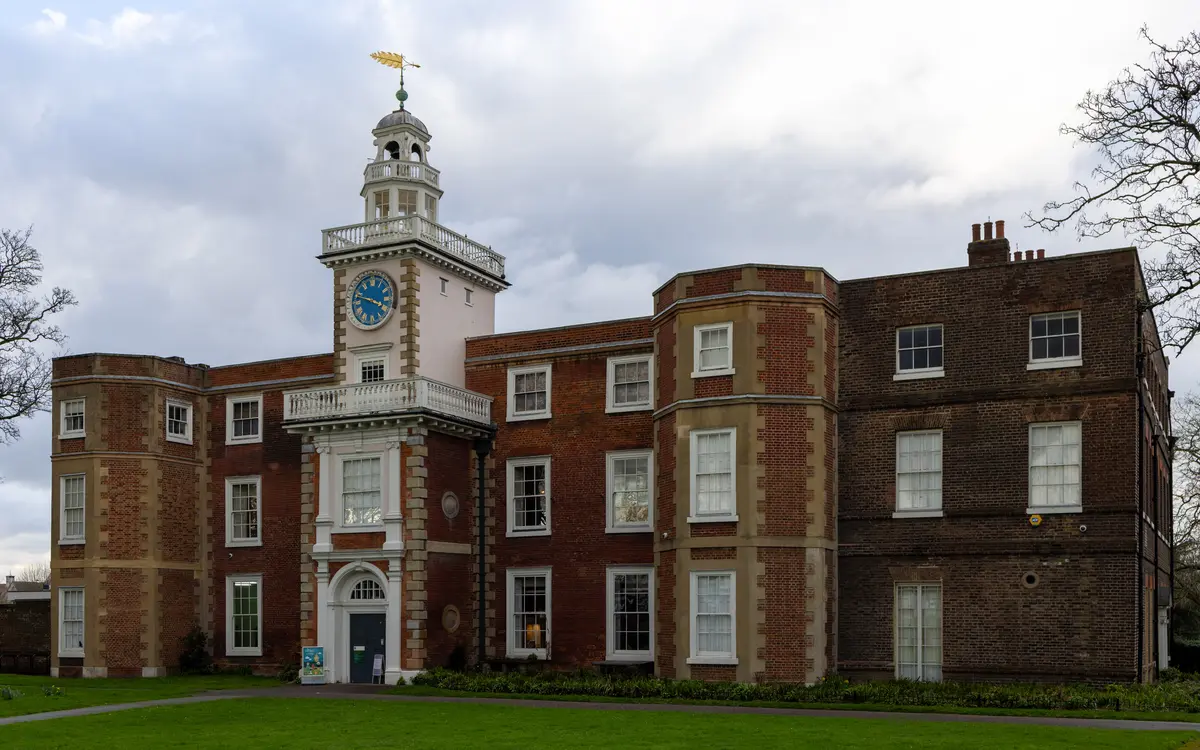
It is a Tudor manor house in Tottenham, for most of its life the Lordship House, renamed in the 1680s by an antiquarian baron who liked its medieval connection with the Bruces of Scotland. Its ghost is Constantia Lucy, first wife of Henry Hare, 2nd Baron Coleraine, and she was real. She died in 1680; her husband said she was buried at All Hallows, and the parish register, which survives complete for those years, has no entry for her. The story that he locked her in the rooms of the clock turret and that she flung herself with her child from the parapet first reaches print in March 1858, 178 years later, at fourth hand from an army officer who heard it while encamped on a march in India. The turret and its balconies were built in 1684, four years after she died. What the house does hold is a brick tower of 1514 that nobody has ever explained, a radical Victorian school run by the inventor of the penny post, and the archive of a whole London borough.
What is the history of Bruce Castle?
Bruce Castle is not a castle and never was one. The museum that occupies it says so on its own website, under a page headed "When is a castle not a castle?": the building is "technically not a castle but a magnificent 16th century former manor house for Tottenham". It stood for most of its life under the plain name of the Lordship House, and the romantic name it carries today was invented in the 1680s.
The oldest thing on the site is the round brick tower that stands apart from the house to the south-west, listed Grade I in its own right. The museum dates it to 1514 and attributes it to Sir William Compton, Groom of the Stool to Henry VIII, who held the manor and was rebuilding here. In 1516 the house appears in the historical record for the first time, and it appears at the top of the political world: Henry VIII rode out to meet his sister Margaret Tudor, Queen of Scots, at "Maister Compton's House beside Tottenham". The Victoria County History puts the house as complete by about that year. The earliest known picture of it is a detail of the Earl of Dorset's Survey of Tottenham of 1619.
The manor passed in 1626 to Hugh Hare, whom Charles I created Baron Coleraine in the Irish peerage on 31 August 1625 — the date is given by the Tottenham antiquaries Oldfield and Dyson in 1790. He was succeeded in 1667 by his son Henry Hare, 2nd Baron Coleraine (d. 1708), and it is Henry who made the house what it is. He was an antiquary himself: he traced the ownership of Tottenham manor back to the De Brus family, whose English lands, Tottenham included, were forfeited when Robert the Bruce took the Scottish throne in 1306, and he liked the association so much that he renamed his home Bruce Castle after a family that had probably never lived in it.
Henry Hare married Constantia Lucy, only daughter of Sir Richard Lucy of Broxbourne in Hertfordshire; Oldfield and Dyson print the pedigree, citing a genealogical dictionary of 1701. Their eldest son Hugh was born in 1668, while the family was still at Totteridge; two more children, Lucius and a daughter also named Constantia, followed. By 1680 the Hares were living at Bruce Castle, and in that year Constantia died. Two years later Henry Hare married Sarah Alston, dowager Duchess of Somerset, to whom he had been engaged in 1661 before she married the Duke.
In 1684, following that second marriage, Hare rebuilt the south front. The statutory list describes what he put up: a projecting square frontispiece dated 1684 carrying a stuccoed clock tower stage that rises above the roofline and is crowned with a glazed octagon, an open drum and a cupola, with wooden balconies at second-floor, octagon and drum level. The museum's own account is blunter — he "remodelled Bruce Castle to his own design and challenged 17th century taste, adding the resplendent clocktower". In 1701, writing what amounts to the first history of Tottenham, Hare admitted he could not explain the round tower in his own garden: "No mention can I find anywhere of the great brick round tower ..... whether it was built for a Monument house or for a Mews or for a Pigeon house or as a Prison ....."
The Hares held Bruce Castle until 1749. The estate then passed, after long litigation, to Henrietta Rosa Peregrina — the 3rd Baron's French-born daughter — and to her husband James Townsend, Lord Mayor of London in 1772, who remodelled the east front as a Georgian entrance. Oldfield and Dyson found the house in 1790 "a regular and substantial brick mansion", refronted "by the Hare family, a little before the Revolution" as a date in one of the chambers showed, and walked the reader through its rooms: nursery and nine bedchambers in the attic storey, a library of thirty-five feet by eighteen on the middle floor, hall, saloon, drawing room and eating room below.
In 1827 the Hill family bought the house for a school, and Bruce Castle School became one of the most talked-about experiments in English education: no corporal punishment, a curriculum with modern languages, science and engineering, and offences tried by a court of the pupils themselves. Its first headmaster was Rowland Hill, later the inventor of the penny post; among the boys were the sons of Charles Babbage. The school closed in 1891, the philanthropist Joshua Pedley bought the estate and pressed the Tottenham Local Board to take it on, the grounds opened in 1892 as Tottenham's first public park, and the house opened as a museum in 1906. It was listed Grade I on 22 July 1949, and the round tower was listed separately on the same day. A community excavation with the Museum of London in 2006 turned up chalk foundations of an earlier building and the everyday debris of the Victorian schoolboys; the Tudor Tower was reroofed and repointed in 2021-22 with Historic England and Haringey Council money.
One more Tottenham life belongs here, because the museum keeps it. Bruce Castle holds close to forty paintings by Beatrice Offor (1864-1920), a Slade-trained painter of portraits and of frankly esoteric subjects, who lived at 8 Bruce Grove, a few minutes' walk away. In August 1920, her health having collapsed, she fell to her death from her bedroom window; the inquest returned suicide while of unsound mind. The museum devoted a centenary exhibition to her, "Sisters, Sirens and Saints", in 2023-24.
Timeline: the documented record of Bruce Castle
- 1306 Robert the Bruce takes the Scottish throne and forfeits his English lands, Tottenham among them. The family probably never lived here, but four centuries later its name will be borrowed for the house.
- 1514 Sir William Compton, Groom of the Stool to Henry VIII, builds the detached round brick tower with locally made bricks, according to the museum. It is the oldest visible part of the site and its purpose has never been established.
- 1516 Earliest known reference to the house: Henry VIII meets his sister Margaret Tudor, Queen of Scots, at "Maister Compton's House beside Tottenham". The Victoria County History dates the completion of the house to about this year.
- 31 August 1625 Charles I creates Hugh Hare Baron Coleraine in the Irish peerage; the date is recorded by Oldfield and Dyson in 1790. The manor of Tottenham is conveyed to his use the following year.
- 1680 Constantia Lucy, first wife of Henry Hare, 2nd Baron Coleraine, dies while the family is living at Bruce Castle. Her husband says she was buried at All Hallows, Tottenham; the parish register, complete for these years, has no entry for her.
- 1682 Henry Hare marries Sarah Alston, dowager Duchess of Somerset, to whom he had been engaged in 1661. Modern historians read Constantia's death against this attachment; there is no document that does so.
- 1684 Hare rebuilds the south front: a projecting frontispiece carrying the stuccoed clock tower stage, glazed octagon, open drum and cupola, with wooden balconies at three levels. The room and the parapet of the legend are built four years after Constantia's death.
- 1701 Writing the first history of Tottenham, Henry Hare admits he cannot explain his own round tower: "No mention can I find anywhere of the great brick round tower ..... whether it was built for a Monument house or for a Mews or for a Pigeon house or as a Prison ....."
- 1790 Oldfield and Dyson describe Bruce Castle room by room, name Constantia five times and date the refronting "a little before the Revolution" from an inscription in one of the chambers. Their book contains no ghost, no apparition and no suicide.
- 1827 The Hill family opens Bruce Castle School, with Rowland Hill as first headmaster: no corporal punishment, offences tried by a court of pupils, modern languages and engineering on the timetable. It runs until 1891.
- March 1858 The Tottenham & Edmonton Advertiser prints "The Ghostly Lady of Bruce Castle", the earliest known telling of the legend, 178 years after Constantia's death. It reaches print at fourth hand, from an officer who heard it while encamped on a march in India.
- 1906 Bruce Castle opens as a museum, fourteen years after its grounds became Tottenham's first public park. It later becomes the local archive for the whole borough of Haringey.
- August 1920 The painter Beatrice Offor, whose work the museum collects, falls to her death from a bedroom window at 8 Bruce Grove, minutes away. The inquest returns suicide while of unsound mind. The ghost legend is already sixty-two years old in print.
- 22 July 1949 The house is listed Grade I; the detached round tower is listed Grade I separately on the same day. The list entry dates the fabric to "circa 1600 ... with additions of 1684 and early and late C18".
- 2006 A community excavation with the Museum of London, for the museum's centenary, uncovers chalk foundations of an earlier building on the site and everyday objects lost by the Victorian schoolboys.
Is there a rational explanation for Bruce Castle?
The woman at the centre of the legend was real, and that is where the honest account has to start. Constantia Lucy is named in print as Henry Hare's first wife in a genealogical dictionary of 1701, quoted by the Tottenham antiquaries Oldfield and Dyson in 1790. What is missing is not her existence. It is everything else.
She has no burial. Deborah Hedgecock, curator of Bruce Castle Museum, put it on the record in 2023: "No record of her burial can be found and certainly there is no mention in All Hallow Church's parish registers, although they completely cover this period." Her husband said she was buried there. The register, which survives complete for those years, does not know her.
The story of how she died can be dated, and it is not old. The earliest printed telling anybody has produced is a piece headed "The Ghostly Lady of Bruce Castle" in the Tottenham & Edmonton Advertiser of March 1858 — 178 years after Constantia's death. It is quoted in full in the published histories of the house, which is where we have read it rather than in the newspaper itself. What it describes is not a Tottenham memory. It is a story told at fourth hand: a lady of the writer's acquaintance met an Indian Officer at a party, who had it years earlier from a brother officer, told to him "when encamped on a march in India". Only then does the tale reach the house it is about. It runs: one of the Lords Coleraine conceived "a violent hatred" against his young wife, confined her first to the upper part of the house and then to "the little rooms of the clock turret", from which she forced her way out one night and "flung herself with child in arms from the parapet".
The building refuses that story. The clock turret, the little rooms and the balconies are all part of the 1684 rebuilding of the south front; Historic England's list entry dates the frontispiece to 1684 and hangs the wooden balconies on the clock stage, the octagon and the drum, and the museum's own history credits Henry Hare with adding the clocktower in that remodelling. Constantia died in 1680. Oldfield and Dyson, who saw a date painted or carved in one of the chambers, put the refronting "a little before the Revolution" of 1688. The room she is said to have been locked in and the parapet she is said to have jumped from were built four years after she was dead. This is arithmetic, not scepticism, and it has been available since 1858.
Nothing else supports it either. Oldfield and Dyson's History and Antiquities of the Parish of Tottenham High-Cross (1790) is the reference work that precedes the legend by sixty-eight years. It runs to some 86,000 words of scanned text; it names Tottenham 174 times, the Coleraines (spelled "Colerane") 55 times and Constantia five times, and it walks through Bruce Castle floor by floor. It contains no ghost, no apparition, no spectre, no shriek and no suicide — nor, for that matter, the words balcony or parapet.
The school is no better. The fullest account of Bruce Castle in the nineteenth century is the two-volume Life of Sir Rowland Hill and the History of Penny Postage (1880), some 366,000 words written by the headmaster and his son. Bruce Castle is named twenty-three times, Hazelwood — the parent school — forty-three. There is exactly one ghost in the whole work, and it is somewhere else: a cheap house at Wolverhampton that Rowland Hill's father rented before Rowland was seven, having been told after signing the lease that it was haunted. "He cared much about a low rent, and nothing about ghosts." The family that ran Bruce Castle for sixty-four years left no record of footsteps, cold rooms or anything else in the tower stair.
Two details of the version this site used to publish should be named. The anniversary is not Twelfth Night. The 1858 text says only "Every year as the fearful night comes round (it is in November)", and the museum's own retelling repeats exactly that: "in November". The specific date of 3 November circulates in ghost gazetteers and databases from the late twentieth century onwards and we could not trace it to any earlier source; the 1858 report gives no day at all. And the claim that museum staff will not lock up last is contradicted by the only member of staff who has spoken publicly: "Having worked at Bruce Castle for a long time, I have not personally encountered her ghost."
What is left is a migratory motif — the wife shut in a tower who throws herself and her child from it — that arrived in Tottenham through a British army camp in India and attached itself to a real woman whose death is genuinely unexplained. The suicide reading is a modern historian's inference from Hare's long attachment to the Duchess of Somerset, not a document. There is a curious footnote: a woman did fall to her death from a window in Tottenham, and the museum keeps her paintings. Beatrice Offor died that way at 8 Bruce Grove in August 1920. She has nothing to do with the ghost — the story was already sixty-two years old in print when she died — but she is the only such death in this parish for which there is a coroner's verdict.
Can you visit Bruce Castle?
Bruce Castle is a museum and archive run by Haringey Council, at Lordship Lane, Tottenham, London N17 8NU, in Bruce Castle Park where Lordship Lane meets Bruce Grove (telephone 020 8489 4250). The house is listed Grade I as National Heritage List entry 1358861, first listed on 22 July 1949, and the list entry gives its grid reference as TQ 33396 90676; the round brick tower to its south-west is a separate Grade I entry, 1294388, listed the same day.
The museum's opening-hours page, read on 24 September 2026, gives the museum as open Wednesday to Sunday from 1pm to 5pm, with free admission to both museum and archive. The same page says the building is always closed on 25 and 26 December, 1 January, Good Friday and the summer bank holidays, and that further closures at holiday times are posted there. The Archive Search Room keeps shorter hours, Wednesday to Friday from 10am to 12.30pm and from 1.30pm to 4pm, plus the second Saturday of each month at the same times, and every archive visit must be booked. Groups, schools among them, may arrange visits at other times through [email protected].
According to the museum's getting-here page, Bruce Grove station on the London Overground Weaver line is a seven-minute walk up Bruce Grove. Buses 123, 243 and 318 stop beside the museum on Lordship Lane, Bruce Grove or the east arm of The Roundway, where the announcement is "Bruce Castle Park and Museum"; the 123 and 243 also run from Seven Sisters and Wood Green Underground stations. The W3 stops at "Tottenham cemetery" on White Hart Lane, which the page puts at ten minutes on foot along the Church Path through the cemetery and the grounds of All Hallows Church. A free car park for museum and archive visitors lies behind the building on Church Lane, reached from All Hallows Road; it is open from 9am until the gates are locked at 5pm, and the museum gives N17 7AA as the postcode nearest its gate.
The grounds became Tottenham's first public park in 1892, a date given both by the museum and by the Victoria County History, and the museum puts the park at 8 hectares (20 acres) with gates that are not locked. On display inside are original manorial court rolls bearing the De Brus family name. The museum holds forty paintings and a sculpture by Beatrice Offor, bequeathed in 1937, which the Friends of Brockley and Ladywell Cemeteries describe as the largest collection of her work in the country; in October 2023 the curator, Deborah Hedgecock, mentioned an exhibition of her paintings then on show. Objects left by the Victorian pupils of Bruce Castle School, found in the 2006 community excavation, are shown in the downstairs galleries.
The tower was built in 1514 for Sir William Compton. Its roof was restored in 2021-22 with a grant from Historic England and Haringey Council; the museum's page on the tower describes the repointing of its brick in lime mortar as still in progress and says the tower will return to community use when the work is finished. All Hallows Church stands about 200 metres north-north-west of the house, measured on OpenStreetMap. Hedgecock told the Haringey Community Press in 2023 that the church's parish registers are complete for the period and make no mention of Constantia's burial.
The museum tells the ghost story itself. Its schools pages, under the title "Ghostly goings on....", recount Constantia's escape through the window onto the front balcony and end on her name missing from the burial records. The Haringey Community Press reported in October 2023 that local groups, the museum among them, hold ghost walks on her story around Halloween.
Sources consulted
- Henry George Oldfield and R. R. Dyson, «The History and Antiquities of the Parish of Tottenham High-Cross, in the County of Middlesex» — Printed for the authors, London, 1790 book
- Wikipedia contributors, «Bruce Castle, "The Ghostly Lady of Bruce Castle" section (citing "The Ghostly Lady of Bruce Castle", Tottenham & Edmonton Advertiser, March 1858)» — Wikipedia, 2026 web
- Historic England, «Bruce Castle, Lordship Lane N17 — National Heritage List for England entry 1358861, Grade I, listed 22 July 1949» — National Heritage List for England, 1949 report
- «Tottenham: Manors» — A History of the County of Middlesex, vol. 5 (Victoria County History), 1976 academic
- Rowland Hill and George Birkbeck Hill, «The Life of Sir Rowland Hill and the History of Penny Postage» — Thos. De La Rue, London, 1880 book
- Bruce Castle Museum, «When is a castle not a castle?» — brucecastle.org (Haringey Council), 2024 web
- Bruce Castle Museum, «Ghostly goings on....» — brucecastle.org (Haringey Council), 2024 web
- Bruce Castle Museum, «The Tudor Tower» — brucecastle.org (Haringey Council), 2024 web
- Miriam Balanescu, «The overlooked story of the Bruce Castle ghost (interview with Deborah Hedgecock, curator)» — Haringey Community Press, 2023 newspaper archive
- Historic England, «Tower to the South West of Bruce Castle — National Heritage List for England entry 1294388, Grade I» — National Heritage List for England, 1949 report
- Bruce Castle Museum, «Opening hours and Getting here» — brucecastle.org (Haringey Council), 2026 web
- Friends of Brockley and Ladywell Cemeteries, «The tragic genius of painter Beatrice Offor (1864-1920) to be remembered in centenary exhibition» — foblc.org.uk, 2020 web
- Bruce Castle Museum, «Getting here: public transport, walking, cycling and the visitors' car park off Church Lane (consulted 24 September 2026)» — brucecastle.org (Haringey Council), 2026 web
- Bruce Castle Museum, «Parkland: Tottenham's first public park (1892), 8 hectares, Holocaust Memorial Garden and the Great Oak» — brucecastle.org (Haringey Council), 2026 web
Reviewed by V. Serrano on 2026-08-17 · How we verify our content
💬 Field testimonies (0)
No testimonies yet. Add the first.
Add your testimony
🔒 Log in to add a testimony