👻 HAUNTED PLACE · EXP. Nº9475
ACTIVE
Gainsborough Old Hall
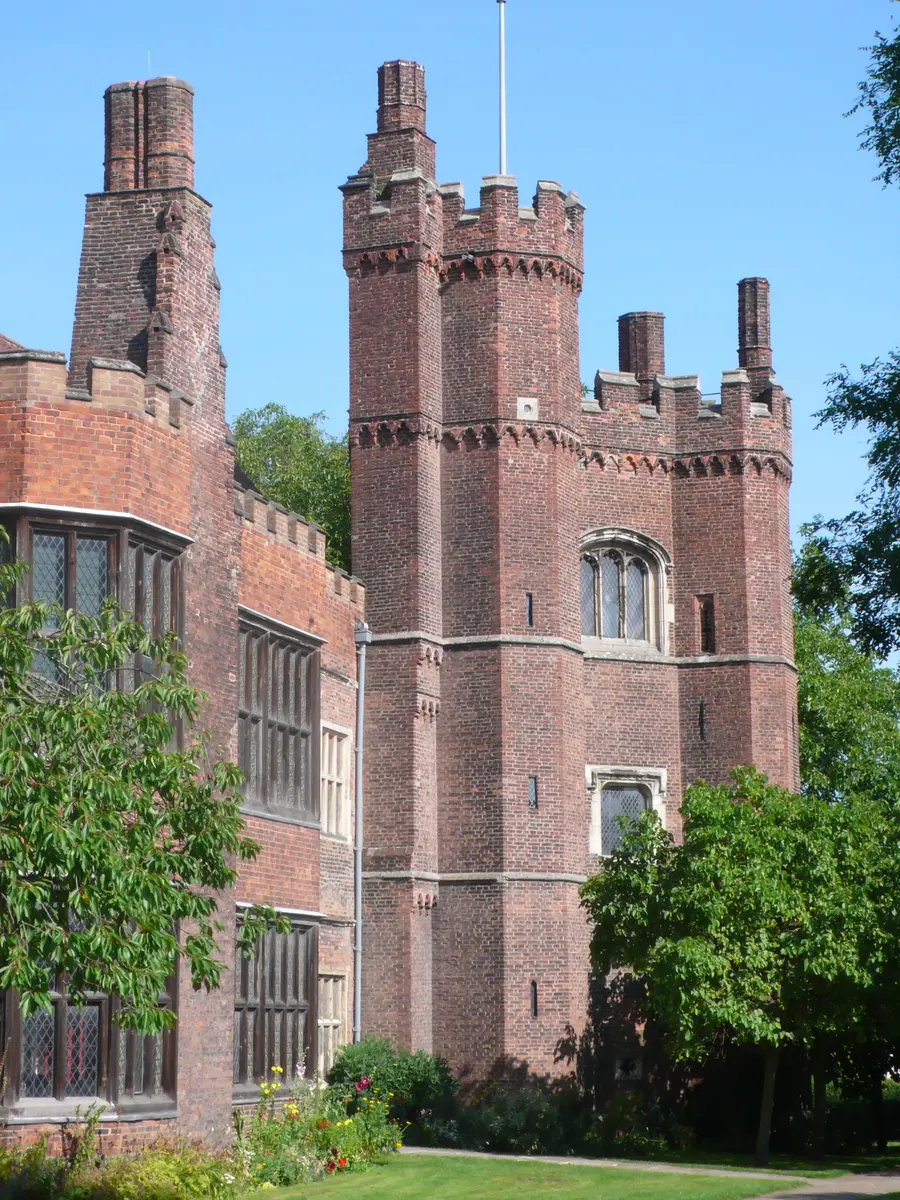
Gainsborough Old Hall in Lincolnshire is one of England's best-preserved medieval manor houses, built in 1460 by Sir Thomas Burgh as a statement of his family's wealth and power.
Where is Gainsborough Old Hall?
- Location
- England, United Kingdom
- Type
- House / mansion
- Coordinates
- 53.401, -0.778
- Last updated
LOCATION
Why is Gainsborough Old Hall said to be haunted?
Its great timber-framed hall, medieval kitchen complex and brick tower survive largely unchanged after five centuries. The hall hosted Richard III in 1484 and Henry VIII twice, and in the early 17th century sheltered the Puritan worship of John Smyth and Thomas Helwys, who went on to found the Baptist tradition in the Netherlands. Its only documented ghost story is the Grey Lady, a local legend about a woman locked in the tower by her father after falling in love with a poor soldier. English Heritage runs the site as a museum, open daily, with the fifty-nine-step tower climb offering fine views over the town of Gainsborough and the river Trent.
What is the history of Gainsborough Old Hall?
Gainsborough Old Hall was built in 1460 by Sir Thomas Burgh, a wealthy and flamboyant landowner who wanted his home to be a demonstration of his family's wealth and importance as much as a place to live. The Burghs were among the most powerful families in Lincolnshire, and the hall they built was one of the largest and most ambitious timber-framed manor houses in England.
The hall's early history was turbulent. In 1470, just a decade after its construction, the manor was attacked by Sir Robert Welles over a dispute about lands, status and honour, though the building was not severely damaged. In 1484, Sir Thomas Burgh entertained King Richard III in his great hall — a mark of the family's standing at court. Henry VII intended to raise Thomas to a barony, but no second writ was issued and no patent followed.
The hall's most dramatic episode came in 1510, when Thomas Burgh's son, Edward Burgh, 2nd Baron Burgh, was incarcerated at the Old Hall after being declared a lunatic. He never attended the House of Lords and remained confined until his death in 1528. His eldest son, also called Sir Thomas, succeeded him and was regarded as 1st Baron Burgh, de jure 3rd.
Henry VIII visited Gainsborough twice: once in 1509, and again in 1541 with his fifth wife, Queen Katherine Howard. The Queen was accused of indiscretions both at Gainsborough and at Lincoln, accusations that contributed to her execution in 1542. Katherine Parr, who would become Henry's sixth wife, had been widowed twice by this point — her second husband, Edward Burgh, having died in 1533.
When Thomas, the fifth Lord Burgh, died without an heir, the hall was sold in 1596 to William Hickman, a merchant from London. Hickman made many improvements, especially to the east wing. He and his mother Rose supported the Puritan Dissenters, and allowed John Smyth, Thomas Helwys and other excommunicated Puritans to worship and conduct services in the hall in the early 17th century, until they sailed to the Netherlands in exile due to persecution and went on to found the Baptist tradition.
The Hickman family continued to play a prominent role in the development of Gainsborough, and many became local members of Parliament. Sir Neville Hickman invited John Wesley to preach in the Great Hall several times, in 1759, 1761 and 1764.
In 1720 a new house was built at Thonock on the edge of the town and the Old Hall became unoccupied. It remained in the family and was used for a variety of purposes over the following centuries, falling into increasing disrepair. The building was looked after from 1949 by a volunteer group, The Friends of the Old Hall (FOHA), who saved it from demolition and first opened it to the public. Sir Edmund Bacon gave it to the nation in 1970. It is now owned by English Heritage and is open to the public as a museum, listed as Grade I for its exceptional heritage significance.
Timeline: the documented record of Gainsborough Old Hall
- 1460 Sir Thomas Burgh builds Gainsborough Old Hall as a demonstration of his family's wealth and importance. The Burghs were among the most powerful families in Lincolnshire.
- 1484 Sir Thomas Burgh entertains King Richard III in his great hall, a mark of the family's standing at court.
- 1510 Edward Burgh, 2nd Baron Burgh, is incarcerated at the Old Hall after being declared a lunatic. He never attended the House of Lords and remained confined until his death in 1528.
- 1541 Henry VIII visits Gainsborough with his fifth wife, Queen Katherine Howard. The Queen is accused of indiscretions both at Gainsborough and Lincoln, contributing to her execution in 1542.
- 1596 The hall is sold to William Hickman, a London merchant, after the fifth Lord Burgh dies without an heir. Hickman makes many improvements, especially to the east wing.
- 1720 A new house is built at Thonock on the edge of the town and the Old Hall becomes unoccupied, remaining in the family but used for a variety of purposes.
- 1949 The Friends of the Old Hall (FOHA), a volunteer group, begins looking after the building, saving it from demolition and first opening it to the public.
- 1970 Sir Edmund Bacon gives the hall to the nation. It is now owned by English Heritage and open to the public as a museum, listed as Grade I.
Is there a rational explanation for Gainsborough Old Hall?
The Grey Lady legend at Gainsborough Old Hall is a local tradition with no documented historical basis. The story — that the daughter of a Lord of the Manor fell in love with a poor soldier, planned to elope, was locked in the tower by her father and died of a broken heart — appears in Daniel Codd's Haunted Lincolnshire (2006) and is repeated in local tourism material, but no specific identity has ever been attached to the figure, and no historical record documents such an event at the hall.
The legend fits a well-known pattern in English country house folklore: the tragic young woman confined by a patriarchal father, dying of love or grief, whose spirit lingers in the building. This motif appears at dozens of stately homes across Britain, often with only the details changed to suit the local architecture. The Grey Lady at Gainsborough is one instance of a widely circulating template rather than a tradition with independent historical roots.
English Heritage, which owns and operates the site, does not promote the Grey Lady legend in its official visitor materials or interpretive content. The institution's focus is on the hall's genuine historical significance: its medieval architecture, its connections to the Burgh and Hickman families, and its role in the early Baptist movement. The absence of any paranormal framing in the official presentation is itself informative.
The tower, where the Grey Lady is said to wander, is a real and striking feature of the building — a brick structure on the north-east corner, accessible to visitors via a fifty-nine-step climb. The atmospheric quality of the space, combined with the power of suggestion in a building marketed as historic and mysterious, provides a straightforward explanation for any reports of unusual experiences.
Can you visit Gainsborough Old Hall?
Gainsborough Old Hall is open to the public as a museum operated by English Heritage. The site is at Parnell Street, Gainsborough, Lincolnshire, DN21 2NB.
The hall is open daily from 10:00 to 17:00, with last entry at 16:15. English Heritage members enter free; non-members pay an admission charge. Advance online booking is available and offers a discount compared to gate prices.
Highlights include the magnificent medieval great hall with its elaborate timber roof, the domestic apartments, and what English Heritage describes as the finest medieval kitchen complex anywhere in England. The kitchen still contains many original features, including two open fireplaces, each large enough to roast an ox, and two bread ovens served by a third chimney.
Visitors can climb the tower — a fifty-nine-step ascent — for views over the town and the river Trent. The hall also contains a large number of witches' marks carved into its walls, thought to have been made to ward off evil, including an unusual inverted carving of William Hickman's name.
A café operates in the 15th-century parlour, which served as the town's Literary Institute in the 19th century and was later used as a Masonic Temple. The Friends of the Old Hall Association, the volunteer group that saved the building in 1949, still provides volunteer guides and other expertise.
The site is accessible by road and is located in the town centre of Gainsborough. Check the English Heritage website for current prices, opening times and any seasonal closures before visiting.
Sources consulted
- Wikipedia contributors, «Gainsborough Old Hall» — Wikipedia, the free encyclopedia, 2026 web
- English Heritage, «Gainsborough Old Hall» — Official visitor information, 2026 archive
- Daniel Codd, «Haunted Lincolnshire» — Tempus Publishing Ltd, 2006 book
- Nadia Khomami, «'Staggering array' of witches' marks discovered at English Heritage site» — The Guardian, 2024 newspaper archive
- Historic England, «The Old Hall (Grade I) (1359773)» — National Heritage List for England, 1964 archive
Reviewed by V. Serrano on 2026-08-22 · How we verify our content
💬 Field testimonies (0)
No testimonies yet. Add the first.
Add your testimony
🔒 Log in to add a testimony