👻 HAUNTED PLACE · EXP. Nº9476
ACTIVE
Linlithgow Palace
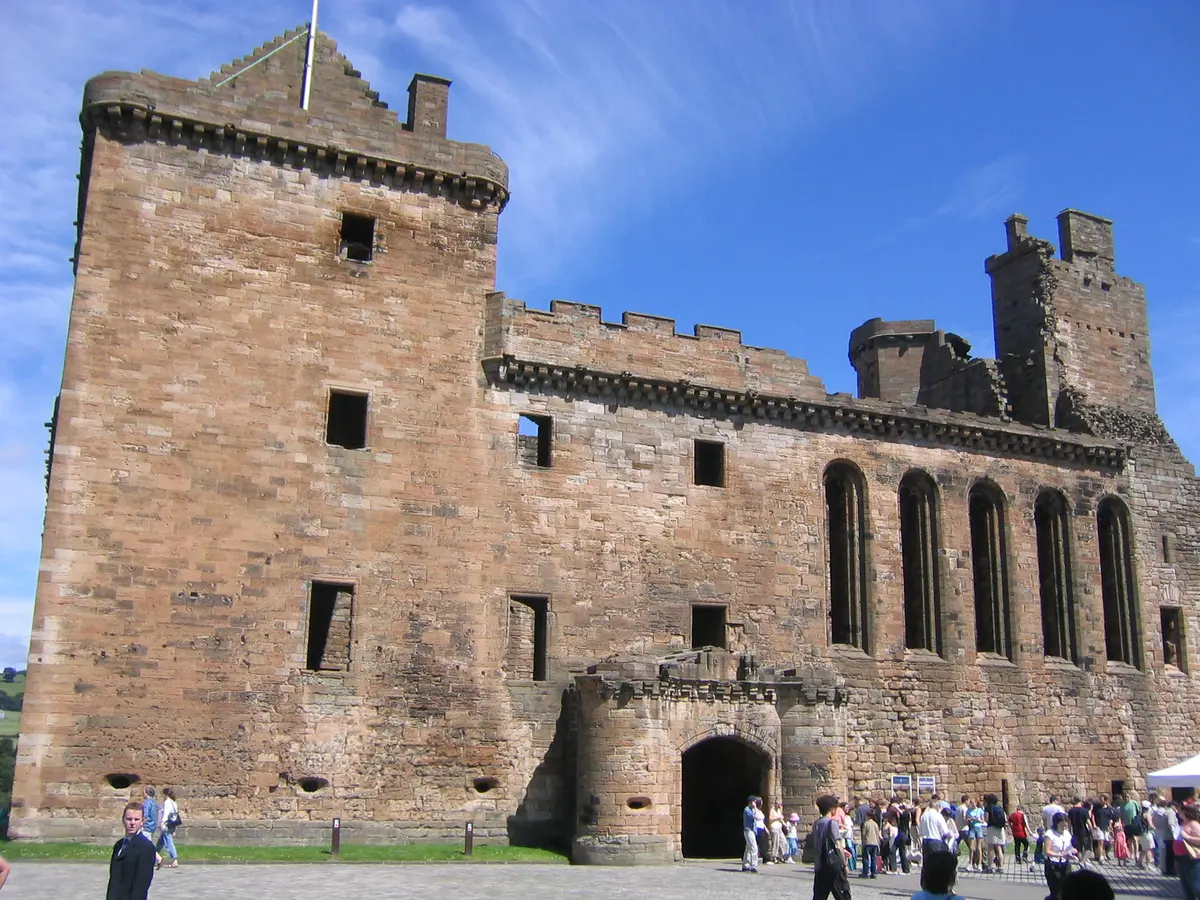
The ruined royal residence of Linlithgow Palace, birthplace of Mary, Queen of Scots in 1542, carries one of Scotland's best-recorded royal omens.
Where is Linlithgow Palace?
- Location
- West Lothian, Scotland, United Kingdom
- Type
- House / mansion
- Coordinates
- 55.979, -3.601
- Last updated
LOCATION
Why is Linlithgow Palace said to be haunted?
According to the 16th-century chronicler Robert Lindsay of Pitscottie, in 1513, while King James IV prayed at nearby St Michael's Kirk before marching to Flodden, a ghostly, blue-robed figure appeared and warned him against the campaign, then vanished before guards could stop him; James ignored the warning and died at Flodden along with much of Scotland's nobility. Burned out by Hanoverian troops in 1746 and never rebuilt, the palace's roofless halls are now said to hold cold drafts and fleeting shadows reported by visitors near the great hall and the chapel ruins, echoes some link back to that fateful pre-Flodden vision.
What is the history of Linlithgow Palace?
Linlithgow Palace began as a royal manor in the 12th century under David I of Scotland. Edward I of England fortified the site in 1302, calling it his 'pele' (from Old French pel, a stake palisade). After a devastating town fire in 1424, James I initiated the transformation into a grand Renaissance palace, a project continued by James III, James IV, and James V over the next century. The palace became the principal royal nursery: James V was born here in 1512, Mary Queen of Scots in 1542, and Princess Elizabeth in 1596. Its most famous supernatural episode occurred in August 1513 when James IV, preparing for the Flodden campaign, prayed at St Michael's Kirk adjacent to the palace. According to the contemporary chronicle of Robert Lindsay of Pitscottie, a man in a blue gown — described as about fifty years old, bald of forehead with red-yellow hair to his shoulders, wearing linen hose and buttons on his feet, carrying a great pikestaff — forced his way through the lords to the king's desk. He made little reverence, leaned on the desk, and warned the king in the name of his 'mother' not to proceed with the campaign nor to consort with women, or he would be confounded and brought to shame. As the even-song ended and the king pondered a reply, the figure vanished before the eyes of the entire court, including Sir David Lyndsay (later Lyon King of Arms) and John Inglis the marshal, who tried to seize him but found only empty air. James ignored the warning, marched to Flodden, and died there on 9 September 1513 alongside much of Scotland's nobility. After the Union of the Crowns in 1603 the palace fell into disuse; the north range was rebuilt for James VI in 1618–22 but only Charles I slept there once in 1633. In January 1746 the Duke of Cumberland's Hanoverian troops burned the palace, leaving the roofless shell seen today. Conservation began in the 19th century; the site is now managed by Historic Environment Scotland and open year-round.
Timeline: the documented record of Linlithgow Palace
- 1124 David I establishes a royal manor at Linlithgow, founding the burgh that grows around it.
- 1302 Edward I of England builds a fortified 'pele' around the royal residence during the Wars of Independence.
- 1424 After a great fire, James I begins reconstruction of the palace as a Renaissance royal residence.
- 1512 James V born at Linlithgow Palace.
- August 1513 James IV prays at St Michael's Kirk; a man in a blue gown appears, warns him against the Flodden campaign, then vanishes before the court (per Pitscottie).
- 9 September 1513 Battle of Flodden: James IV and much of the Scottish nobility are killed.
- 1542 Mary Queen of Scots born at Linlithgow Palace.
- January 1746 Duke of Cumberland's troops burn the palace; it is never rebuilt.
Is there a rational explanation for Linlithgow Palace?
The apparition account rests on a single primary source: Robert Lindsay of Pitscottie's chronicle (written c. 1570s, published 1728, critical edition by A. J. G. Mackay 1899–1911). Pitscottie wrote decades after the event and frames the story as hearsay («sum sayis»), though he names Sir David Lyndsay and John Inglis as eyewitnesses. George Buchanan, in his Rerum Scoticarum Historia (1582), corroborates that Sir David Lyndsay was his informant for the tale. No contemporary diplomatic correspondence, papal dispatches, or English intelligence reports mention the apparition. The figure's blue gown and maternal warning echo medieval exempla of supernatural deterrents (e.g., the Virgin or a saint interceding), and the vanishing act serves a clear moral-didactic purpose: explaining Flodden as divine punishment for James IV's lust and impiety rather than military incompetence. The «mother» may be a coded reference to the Virgin Mary or to James's actual mother, Margaret Tudor, who opposed the war. Modern visitors report cold draughts and shadows in the great hall and chapel ruins, but these are typical of large, roofless stone structures with wind tunnels and shifting light. No instrumental investigation has captured anomalous phenomena. The story's persistence owes more to its literary power — repeated by Sir Walter Scott in Marmion (1808) and countless guidebooks — than to verifiable evidence.
Can you visit Linlithgow Palace?
Linlithgow Palace is managed by Historic Environment Scotland and open daily (hours vary seasonally; check the official website). The site includes the palace ruins — great hall, royal apartments, courtyard fountain (James V, 1538), queen's oriel window, and Queen Margaret's Bower with views over the peel and loch — and the adjacent St Michael's Parish Church, where the 1513 apparition allegedly occurred. A visitor centre, shop, and café are on site. The Linlithgow Peel and Loch form a Site of Special Scientific Interest with ranger-led walks covering history, wildlife, and folklore. The palace is on the John Muir Way long-distance path. Rail: Linlithgow station (Edinburgh–Glasgow line) is a 15-minute walk. Parking is available at the palace and at the Kirkgate car park. Admission charges apply; Historic Scotland members and Explorer Pass holders enter free. The king's bedchamber and court kitchen may be closed for conservation work. Allow 1.5–2 hours for a full visit.
Sources consulted
- Robert Lindsay of Pitscottie, «The Historie and Cronicles of Scotland, Vol. III (Pitscottie's Chronicles, Scottish Text Society edition)» — Edinburgh: William Blackwood and Sons, 1899–1911, edited by A. J. G. Mackay, 1575 archive
- George Buchanan, «Rerum Scoticarum Historia» — Edinburgh, 1582 (Book XIII, ch. 31), 1582 book
- Historic Environment Scotland, «Linlithgow Palace: Statement of Significance» — HES Publications, 2019, 2019 report
- Historic Environment Scotland, «Linlithgow Palace – History and Stories» — Official website, 2024 report
Reviewed by V. Serrano on 2026-08-23 · How we verify our content
💬 Field testimonies (0)
No testimonies yet. Add the first.
Add your testimony
🔒 Log in to add a testimony