👻 HAUNTED PLACE · EXP. Nº9476
ACTIVE
The Tolbooth, Aberdeen
The Tolbooth, Aberdeen is a location reputed to be haunted in Aberdeen, Scotland, GB. Its reputation comes from reported apparitions, unexplained phenomena and eyewitness accounts gathered over time.
Where is The Tolbooth, Aberdeen?
- Location
- Aberdeen, Scotland, GB
- Type
- Prison
- Coordinates
- 57.148, -2.094
- Testimonies
- 0
- Last updated
LOCATION
Why is The Tolbooth, Aberdeen said to be haunted?
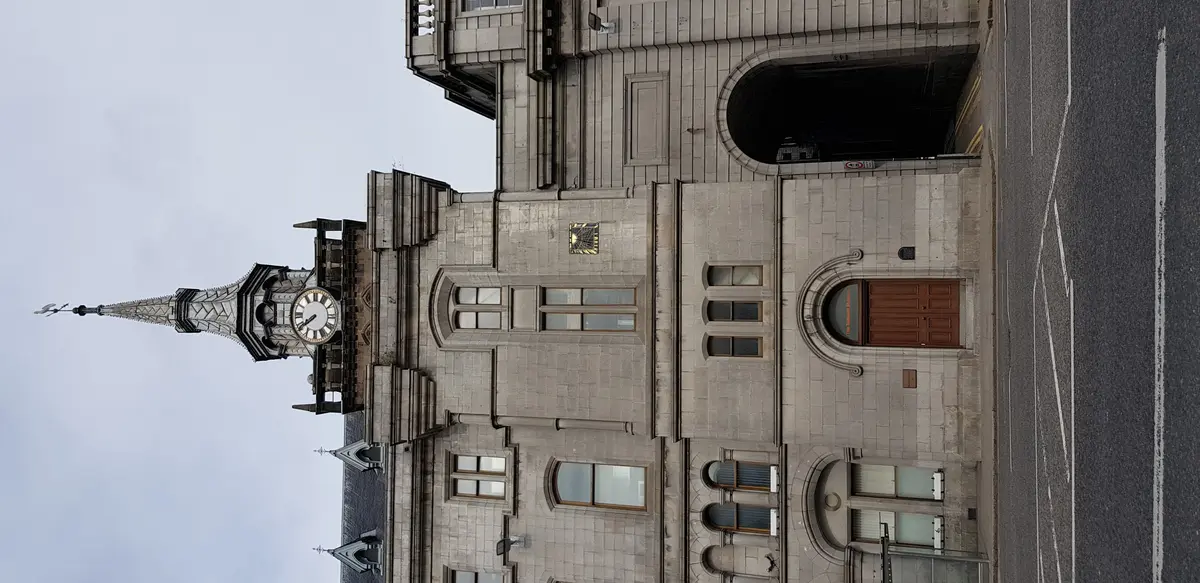
The Tolbooth Museum on Castle Street is the surviving wardhouse of Aberdeen's burgh jail, a granite tower of vaulted 17th-century cells reached by a tight turnpike stair. It is widely sold as the place where Aberdeen held its witches, and the dates do not allow it. The Justice Court that condemned Janet Wishart and her son Thomas Leyis did sit in the Tolbooth in February 1597, but in the older, unsafe building that stood on the site; the burgh's own accounts pay a smith for shackles for the witches in the steeple of the Kirk of St Nicholas, across town. The cells visitors walk into were begun in 1616 by the mason Thomas Watson of Old Rayne and finished in 1629, in obedience to an act of the Scottish Parliament of November 1597 ordering every burgh to build a secure jail. The building's documented misery is real and comes later: a suicide dragged through the streets, an escape in 1636, Jacobites held so straitly in 1745 that food barely reached them. The apparition people report here wears a 1920s trilby. The museum has been shut since 2020 and the council expects to reopen it in spring 2027.
What is the history of The Tolbooth, Aberdeen?
The Tolbooth Museum on Castle Street is what is left of the burgh tolbooth of Aberdeen. Aberdeen City Council calls it "the former wardhouse, or prison for Aberdeen, a unique complex of 17th and 18th century gaol cells". Historic Environment Scotland dates the surviving fabric to 1615-29, notes that "The Tolbooth cells are particularly rare as many from the 17th century no longer survive", and names the builder in a single line: "In 1616 Thomas Watson, a mason from Old Rayne in Aberdeenshire, was employed to build a Tolbooth in Aberdeen." The same record describes an interior of "stone-flagged floors, a narrow spiral stair, several small internal rooms, some of which are vaulted with original heavy timber iron bound yetts". An earlier tolbooth stood on the same ground from about the close of the fourteenth century, and it was a poor prison. William Robbie, writing in 1893, put the reason plainly: "it was sometimes necessary to keep a watch on the cells night and day to insure their inmates remaining in safe custody, and, notwithstanding this additional precaution, escapes were numerous". By the 1610s the burgh called its own tolbooth, in the phrase Robbie quotes, "a dishonour and dishonestie to the town".
Aberdeen's great witch hunt fell in 1596 and 1597, and its court did sit in the Tolbooth. Aberdeen City and Aberdeenshire Archives say so in seven words: "The trials were held in the Tolbooth." The assize records printed by the Spalding Club in 1841 open with the sitting of 17 February 1596, which is 1597 by modern reckoning: "The Court of Justiciare hauldin within the Tolbuithe of Aberdene, the sevinteenth day of Februar, 1596, be Alexander Rutherfurd, provest of Aberdene", acting on a royal commission dated at Holyroodhouse on 2 February. Janet Wishart was tried that day. Her son Thomas Leyis followed on 23 February and was convicted by all but three of his twenty-one assizers on the first point, "that he was the ringleader of the dans on a Hallow evin last, about the croce". The city archive's account of the charge adds that the dancers were "under the conduct and guiding of the devil present with them" and that Leyis struck Kathren Mitchell "because she spoilt the dance and ran not so fast as the rest". Of mother and son the record then says only that they "war convict and brint for wichecraft and socerie".
The accused were held somewhere else. The Dean of Guild accounts for 1596-97, kept by William Dun and printed in the same volume, pay a smith for the irons: "Item, To Alexander Reid, Smyth, for tua pair of scheckillis to the Witches in the Stepill, xxxii sh." Arthur Winfield of the OpenSpace Trust and the historian Chris Croly, then Aberdeen's city historian, identified those two prisons as the stone-vaulted chapel of St Mary and the steeple of the Kirk of St Nicholas, where an iron ring survives in a pillar; Winfield told Live Science that "In the winter nowadays, the temperature gets down to 3 degrees [Celsius] in St Mary's Chapel, and I guess it would be even colder up in the spire." The accounts also record what that winter cost the prisoners. They open with "Imprimis, For eirding of Suppak, quha deid in prisoun", and pay ten shillings for "trailling of Manteith throw the Streittis of the Town in ane Cart, quha hangit herself in Prisoun, and for Cart hyir and eirding of hir". The fires were on the hill: "Item, For careing the peittis, coillis, and barrellis to the Hill".
1597 is also the year the granite came from. On 1 November the parliament of James VI passed the act that the Records of the Parliaments of Scotland head "Prison houses should be built within all burghs". Its complaint, in that edition's modernised spelling, was that "through want of sufficient and sure prisons, jails and ward-houses sundry rebels and transgressors of the laws, as well criminal as civil, escape unpunished and justice contemned". Its remedy was that "within the space of three years in all burghs within this realm there be sufficient and sure jails and ward-houses built, upheld and maintained by the provost, bailies, council and communities of the said burghs upon their own common good". Historic Environment Scotland records the consequence for this building in one sentence: "A Parliamentary Act, passed in 1597, required all burghs to erect prisons." Aberdeen took nineteen years to begin. Robbie dates the start: "in 1616 the work of rebuilding was seriously entered upon". The wardhouse was finished in 1629, the year a spire went up on the tower, and the tower was extended again in 1704.
The cells held accused witches in the next wave. The city archive states that "The city's wardhouse, completed in 1629 within the walls of the existing Tolbooth, housed several witches awaiting trial." A commission of 9 August 1630 tried Marion Hardie, a vagabond from Elgin, who confessed before the Bishop of Aberdeen and the magistrates and was strangled and burnt. In 1636 Margaret Fraser, suspected of witchcraft, "managed to break ward and flee from the Tolbooth"; she was still being sought in Turriff in 1650, when she was reported dead. The Reverend John Bisset, living in the town under Jacobite occupation, wrote on 21 December 1745 that the merchant John Dingwall and David Bartlet were kept in different rooms in the tolbooth so straitly that necessaries could hardly be got in to them, and on 15 May 1746 that the prisoners in the tolbooth were to be taken to Inverness and shipped from there for London.
When Peddie and Kinnear built the present Town House in 1868-74 the rest of the old complex came down, and the listing records what survived: "only the prison tower, or wardhouse of the Tolbooth remains". The whole is listed category A as LB19990, first listed in 1967 and revised in 2017. Aberdeen City Council opened the wardhouse as a museum in 1995 and the building marked its four hundredth anniversary in 2016. The ghost stories date from that museum period and are attributable. The Aberdeen local-history site aboutaberdeen.com summarises the chapter that the paranormal investigator Graeme Milne devoted to the building in his book The Haunted North (2008): white mist, a photographed orange light, shuffling feet, the sound of a chain, cold down one side of the body, and accounts collected from others of a figure about four feet tall in 1920s clothes and a trilby hat. A Most Haunted crew filmed here in April 2009; the episode, series 13 number 7, was broadcast on 1 December 2009.
Timeline: the documented record of The Tolbooth, Aberdeen
- Late 14th century An earlier tolbooth stands on the Castlegate site. Robbie describes it as small and incommodious, with a prison so weak that a watch was kept on the cells night and day and escapes were still numerous.
- 17 February 1596/97 The Court of Justiciary sits within the Tolbooth of Aberdeen under Provost Alexander Rutherfurd, on a royal commission dated at Holyroodhouse on 2 February, and tries Janet Wishart for witchcraft.
- 23 February 1597 Thomas Leyis is convicted by eighteen of his twenty-one assizers of leading a dance about the mercat cross on Hallowe'en. The Dean of Guild pays 3 pounds 13 shillings 4 pence for the peats, tar and fir to burn him.
- 1596-97 audit year William Dun's accounts pay Alexander Reid, smith, for two pairs of shackles for the witches in the steeple; bury Suppak, dead in prison; and pay ten shillings to cart Manteith through the streets after she hanged herself in ward.
- 25 April 1597 A single sitting of the Justice Court in the Tolbooth charges Bessie Paull, outlaws Thomas Ego and two others, absolves Isobel Forbes and Margaret Clerauche, and convicts Katherine Ferries on eight points.
- 1 November 1597 The parliament of James VI orders every burgh to build and maintain sufficient and sure jails and ward-houses within three years, because for want of them rebels and transgressors escape unpunished.
- 1616 Thomas Watson, mason of Old Rayne in Aberdeenshire, is employed to build the new Tolbooth. Rebuilding begins on the tower west of Lodge Walk, known as the High Tolbooth.
- 1629 The wardhouse is completed and an oak spire covered with lead is added to the tower. The cells the museum shows date from this campaign, thirty-two years after the burnings of 1597.
- 9 August 1630 A commission is issued to try Marion Hardie, a vagabond from Elgin apprehended in Aberdeen. She confesses before the Bishop of Aberdeen and the magistrates and is strangled and burnt.
- 1636 Margaret Fraser, suspected of witchcraft, breaks ward and escapes from the Tolbooth. She is still being sought in Turriff in 1650, when she is reported dead.
- 21 December 1745 The Reverend John Bisset records that John Dingwall and David Bartlet are kept in separate rooms in the tolbooth so straitly that necessaries can hardly be got in to them.
- 15 May 1746 Bisset hears that the prisoners in the tolbooth are to be taken with a convoy of some sixty-three captives to Inverness and shipped from there for London.
- 1868-74 Peddie and Kinnear build the present Town House. Everything of the old complex is demolished except the prison tower, which is refaced in ashlar; 1616 masonry survives on the north side, visible from Lodge Walk.
- 1893 William Robbie publishes his book of Aberdeen traditions, some 154,000 words. He names the Tolbooth twenty-two times and uses the word ghost once, of a street name. No haunting of the building is recorded.
- 1995 Aberdeen City Council opens the former wardhouse to the public as the Tolbooth Museum. The building marks its four hundredth anniversary in 2016.
- 2008 Graeme Milne publishes The Haunted North, reporting white mist, a photographed orange light, the sound of a chain and accounts of a four-foot figure in 1920s clothes and a trilby.
- 1 December 2009 Most Haunted broadcasts the episode filmed at the Tolbooth in April that year, series 13 episode 7. It is the building's first appearance as a haunted location on national television.
- 19 July 2016 Arthur Winfield and the historian Chris Croly describe to Live Science the iron ring in St Mary's Chapel at the Kirk of St Nicholas, one of the two places where the accused of 1597 were actually held.
- 27 October 2020 The earliest archived capture of the council's visitor page already reads temporarily closed to the public. By 2023 the same page says the museum will stay shut until further notice while the building is surveyed.
- September 2026 Aberdeen City Council states that the restoration is complete and award-winning, that electrical, lighting and fire detection systems are being reinstated, and that reopening is expected in spring 2027.
Is there a rational explanation for The Tolbooth, Aberdeen?
The burnings happened, and Aberdeen wrote them down better than any burgh in Scotland. Chris Croly, the city's historian at the time of the Kirk of St Nicholas excavations, told Live Science that "Aberdeen has the best civic records of witch burning in Scotland, and so it can appear that way". Those records place the year 1597 outside this room. The wardhouse was completed in 1629, thirty-two years after Thomas Leyis went to the fire, and the burgh's accounts show it paying a private citizen to keep the accused meanwhile: "gevin to Gilbert Bairnis, be vertew of one ordinance of counsall, for satisfaction of the expensis maid be him in sustenatioun of the witches preceding that dait, induring thair remaining in prisoun, 20 lib." The city archive dates the cells now on show to the second wave of prosecutions: "The city's wardhouse, completed in 1629 within the walls of the existing Tolbooth, housed several witches awaiting trial."
There is also a datable silence. Robbie's Aberdeen: Its Traditions and History (1893) runs to some 154,000 words of local tradition. It mentions the Tolbooth twenty-two times, the Castlegate twenty, the prison fifty-one, witches twenty-nine, and tradition itself two hundred and seven times. The word ghost occurs once in the whole book, in the etymology of a street name, "an ancient spelling of the name, Ghaist-raw"; spectre, phantom, apparition and supernatural occur not at all. Robbie's fullest word on these cells is architectural: the tower "contains some vaulted apartments which had once been prison cells of a very dismal description". A Victorian antiquary collecting everything Aberdeen said about itself had no ghost story to tell about this building.
The phenomena on record come from named people with a stake in the genre. Graeme Milne is a paranormal investigator publishing a book of case files; Most Haunted is an entertainment series. The apparition that recurs in the retellings wears 1920s dress and a trilby and stands about four feet tall, and the height is accounted for by saying the floor has been raised since he was alive, an explanation that arrives after the sighting and adds nothing anyone can check. Commercial ghost hunts have been sold inside the building, and a Halloween walking tour runs on Castle Street a few doors away at 15.90 pounds a head on the nights of 29 October to 1 November 2026, listing "The ghost of Marion Hardie" among its highlights: a woman the city archive records as strangled and burnt in 1630, and about whose ghost the archive says nothing.
The institution stays quiet in both directions. Aberdeen City Council's visitor page for the museum and its own archive guide to witchcraft, the two documents that would gain most from a haunting, mention no ghosts. What the archive prints instead is the arithmetic of an execution, "Item, for a staik, careing and upsetting thairof, 13s. 4d." and "Item, to Jon Justice for his fie, 13s. 4d.", and the building supplies the rest: thick granite, a turnpike stair, a death and a suicide recorded in ward, and, according to visitors writing before the closure, a taped recording of a prisoner crying played in the cells.
Can you visit The Tolbooth, Aberdeen?
The Tolbooth Museum has been closed for years. Aberdeen City Council's visitor page gives the opening hours as "Closed for building maintenance", and the earliest capture of that page in the Wayback Machine, from 27 October 2020, already read "Temporarily closed to the Public". By January 2023 the same page said the museum "will remain closed until further notice whilst a comprehensive survey of the historic building is carried out, which will inform a programme of care and maintenance". Read on 7 September 2026, it reports the restoration finished and recognised with a "Conservation Category Award at the annual Aberdeen Society of Architects (ASA) Design Awards", the electrical, lighting and fire detection systems being reinstated, and that "we expect to be able to reopen the Museum to the public in spring 2027". Listings that still print hours of ten to four are quoting a museum that has not opened in six years.
The council gives the address as The Tolbooth Museum, Castle Street, Aberdeen AB11 5BB, at the Castlegate end of Union Street, with its own door beside the Town House; VisitAberdeenshire gives the postcode as AB11 5BQ, and the two do not agree. Buses 1 and 2 stop directly outside. There is no parking at the door and the nearest pay and display is on Marischal Street across the road. "There are no toilets on site", the council notes. Neither page prints an admission price, and the museum was free before it shut. VisitAberdeenshire, which calls the building "one of Aberdeen's oldest buildings and among the best-preserved 17th-century gaols in Scotland", lists "the Maiden and the blade of Aberdeen's 17th-century guillotine" among the displays. Access is the hard limit, and the council states it without hedging: "Due to its historic nature The Tolbooth Museum is not accessible with wheelchairs and prams. The turret steps tight and steep." Assistance dogs are welcome.
Until it reopens the exterior is free at any hour. Historic Environment Scotland's description picks out the detail worth finding on the Castle Street front: "A vertical metal sundial is set high on the wall to the far right and carries the motto UT UMBRA SIC FUGIT VITA (Life flies like a shadow)." The seventeenth-century masonry is round the other side, where, in Robbie's words, "a part of the north side of the original tower of 1616, and its ancient corbelling can still be seen from Lodge Walk". The documents are open as well. Aberdeen City and Aberdeenshire Archives publish a guide to their witchcraft records with a transcription of the surviving dittay against Isobel Strathauchyn, and the whole 1841 Spalding Club volume of the 1596-97 trials is free at the Internet Archive.
Sources consulted
- John Stuart (ed.), «Trials for Witchcraft, 1596-97, and the Dean of Guild accounts for the burning of the witches, in The Miscellany of the Spalding Club, vol. I (includes the Diary of the Rev. John Bisset, 1745-46)» — Spalding Club, Aberdeen, 1841 book
- Records of the Parliaments of Scotland, «Prison houses should be built within all burghs, act of the parliament of James VI, 1597/11/51 (NRS PA2/15, f.70v)» — University of St Andrews, 1597 archive
- William Robbie, «Aberdeen: Its Traditions and History, with Notices of Some Eminent Aberdonians (pp. 174-176 on the rebuilding of the Tolbooth; pp. 268-271 on the kidnapping trade)» — D. Wylie & Son, Aberdeen, 1893 book
- Historic Environment Scotland, «Aberdeen Town House including Municipal Offices, Council Chambers, Court Houses and Tolbooth, Castle Street and 2 Broad Street, Aberdeen (LB19990), category A, listed 1967, record revised 2017» — Statutory list of buildings of special architectural or historic interest, 2017 report
- Aberdeen City and Aberdeenshire Archives, «Witchcraft: a guide to the records, with the dittay against Isobel Strathauchyn and the table of cases 1536-1703» — Aberdeen City Council, 2026 archive
- Aberdeen Art Gallery and Museums, «Tolbooth Museum: plan your visit (closure notice and reopening expected spring 2027)» — Aberdeen City Council, 2026 web
- Tom Metcalfe, «Witch Prison Revealed in 15th-Century Scottish Chapel» — Live Science, 2016 newspaper archive
- Graeme Milne, «The Haunted North: Paranormal Tales from Aberdeen and the North East» — Cauliay Publishing, Aberdeen, 2008 book
- TheTVDB, «Most Haunted, series 13, episode 7: Tolbooth Museum, first broadcast 1 December 2009» — TheTVDB episode record, 2009 web
- AboutAberdeen.com, «Tolbooth Prison Aberdeen: the museum, the Fittie Witch re-enactment, and a summary of Graeme Milne's investigation of the building» — AboutAberdeen.com, Aberdeen local history site, 2026 web
- Walking Tours in Aberdeen, «Aberdeen: The Dark Side, Halloween tour, 29 October to 1 November 2026, 15.90 pounds a head, meeting on Castle Street; highlights include the ghost of Marion Hardie» — walkingtoursin.com, 2026 web
- VisitAberdeenshire, «The Tolbooth Museum: visitor listing (the Maiden and the blade of Aberdeen's 17th-century guillotine; temporarily closed to the public)» — VisitAberdeenshire, 2026 web
- Aberdeen City Council, captured by the Internet Archive, «Tolbooth Museum visitor page as archived on 27 October 2020 and 1 January 2023: temporarily closed to the public, then closed until further notice pending a survey of the building» — Wayback Machine, 2020 archive
Reviewed by V. Serrano on 2026-09-07 · How we verify our content
💬 Field testimonies (0)
No testimonies yet. Add the first.
Add your testimony
🔒 Log in to add a testimony