👻 HAUNTED PLACE · EXP. Nº9478
ACTIVE
Horseshoe Las Vegas
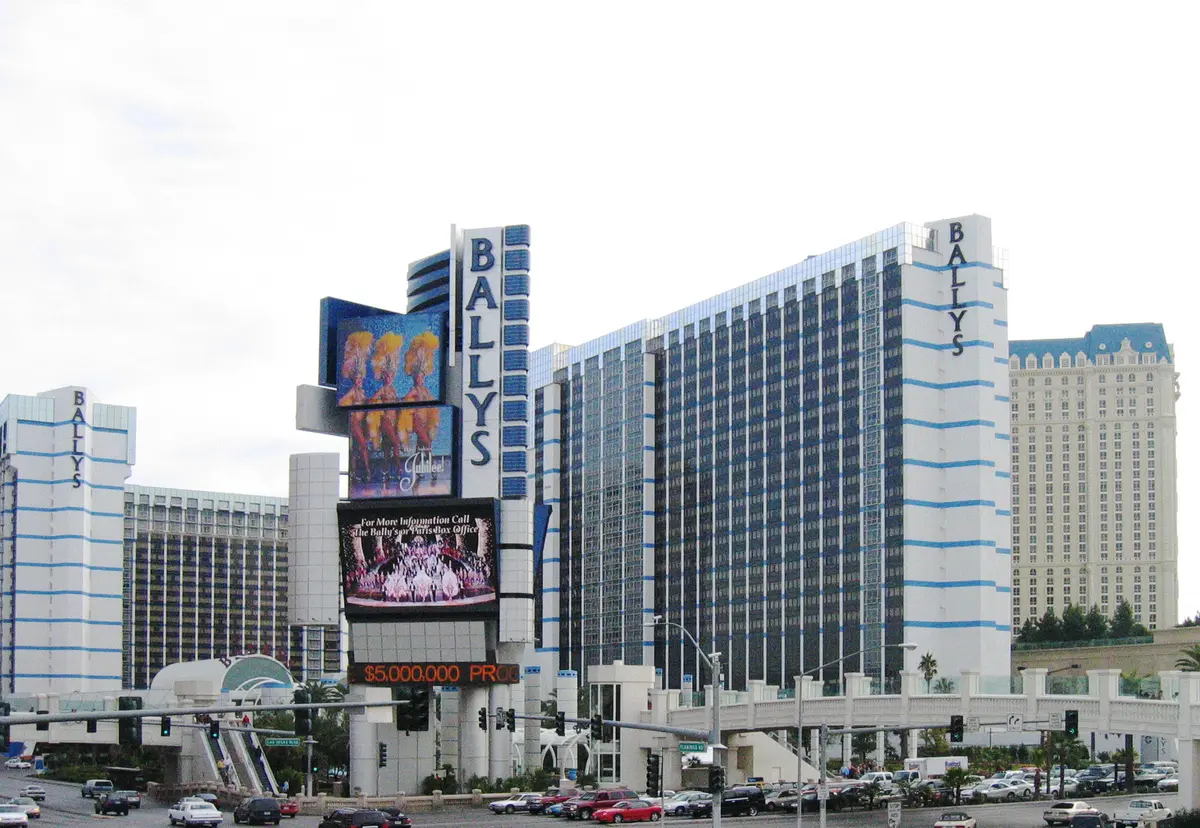
Horseshoe Las Vegas is the building where the MGM Grand fire killed 85 people on 21 November 1980 — the deadliest disaster in Nevada's history and, at the time, the second-worst hotel fire in the United States.
Where is Horseshoe Las Vegas?
- Location
- Nevada, United States
- Type
- Hotel / inn
- Coordinates
- 36.114, -115.169
- Last updated
LOCATION
Why is Horseshoe Las Vegas said to be haunted?
It began before half past seven in the morning inside a wall cavity behind a refrigerated pastry case in The Deli, a restaurant on the casino level, and crossed the unsprinklered casino at 15 to 19 feet per second. Almost nobody died in the flames. The dead were overwhelmingly upstairs, in a 26-storey tower the fire never reached, killed by smoke that travelled through a shared return-air plenum, unsealed stairs, elevator shafts, seismic joints and the fan units in their own rooms. The investigation that followed rewrote fire codes across the United States. The hotel has been rebuilt and renamed since — MGM Grand, then Bally's, then Horseshoe — and the ghost stories attached to it are told almost exclusively by paranormal-tourism websites, with no named witness and no date.
What is the history of Horseshoe Las Vegas?
Four names have been screwed to the front of this building, and only the first one belongs to the story people come looking for.
Kirk Kerkorian's MGM Grand Hotel and Casino opened at the corner of Las Vegas Boulevard and Flamingo Road in December 1973 — sources still disagree over whether the doors opened on the 4th or the 5th — and it was, briefly, one of the largest hotels on earth. The National Fire Protection Association measured it days after the fire: a T-shaped, 26-storey tower of 2,076 guest rooms standing on a casino and arcade level 380 feet by 1,200 feet, with 780 more rooms already going up on the west side. It had cost around $106 million.
It had also been built without sprinklers where it mattered. The NFPA's preliminary report is blunt. The complex was partially sprinklered — the arcade level, convention areas, showrooms, some restaurants and part of the 26th floor — but "the large gambling Casino and the high-rise tower were not sprinklered." Clark County investigators recorded the same thing one room at a time: "The Deli was not sprinklered; heat and smoke detectors were not present." The restaurant immediately to the south, the Barrymore Room, was. Firehouse magazine reported that MGM chairman Fred Benninger decided against a full system quoted at $192,000, and that the county's building director, John Pisciotta, ruled the sprinkler requirements in the code did not apply to the hotel and casino.
At around five past seven on the morning of Friday 21 November 1980, Tim Connor, a tile-setting supervisor who had worked at the hotel for seven years, walked through the closed Deli and saw a flickering light at the waitress station known as side stand #2. He found a wall of flame running from the counter top to the ceiling, telephoned MGM security, went back for a hose line and was knocked over twice by smoke and pressure. Elsewhere in the room, unaware of him, an employee named Velma Turner saw fire near the Keno board and told the chef, Kent Oborn, who was warned off putting water on an electrical fire and began evacuating the kitchen instead. Clark County was notified at about 7.15; Engine 11, from the station directly across the street, arrived at 7.19. By 7.25 the entire casino and the porte-cochère over the entrance were fully involved. Investigators later calculated that the fire crossed the casino at 15 to 19 feet per second.
The cause was traced to the wall soffit of that side stand, roughly 45 inches above the floor, below and to the west of a refrigerated pastry display case. A ground fault — aggravated by galvanic action where an aluminium raceway rubbed against uninsulated copper tubing, by vibration from the compressor, and by some six years of warm air drying out the timber inside the cavity — ignited the concealed space.
And then the fire more or less stopped, and the dying began. Flame barely entered the tower. Smoke did, and the building offered it every route: a single undivided return-air plenum over almost the whole casino level; two "seismic joints", shafts about a foot wide, running from that plenum to above the 26th floor; three interior stairs not enclosed in two-hour construction; fire dampers that had been bolted so they could not close; and, in each bedroom, a fan coil unit drawing its air from the corridor. The NFPA added one more line: "There is no evidence that the building fire alarm system sounded." Guests found out by smelling smoke, hearing shouting, or seeing helicopters outside their windows. "Total evacuation of the building took nearly four hours."
Eighty-five people died. The hotel was rebuilt for about $50 million and reopened in July 1981 with Dean Martin headlining. Eighty-one days after the MGM fire, on 10 February 1981, a room-service busboy set an arson fire at the Las Vegas Hilton that killed eight more people, and the political argument ended. Nevada passed Senate Bill 214 that June: sprinklers, detectors, alarms and exit maps retrofitted into every building over 55 feet, some 30,000 structures in all. Clark County records the Hilton dead as the last high-rise fire fatalities in the county.
MGM agreed to sell the hotel to Bally Manufacturing in December 1985 for $440 million, together with its Reno property; the deal closed in early 1986 and the building became Bally's. It passed through Hilton, Park Place and Harrah's, and in mid-December 2022 Caesars Entertainment renamed it Horseshoe Las Vegas, with a formal grand opening on 24 March 2023. The 1973 tower is still standing, and still selling rooms.
Timeline: the documented record of Horseshoe Las Vegas
- December 1973 Kirk Kerkorian's MGM Grand Hotel and Casino opens on the Las Vegas Strip: a 26-storey, T-shaped tower of 2,076 rooms over a casino level 380 by 1,200 feet, built for around $106 million. Sources disagree over whether the opening day was 4 or 5 December.
- 21 November 1980, about 7.05 a.m. Tile-setting supervisor Tim Connor, a seven-year MGM employee, walks through the closed Deli and finds a wall of flame at side stand #2. He calls security and is twice knocked down by smoke and pressure. Separately, employee Velma Turner sees fire near the Keno board and alerts chef Kent Oborn.
- 21 November 1980, 7.19–7.25 a.m. Engine 11 arrives from the station across the street at 7.19. By 7.25 the whole casino and the entrance canopy are fully alight; the fire crossed the casino at 15 to 19 feet per second. The NFPA notes: "There is no evidence that the building fire alarm system sounded."
- 21 November 1980, morning Smoke reaches the top of the 26-storey tower through the casino return-air plenum, unenclosed stairs, elevator shafts, two seismic joints and bolted-open fire dampers; guest-room fan coil units pull it in from the corridors. Evacuation of the building takes nearly four hours, with guests lifted off the roof by helicopter.
- December 1980 The Clark County coroner records the toll: 85 dead, of whom 75 died of smoke inhalation and carbon monoxide, four of smoke alone, three of burns and smoke, one of burns, one of a skull fracture and one of myocarditis weeks later in a Houston hospital. Eighteen died on the casino level; the rest on floors 16 to 26, or in places that were never established.
- 10 February 1981 Eighty-one days after the MGM fire, 23-year-old room-service busboy Phillip Bruce Cline sets fire to the Las Vegas Hilton, killing eight people and injuring more than 200. He is convicted of eight murders and arson. Clark County records these as the last high-rise fire deaths in the county.
- June 1981 Nevada enacts Senate Bill 214, introduced days after the Hilton fire, requiring sprinklers, detectors, alarms and exit maps to be retrofitted into every building over 55 feet. Around 30,000 structures are reworked. State senator Joe Neal, a co-sponsor, told Desert Companion the legislature had been firmly against retrofitting before the Hilton fire and that afterwards nobody opposed it.
- July 1981 The hotel reopens as the MGM Grand after eight months and about $50 million of reconstruction, with Dean Martin headlining and a new fire-suppression system at its core.
- 15 January 1982 The NFPA publishes the final investigation report by Richard Best and David Demers (NFPA LS-4), produced jointly with the US Fire Administration and the National Bureau of Standards. It becomes one of the most cited fire investigations in American practice; Demers is later quoted saying that with sprinklers "it would have been a one or two sprinkler fire, and we would never have heard about it".
- 1986 Bally Manufacturing completes the purchase of MGM's Las Vegas and Reno hotels, agreed in December 1985 for $440 million, and the building stops being the MGM Grand. The MGM Grand name is later reused for an entirely different resort further south on the Strip, which is the root of most of the confusion about this address.
- December 2022 Caesars Entertainment renames the property Horseshoe Las Vegas after a refurbishment, with a formal grand opening on 24 March 2023. It is the building's fourth name, and the 1973 tower is still in service.
Is there a rational explanation for Horseshoe Las Vegas?
Start with what is actually claimed, and by whom.
The ghost stories attached to this address do not come from the Las Vegas Review-Journal, the Las Vegas Sun, or any employee willing to give a name. They come from paranormal-tourism websites. HauntedRooms.com, one of the most widely copied, offers four: "the acrid smell of smoke on the upper guest room floors, even if there is no one smoking"; people who "heard people screaming coming from the direction of the stairwell"; "a certain bank of slot machines in the casino which is said to be haunted by an old woman" whose "dress was aflame"; and "the voice of a small boy on the 17th floor corridor, who is crying out desperately for his mother". Not one witness is named, not one date is given, and not one incident is traceable to a report.
Two of those claims can be tested against the record, and both fail. The Clark County coroner tabulated where each of the 85 bodies was found: the casino level and floors 16, 19, 20, 21, 22, 23, 24, 25 and 26, plus six people whose location could not be established. The 17th floor is not on the list. And the burning woman at the slot machines is close to the opposite of what happened. The coroner attributed 75 deaths to smoke inhalation and carbon monoxide, four to smoke alone, three to burns and smoke together, one to burns alone, one to a skull fracture and one to myocarditis. Carbon monoxide saturation in the victims ran from 25 to 66 per cent. Almost nobody in this building burned; they were poisoned in their sleep.
The same sites are unreliable on facts anyone can check. One tells readers the hotel was sold to Harrah's in 1985; another says Bally's opened in 1985 and that the dead died "most from burns". The hotel reopened as the MGM Grand in July 1981 and was not renamed until 1986. A source that cannot get the name of the building right is not a source for what walks its corridors.
There is a physical objection too. The casino where 18 people died was gutted and rebuilt in 1981. The ventilation that carried the smoke was replaced under the retrofit law the fire itself produced. The tower has been refurbished repeatedly, most recently before the 2023 rebrand. Nevada still allows smoking on casino floors, and a hotel tower sitting directly on top of one is an unremarkable place to catch a whiff of smoke.
A closing note, because this case deserves it. It is entirely believable that survivors, firefighters and staff have found this building hard to be in. The official report counted around 300 firefighters and rescue workers with symptoms of smoke inhalation, and at least ten with psychological problems. That is documented trauma, in a document with signatures on it. It is not evidence of a haunting, and dressing it up as one is unfair to people who are still alive.
Can you visit Horseshoe Las Vegas?
Horseshoe Las Vegas is a working hotel and casino at 3645 South Las Vegas Boulevard, Paradise, Nevada 89109, on the east side of the Strip at Flamingo Road. The casino is open around the clock and costs nothing to walk into. It is not a heritage site: there is no exhibit, no tour, no sign and no marker anywhere on the property relating to what happened here in 1980.
As far as can be established, there is no memorial to the 85 dead anywhere in Las Vegas either — no plaque at the building, nothing in the public record from Clark County or from Caesars Entertainment. Anniversaries are marked by the Clark County Fire Department on social media and by retrospectives in the local press. Claims on content-farm sites that a memorial plaque was erected at the site do not appear in any verifiable source. What the county does maintain, and what is genuinely worth an hour of anyone's time, is the full investigation report, published free online as a public-education document.
Practicalities. Guest rooms are in the original 1973 tower, refurbished as the Resort Tower; the second tower, built in 1981, was transferred to neighbouring Paris Las Vegas. Published 2026 rates put the resort fee at around $50 per room per night, self-parking at roughly $20 to $25 for 24 hours in the garage shared with Paris, and valet at about $40; Nevada residents get three hours of free self-parking with ID. The Las Vegas Monorail's Horseshoe/Paris station sits on the property's lower level and can only be reached through the resort; single rides are $6 from the machine or $5.50 online, and trains run from 7 a.m. until between midnight and 3 a.m. depending on the day. Footbridges cross Las Vegas Boulevard and Flamingo Road towards Paris, Bellagio and the Cosmopolitan.
Two warnings. The World Series of Poker takes over Horseshoe and Paris from late May to mid-July, and the property is crowded and expensive throughout. And a matter of manners: the fire killed identifiable people whose families are alive, and the staff are not tour guides to it.
Sources consulted
- Wm. Mike Patterson and Lorne Lomprey, Fire Investigation Division, «Official Findings of the Fire that Occurred at the MGM Grand Hotel, Las Vegas, Nevada, on November 21, 1980» — Clark County Fire Department, 1981 report
- National Fire Protection Association, «Preliminary Report: MGM Grand Hotel Fire, Las Vegas, Nevada, November 21, 1980 (Section X of the Clark County report)» — NFPA / USFA / National Bureau of Standards Major Fires Investigation Agreement, 1981 report
- Richard Best and David P. Demers, «Investigation Report on the MGM Grand Hotel Fire, Las Vegas, Nevada, November 21, 1980 (NFPA LS-4, revised 15 January 1982)» — National Fire Protection Association, 1982 report
- Azarang (Ozzie) Mirkhah, «Lessons from the Past: MGM Grand Fire» — Firehouse, 2010 newspaper archive
- Las Vegas Review-Journal, «'Hell on Earth': 40 years ago, a historic fire at the MGM Grand» — Las Vegas Review-Journal, 2020 newspaper archive
- Desert Companion, «It Took a Fire to Change Us» — Desert Companion (Nevada Public Radio), 2020 newspaper archive
- Clark County Fire Department, «MGM Grand Hotel Fire» — Clark County, Nevada (official), 2026 archive
- HauntedRooms.com, «The Haunted Horseshoe Las Vegas, Formerly Bally's» — HauntedRooms.com, 2026 web
- Clark County Fire Department, «Historic Las Vegas Hilton Fire» — Clark County, Nevada (official), 2026 archive
- International Directory of Company Histories, Vol. 17, «MGM Grand Inc. — Company History» — St. James Press, 1997 book
- Las Vegas Review-Journal, «'A very exciting day': Bally's becomes Horseshoe Las Vegas» — Las Vegas Review-Journal, 2023 newspaper archive
- Las Vegas Monorail, «Horseshoe & Paris Monorail Station» — lvmonorail.com, 2026 web
Reviewed by V. Serrano on 2026-08-11 · How we verify our content
💬 Field testimonies (0)
No testimonies yet. Add the first.
Add your testimony
🔒 Log in to add a testimony