👻 HAUNTED PLACE · EXP. Nº9477
ACTIVE
Newton, Alabama
Just outside Newton, in the Alabama Wiregrass, a concrete bridge carries Highway 123/134 over the Choctawhatchee River.
Where is Newton, Alabama?
- Location
- Alabama, United States
- Type
- Road / bridge
- Coordinates
- 31.362, -85.581
- Last updated
LOCATION
Why is Newton, Alabama said to be haunted?
Beneath it is the site of one of the South's best-known ghost stories - and, since 1990, tons of loose rock. On 3 December 1864 a Methodist minister named Bill Sketoe was seized here by Captain Joseph Breare's Confederate conscription company and hanged from an oak without charge or trial. He was a big man, the limb bent, his feet reached the ground, and one of the party dug a shallow hole beneath them so he would strangle. For about 125 years afterwards, people said that hole could not be filled: shovel in dirt or rubbish and it was found swept clean again. Kathryn Tucker Windham and Margaret Gillis Figh made it famous in 1969 as "The Hole That Will Not Stay Filled". It is gone now, buried under flood rip-rap. What stands at the riverside park today is a marker, a reconstruction and the record of a real lynching.
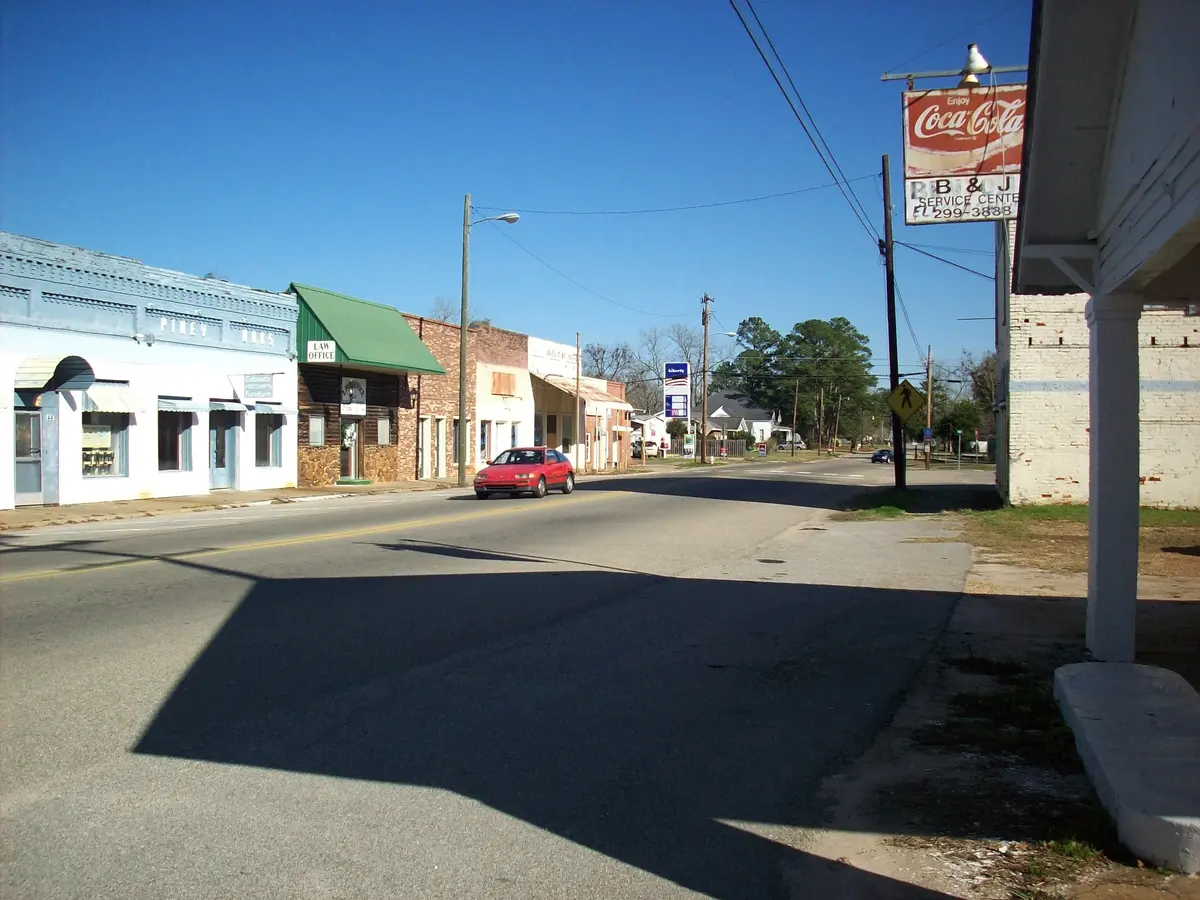
What is the history of Newton, Alabama?
Bill Sketoe was almost certainly not a soldier, and that is where the trouble with his story begins.
William Sketoe Sr. was a Methodist circuit rider living at Newton, then the seat of Dale County in the Alabama Wiregrass, when the Civil War reached the pine flats of the south-eastern corner of the state. By late 1864 the county had effectively stopped functioning as a civil society. The circuit court had not sat for two years. The swamps and pine barrens along the Choctawhatchee River sheltered deserters, Unionists and raider gangs — the best known led by a man called John Ward, who ambushed a Confederate ammunition wagon in Dale County that autumn and killed an officer.
The man sent to deal with all this was Captain Joseph R. Breare, an English-born Newton lawyer who had emigrated to Alabama in the 1850s. Breare had gone to war as commissary-sergeant of the 15th Alabama Infantry, been elected an officer, fought through the Valley campaign and the Seven Days, and been captured at Gettysburg. Exchanged in the autumn of 1863, he went home and raised a cavalry company. His own former colonel, William C. Oates, described what it was for in 1905: the company "was only in service of the conscript department", and the soldiers at the front called such units "Buttermilk Rangers" — men who, in Oates's contemptuous phrase, "never heard the whistle of a Yankee bullet during the war". The roadside sign calls its men "Newton Home Guards"; Oates's description puts the company in the service of the conscript department.
On the afternoon of 3 December 1864, Breare's men took Sketoe. The version told in Newton for a century and a half — and repeated on the roadside sign that stands there now — is that he was a loyal Confederate home on leave to nurse his sick wife Sarah, and that his captors would not believe him. The historian David Williams reached a harder conclusion from the records: that rumour in Dale County connected the Reverend Bill Sketoe with John Ward's unionist gang, and that Breare hanged him without the evidence needed to convict him of anything. Sketoe was never charged and never tried. He was not the first: "Doc" Prim, a soldier of the 1st Florida Cavalry (U.S.) working undercover in the area, had been hanged at Newton days earlier.
They threw a rope over an oak limb near the old river bridge. Sketoe was a big man and the limb bent until his feet reached the ground, so one of the party scooped out a shallow hole beneath them with a crutch — a detail several men who were present later described, and the only part of the whole legend that has direct eyewitness support. His body was displayed briefly in Newton as a warning and then buried by his family at Mount Carmel Cemetery near Echo.
The family carried the consequences into the next century: his descendants dropped the final "e" from the surname after his death, and were still, in 2006, telling reporters that what mattered to them was that people should know he was not a traitor.
Timeline: the documented record of Newton, Alabama
- Autumn 1863 Joseph R. Breare, a Newton lawyer captured at Gettysburg with the 15th Alabama, is exchanged, returns home and raises a cavalry company. His former colonel William C. Oates later records that it "was only in service of the conscript department" and that front-line soldiers called such units "Buttermilk Rangers".
- 17 February 1864 The Confederate Congress approves "An Act to Organize Forces to Serve During the War", whose fourth section rules that those who furnished substitutes shall no longer be exempted. From this date the substitute defence at the heart of the legend would have protected nobody.
- November 1864 After John Ward's raiders ambush a Confederate ammunition wagon and kill an officer, Breare's company sweeps Dale County. "Doc" Prim, a soldier of the 1st Florida Cavalry (U.S.) operating undercover, is captured and hanged at Newton days before Sketoe.
- 3 December 1864 Bill Sketoe, a Methodist minister, is seized near the river bridge at Newton and hanged from an oak by Breare's men, without charge or trial. Because the limb bent under his weight, one of the party dug a shallow hole beneath his feet with a crutch. His family buries him at Mount Carmel Cemetery near Echo.
- 1866 Breare, back practising law at Newton, is killed by a falling tree during a storm east of the town. Colonel Oates records the death in 1905 as a plain accident; the reading of it as retribution for the hanging is a later addition, and Oates never mentions Sketoe.
- 1968 Fred S. Watson's county history "Forgotten Trails: A History of Dale County, Alabama, 1824-1966" records the local suspicion that Wash Reynolds, who sympathised with the hanged man, was the one keeping the hole clear. Reynolds always denied it.
- 1969 Kathryn Tucker Windham and Margaret Gillis Figh publish "13 Alabama Ghosts and Jeffrey" (Strode Publishers). The Library of Congress contents note confirms the tenth chapter is "The hole that will not stay filled". The book turns a Dale County story into a statewide legend.
- 1990 The Choctawhatchee floods. The bronze marker that hung by the tree is smashed and washed downriver, and tons of imported rip-rap are piled under the modern bridge to stop the piers being undermined. The hole disappears beneath the rock and has not been seen since.
- October 2006 Newton's mayor Jean Watson and five Sketoe descendants unveil a memorial plaque behind the pavilion at John Hutto Park. "We've done a lot of family research and we wanted to make sure people know he wasn't a traitor", great-great-granddaughter Joyce Sketo Yeomans told The Southeast Sun.
- 2017 Updating his account of the site, the historian Dale Cox states flatly that Sketoe's Hole no longer exists, and that what stands near the original site is a reconstruction of the hole with an interpretive sign.
Is there a rational explanation for Newton, Alabama?
The version of this story that reached the internet contains at least two things the records do not support, and the sign at the site contains a third.
On the substitute, nearly every retelling says Sketoe had legally paid a man to fight in his place and was hanged anyway. The Confederate Congress had already closed that door. "An Act to Organize Forces to Serve During the War", approved 17 February 1864, states in its fourth section that no one is relieved by having been previously discharged, "nor shall those who have furnished substitutes be any longer exempted by reason thereof". By December 1864 a substitute exempted nobody, so producing papers for one would have saved no one. Beyond that, the researcher Dale Cox notes that no record has been found of Bill Sketoe serving in any Confederate unit at all.
The sign erected by the Newton Historical Society states that "in truth, Mr. Sketoe had served 3 years in the Confederate army and had come home on leave to see his sick wife". That is the family's account, and his descendants were still defending his name to The Southeast Sun in 2006; Cox, as noted, found no record of any such service.
As for the hole, the oldest deflating explanation comes from Dale County itself: Fred S. Watson's 1968 county history Forgotten Trails records the long-standing local suspicion that Wash Reynolds, a friend who sympathised with the hanged man, quietly kept the hole clear; David Williams repeats it, and Reynolds denied it. It is not provable either way now, and neither is the alternative reading — that a shallow scrape in sandy riverbank soil, in a spot people visited constantly, stayed open because feet and curiosity kept it open.
The curse rests on local tradition, which holds that every man in the hanging party died unnaturally, Breare killed by a limb of the same kind of oak Sketoe hung from. Breare did die under a falling tree, and Colonel Oates, who knew him, recorded it in 1905 in a regimental appendix full of ordinary deaths: "in the year 1866 he was caught in a storm on the road east of Newton, when a tree fell upon and killed him". Oates writes it as an accident, with no hint of retribution — and never mentions Sketoe anywhere in the book. The curse reading is laid over a death that Oates recorded as an accident.
The hole itself has been under tons of rock since the 1990 flood.
Can you visit Newton, Alabama?
The hole is gone, and has been gone since 1990.
A modern concrete bridge carries Alabama 123/134 over the Choctawhatchee River on the north-western edge of Newton, and the hanging site lies beneath it. After the Choctawhatchee flood of 1990 —and again after the flooding of 1994— the banks and the piers were armoured with imported rip-rap, and the hole disappeared under tons of loose limestone. The Newton Historical Society marker, titled "The Hanging of Bill Sketoe", records the outcome: "The site is now part of the flood prevention area." The original bronze marker that hung on the tree was smashed and washed downriver in that same 1990 flood.
What stands there now is a memorial. Crossing the bridge from town, the riverside park —John Hutto Park— is on the left; behind the pavilion stands the plaque unveiled in October 2006 by Newton's mayor Jean Watson and five of Sketoe's descendants. Dale Cox records that a reconstruction of the hole and an interpretive sign have been placed near the original site. Under the bridge itself there is rock, graffiti on the piers and the river.
The surviving original bronze marker is displayed in the Newton museum, which shares the Oates-Reynolds Memorial Building with the town library. That building went up in 1922 as the girls' dormitory of the Baptist Collegiate Institute on Oates Street; it has been on the National Register of Historic Places since 13 June 1974, under reference 74000409. The museum's collection also holds a cloak said to have belonged to Sarah Sketoe.
Sketoe's grave is at Mount Carmel Cemetery on County Road 61 near Echo. A small fence was put round it after a visitor damaged the headstone. It is a family burial place and the grave of a lynching victim, and Sketoe descendants still live in the county: five of them stood at the 2006 unveiling.
Sources consulted
- William C. Oates, «The War Between the Union and the Confederacy and Its Lost Opportunities, with a History of the 15th Alabama Regiment (Appendix A, pp. 634-635; "Buttermilk Rangers", p. 157)» — Neale Publishing Company, 1905 book
- Congress of the Confederate States of America, «An Act to Organize Forces to Serve During the War, approved 17 February 1864 (section 4, on substitutes)» — Laws of Congress in Regard to Taxes, Currency and Conscription, Passed February 1864 (DocSouth, UNC), 1864 archive
- Kathryn Tucker Windham and Margaret Gillis Figh, «13 Alabama Ghosts and Jeffrey, chapter "The Hole That Will Not Stay Filled"» — Strode Publishers, 1969 book
- Flavia Hulsey, «Sketoe tale memorialized» — The Southeast Sun (Enterprise, Alabama), 26 October 2006, 2006 newspaper archive
- Fred S. Watson, «Forgotten Trails: A History of Dale County, Alabama, 1824-1966» — Dale County Centennial Committee, 1968 book
- David Williams, «A People's History of the Civil War: Struggles for the Meaning of Freedom (on Breare, Sketoe and John Ward's gang)» — The New Press, 2005 academic
- Dale Cox, «Ghost of Sketoe's Hole - Newton, Alabama (last updated 12 October 2017)» — ExploreSouthernHistory.com, 2017 web
- Newton Historical Society, «Roadside marker "The Hanging of Bill Sketoe", John Hutto Park, Newton, Alabama (text read from photographs of the sign)» — Interpretive marker, Newton, Alabama, 2006 report
- Library of Congress, «Catalogue record for 13 Alabama Ghosts and Jeffrey (MARC contents note listing the thirteen chapters)» — Library of Congress Catalog, LCCN 2014006089, 2014 archive
Reviewed by V. Serrano on 2026-08-11 · How we verify our content
💬 Field testimonies (0)
No testimonies yet. Add the first.
Add your testimony
🔒 Log in to add a testimony