👻 HAUNTED PLACE · EXP. Nº9477
ACTIVE
Union Cemetery (Easton, Connecticut)
Union Cemetery (Easton, Connecticut) is a location reputed to be haunted in Connecticut, US. Its reputation comes from reported apparitions, unexplained phenomena and eyewitness accounts gathered over time.
Where is Union Cemetery (Easton, Connecticut)?
- Location
- Connecticut, US
- Type
- Cemetery
- Coordinates
- 41.273, -73.297
- Testimonies
- 0
- Last updated
LOCATION
Why is Union Cemetery (Easton, Connecticut) said to be haunted?
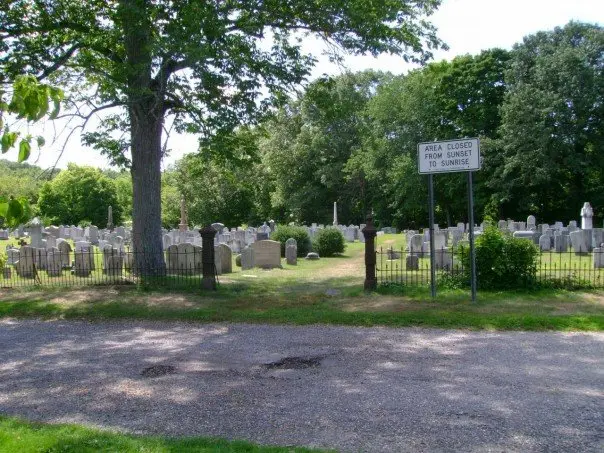
An active burial ground on Route 59 in Easton, Connecticut, and one of the few haunted places where both sides came, took notes and published under their own names. The ghost is the White Lady — young, long dark hair, white nightgown — who is told of the road rather than the graves, and who is also told of Stepney Cemetery a few miles away, which is the first clue that she is a type and not a person. Ed and Lorraine Warren, who lived nearby, worked the site for decades and put it in a book, «Graveyard», published by St. Martin's Press in 1992. In April 1996 Perry DeAngelis walked the same ground for the New England Skeptical Society and found whiskey bottles, ghost-hunting paraphernalia and broken headstones; the sexton told him the vandalism had cost the cemetery association five thousand dollars. Union Cemetery now closes at sundown and the Easton police enforce it.
What is the history of Union Cemetery (Easton, Connecticut)?
Union Cemetery lies beside Route 59 near Stepney Road in Easton, Connecticut, and it is one of the very few haunted places in this catalogue where both sides of the argument came, took notes, and published under their own names.
Start with the ground, because even its age is contested. The town is younger than the burials: the Connecticut General Assembly established the parish of North Fairfield in 1762, the legislature folded it into the new town of Weston in 1787, and only in 1845 did North Fairfield split off again as Easton. That is almost certainly why the New England Skeptical Society's visit in 1996 dates the cemetery to circa 1845 — the year the town, and with it the Easton Cemetery Association, came into being — while the standard reference works say simply "the 18th century" and the ghost literature stretches it to four hundred years and graves from the 1600s. Nobody has published a survey of the stones that would settle it.
The ghost is the White Lady, and she is not confined to this cemetery: the same figure is told of Stepney Cemetery in neighbouring Monroe. The description is stable across tellings — a young woman with long dark hair in a white nightgown or bonnet, sometimes a wedding dress — and so is her behaviour, which is the part that matters. She does not haunt the graves so much as the road. The signature story is a driver on Route 59 who brakes and swerves for a woman who steps out in front of the car, stops, gets out, and finds nobody.
The people who made her famous were Ed and Lorraine Warren, the Connecticut demonologists, who lived nearby and worked the site for decades. Their organisation, the New England Society for Psychic Research, identifies her as a woman who died in childbirth in her mid to late twenties, says she has been seen by hundreds of visitors, and claims she has been photographed and filmed on several occasions. It records a specific incident in 1993: an off-duty firefighter whose vehicle struck the apparition hard enough to damage the vehicle, with no body found. The Warrens put the case into a book, Graveyard: True Hauntings from an Old New England Cemetery, published by St. Martin's Press in 1992.
NESPR also names a second presence, and this one has a name and a death attached: "Red Eyes", said to be Earle Kellog, a man set on fire across the road and burned to death in 1935, whose eyes are reported in the woods behind the burial ground. The 1935 death circulates only inside the ghost literature; no newspaper account of it has been produced.
The consequence of all this publicity is documented, and it is not a haunting. Union Cemetery is now closed from sundown, the Easton police patrol it, and people who ignore that have been fined and arrested.
Timeline: the documented record of Union Cemetery (Easton, Connecticut)
- 1762 The Connecticut General Assembly establishes the parish of North Fairfield, the ecclesiastical unit that will eventually become Easton.
- 1787 The legislature combines North Fairfield with the parish of Norfield into the town of Weston.
- 1845 North Fairfield separates from Weston and becomes the town of Easton — the year the New England Skeptical Society's account gives for the cemetery, against the 'eighteenth century' of the reference works and the four hundred years of the ghost literature.
- 1935 The year the ghost literature gives for the death of Earle Kellog, said to have been set on fire across the road and to be the 'Red Eyes' seen in the woods behind the cemetery. No newspaper account of the death has been produced.
- 1992 Ed and Lorraine Warren publish 'Graveyard: True Hauntings from an Old New England Cemetery' with St. Martin's Press, which is what turns a local road story into a national one.
- 1993 The Warrens' organisation records an off-duty firefighter whose vehicle is damaged striking the apparition on Route 59, with no body found. A collision causing vehicle damage is reportable, and no report has been produced.
- April 1996 Perry DeAngelis walks the cemetery for the New England Skeptical Society and finds bottles, ghost-hunting paraphernalia and damaged headstones. The sexton, Joseph Silhavey, tells him the vandalism has cost the Easton Cemetery Association five thousand dollars.
- 2004 Lisa Rogak includes Union Cemetery in her guide to notable New England cemeteries, one of the routes by which the site reaches readers who are not looking for ghosts.
- 2 October 2020 The Easton Courier revisits the town's White Ladies, by then a fixture of local identity and of the sundown closure that the police enforce.
Is there a rational explanation for Union Cemetery (Easton, Connecticut)?
The most useful document about Union Cemetery is a short one, and it is nearly thirty years old.
In April 1996 Perry DeAngelis, of the New England Skeptical Society, walked the cemetery looking for what he had been told was there. What he found was broken glass, whiskey and gin bottles and the rest of the paraphernalia of ghost hunters and thrill seekers, and headstones plainly damaged. The sexton, Joseph Silhavey, told him the vandalism had cost the Easton Cemetery Association five thousand dollars in repairs. DeAngelis drew the line himself and named names: when people like Ed and Lorraine Warren, he wrote, spout their stories, it attracts the uninformed from many miles. He called those who make such claims prevaricators.
That is the shape of the case. There is no dispute about what happens at the cemetery — the dispute is about who is doing it, and one side's evidence is a bill from a stonemason.
The White Lady herself is not a person, she is a type. The same figure — young, long dark hair, white gown, appears on a road at night, vanishes when approached — is told of Stepney Cemetery a few miles away, and of dozens of roads across New England and far beyond it. A ghost that is shared between two cemeteries is not two hauntings; it is one story that travels, and its natural habitat is the stretch of dark road where a driver's headlights, a wet verge and a moment's inattention will supply a pale shape all by themselves.
The specifics do not survive contact either. NESPR's most concrete claim is the 1993 collision, a vehicle damaged by striking an apparition — which is a police-reportable event, and no report has been produced. Its second entity, Earle Kellog, comes with a name, a manner of death and a year, 1935, which ought to make him the easiest thing here to confirm; the story appears only in the ghost literature, never in a newspaper anyone has cited. And the claim that the White Lady has been photographed and filmed on multiple occasions has been made since the 1980s without the footage ever being examined by anyone outside the group that says it holds it.
What is beyond argument is the harm. A quiet burial ground where local families are still interred became a destination because two people with a publisher said it was haunted, and the town now has to police it after dark to stop its stones being broken.
Can you visit Union Cemetery (Easton, Connecticut)?
Union Cemetery stands in Easton, Connecticut, at the junction where Route 59 changes from Sport Hill Road into Stepney Road, beside the Easton Baptist Church. The Easton Courier places it at the meeting of Stepney, Sport Hill and Westport Roads; Damned Connecticut puts it at "the junction of routes 59 and 136 in Easton, next to Easton Baptist Church". Local families are still buried here: the Courier's piece of 2 October 2020 describes a ground "still in use today with recent interments", set off by stone walls and wrought iron fencing.
The closure at sundown is enforced. Damned Connecticut records that the cemetery "is strictly off-limits after sunset, and the Easton police are very active in keeping it that way", and people who have gone in after dark have been fined and arrested.
The reason for the policing is on the stones themselves. In April 1996 Perry DeAngelis of the New England Skeptical Society walked the ground and found broken glass, whiskey and gin bottles and plainly damaged headstones; the sexton, Joseph Silhavey, told him the vandalism had cost the Easton Cemetery Association five thousand dollars in repairs. Thirty years on, that bill from a stonemason is still the most concrete document the place has produced.
Daylight leaves the older stones open to a walk, and they repay it. The White Lady's own stretch is Route 59 itself, an ordinary rural highway with no verge to speak of, which makes stopping on it the worst of the options available to anyone who comes looking for her.
Sources consulted
- Ed Warren, Lorraine Warren and Robert David Chase, «Graveyard: True Hauntings from an Old New England Cemetery» — St. Martin's Press, New York, 1992 book
- Perry DeAngelis, «Ghosts of Union Cemetery» — New England Skeptical Society, April 1996, 1996 report
- Lisa Rogak, «Stones and Bones of New England: A Guide to Unusual, Historic, and Otherwise Notable Cemeteries» — Globe Pequot Press, 2004 book
- New England Society for Psychic Research, «Union Cemetery» — warrens.net — the Warrens' own organisation, 2026 web
- Connecticut Humanities, «Easton» — ConnecticutHistory.org, town histories, 2026 web
- Easton Courier, «Easton's Ladies in White» — Easton Courier, 2 October 2020, 2020 newspaper archive
- Damned Connecticut, «Union Cemetery, Easton» — Damned Connecticut, 2026 web
Reviewed by V. Serrano on 2026-09-04 · How we verify our content
💬 Field testimonies (0)
No testimonies yet. Add the first.
Add your testimony
🔒 Log in to add a testimony