🦶 CRYPTID SIGHTING · EXP. Nº9045
ACTIVE
Lizard Man of Scape Ore Swamp
The Lizard Man of Scape Ore Swamp is a modern Southern legend rooted in Bishopville, Lee County, South Carolina, dating to the summer of 1988.
Where and when was Lizard Man of Scape Ore Swamp sighted?
- Location
- Bishopville, South Carolina, United States
- Date sighted
- 1988-06-29
- Coordinates
- 34.22, -80.25
- Last updated
LOCATION
What is Lizard Man of Scape Ore Swamp?
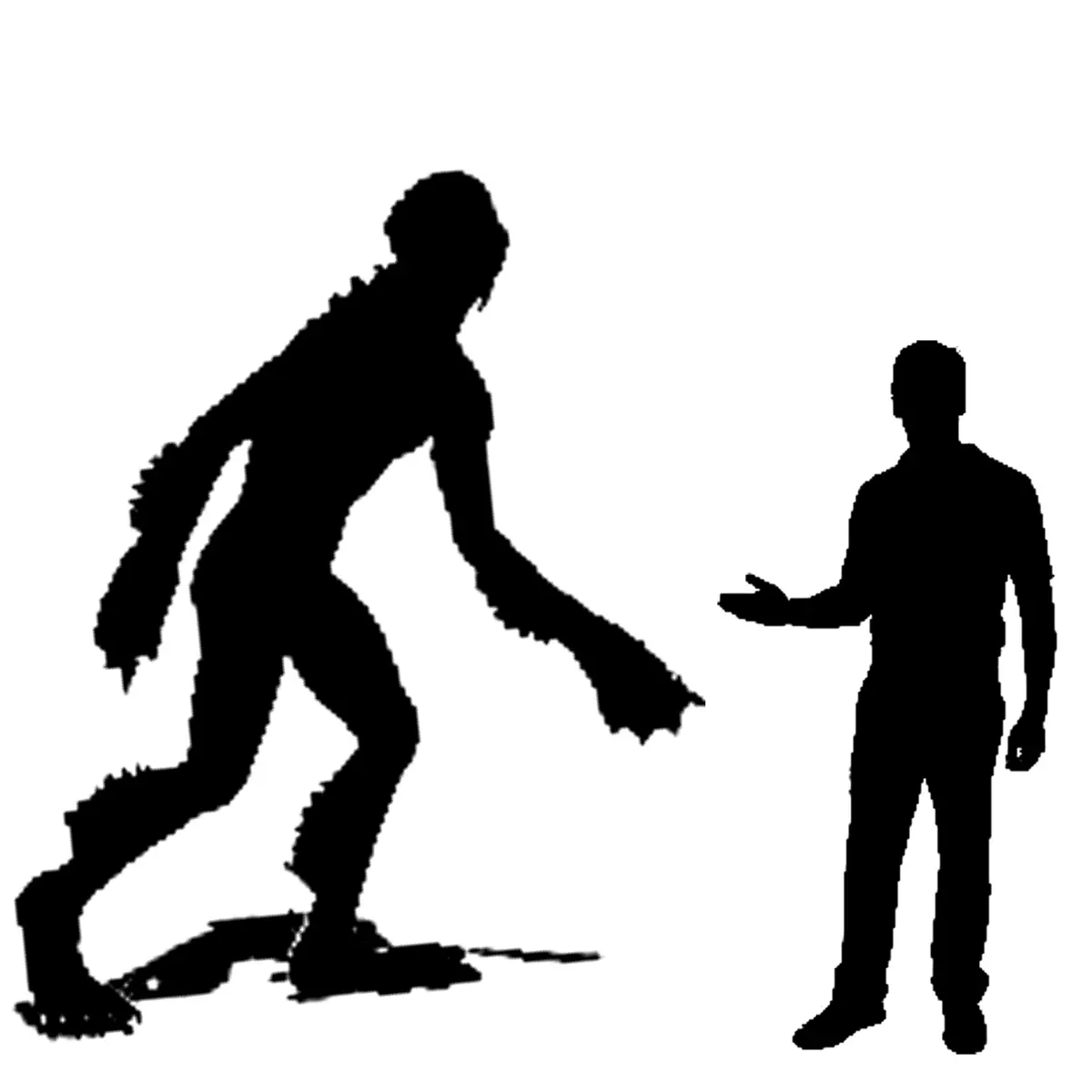
The case began when a teenager named Christopher Davis reported that a tall, green, scaly humanoid with glowing red eyes and three-fingered hands had chased and clawed at his car near the swamp late at night, letting out what he called "a hissing sound" before he sped away; he displayed the scratches to the local sheriff's office. The story ignited a media frenzy, prompting dozens of additional callers to report their own encounters or vehicle damage, and briefly turned Bishopville into a tourist curiosity, complete with souvenir t-shirts. No creature was ever captured or conclusively photographed. Skeptical explanations range from an escaped or misidentified alligator, bear, or large lizard to a deliberate hoax exploiting the small town's sudden fame, and investigators have noted inconsistencies in witness accounts that suggest a mix of genuine fear, copycat reports, and local mythmaking rather than an unknown animal.
What is the history of Lizard Man of Scape Ore Swamp?
The Lizard Man of Scape Ore Swamp is one of the few American cryptids whose wave can be followed week by week in a sheriff's office file.
It began in the summer of 1988, near Bishopville in Lee County, South Carolina. Christopher Davis, seventeen, pulled over in the middle of the night to change a flat tyre beside Scape Ore swamp. What he said he saw became the canonical description: a creature about seven feet tall, with green scaly skin, red eyes and three toes on each foot.
What distinguishes this case is the institutional response. The county sheriff, Liston Truesdale, took it seriously. He took witness statements, encouraged other people with similar accounts to come forward, and when somebody reported enormous three-toed tracks in the sand matching Davis's drawing, he drove out to the site personally and made casts.
On 14 July 1988 the Lee County sheriff's office also investigated a report of a car damaged overnight while parked at a house in the Browntown area outside Bishopville. According to the report the vehicle had tooth marks and scratches, with hair and muddy footprints left behind.
The effect was explosive. Media descended on Bishopville from around the world, and a Columbia radio station offered a million dollars in reward for the Lizard Man's capture. Nobody ever claimed it.
Timeline: the documented record of Lizard Man of Scape Ore Swamp
- 12 August 1988 Kenneth Orr, twenty-six, who days earlier had claimed to have shot and wounded the Lizard Man and had handed in blood and scales as evidence, confesses that he made it up "to keep the legend of the Lizard Man alive". He is charged with unlawfully carrying a pistol.
- 14 July 1988 The sheriff's office investigates a car damaged overnight in Browntown. The couple who own it blame the Lizard Man, but a state wildlife official states that the marks on the vehicle indicate a red fox did the damage.
- Following weeks Sheriff Liston Truesdale takes witness statements, encourages more people to come forward and, on being told of three-toed tracks matching Davis's drawing, attends personally and makes casts.
- Summer 1988 Christopher Davis, seventeen, stops in the early hours to change a tyre beside Scape Ore swamp and describes a creature about seven feet tall, with green scaly skin, red eyes and three toes on each foot.
- Summer 1988 A Columbia radio station offers a million dollars for the Lizard Man's capture and media from around the world descend on Bishopville. The reward was never claimed.
Is there a rational explanation for Lizard Man of Scape Ore Swamp?
To understand the Scape Ore case you have to look at something that is neither testimony nor evidence but an incentive: a radio station put a million dollars on the table.
That completely changes the nature of everything that followed. The moment a seven-figure reward exists and the world's media are camped in a town of three thousand people in rural South Carolina, the cost of manufacturing evidence drops to zero and the potential prize goes through the roof. And the kind of evidence that was produced is precisely the easiest to manufacture: three-toed tracks in soft sand.
A plaster cast of a footprint proves nothing in itself. It faithfully documents a mark in the ground, and says nothing about what made it. And an enormous three-toed print, pressed into the sand of a swamp anyone can reach at night, with a million dollars in play, is the most predictable hoax scenario anyone could design. That Sheriff Truesdale acted in good faith and with diligence — and all the signs are that he did — does not change what a cast can prove.
On the Browntown car, note what the report actually describes: tooth marks, scratches, hair and mud. That is an inventory compatible with any large animal in the area — dogs, coyotes, raccoons, a black bear — working on a vehicle parked overnight, most likely drawn by food. None of those elements points to a bipedal reptile, and reptiles, moreover, do not leave hair.
And there are two facts from that same summer of 1988, rarely told, that close the case rather better than any reasoning of ours. First: a state wildlife official examined the car and said the marks had been left by a red fox. Second: on 12 August Kenneth Orr, twenty-six, confessed that he had invented his claim of shooting and wounding the creature — he had gone as far as handing in blood and scales as evidence — and explained why: "to keep the legend of the Lizard Man alive". He was charged with unlawfully carrying a pistol. In other words: while the reward was on the table, there was at least one documented, confessed hoax.
And then there is the classic flap dynamic. A first sincere and frightened account — Davis, seventeen, alone, at night, changing a tyre beside a swamp — fixes a very specific visual template. The sheriff, honestly, encourages other witnesses to come forward. The media amplify. The template circulates. And subsequent sightings come from people who already know exactly what shape the thing out there is supposed to have.
Can you visit Lizard Man of Scape Ore Swamp?
Bishopville is the seat of Lee County, in central South Carolina, and the town has taken the legend back on purpose. The city's own Lizard Man page reprints a Lee County Observer article by Gee Whetsel telling how a "Friends of the Lizard Man" committee was formed in 2019, held its first Lizard Man Stomp downtown in 2022 and added a parade in 2023, while Smith's Concrete cast a three-foot statue of the creature that "can now be seen in strategic locations around town". The Sumter Item reported on 17 April 2026 that the fifth Stomp would be held on Saturday 27 June 2026 in downtown Bishopville, free, from 10 a.m. to 2 p.m., with Margaret Copeland as organiser, and noted that the festival is always held on the last Saturday in June.
Scape Ore Swamp runs past the town to the south-west. The same city page puts the Browntown area where Christopher Davis stopped to change his tyre "very close to the edge of Scape Ore Swamp". The US Geological Survey kept a benchmark stream gauge on it, "Scape Ore Swamp near Bishopville", which its 1999 report (Circular 1173-A) places 8 km south-west of the town; from the coordinates the USGS gives for the gauge, that is about 9 km (5.7 miles) from the centre of Bishopville. The report describes the lowland along the channel as swamp tupelo, water oak and bald cypress, and gives the ownership of the 249 km² basin as 96 per cent private and 4 per cent federal, state and county. Very little of the basin, in other words, is public ground.
The Pearl Fryar Topiary Garden is in Bishopville itself. Pearl Fryar, who had no training in horticulture, built it over decades from plants that local nurseries had thrown away; the Garden Conservancy, which supported the garden between 2006 and 2021, records that he died on 4 April 2026, at 86. The garden is now run by a non-profit, Pearl Fryar Topiary Garden, Inc., whose website, consulted on 23 September 2026, calls it "a living memorial", says that it "is open and free to all" and offers scheduled tours for 2026.
The South Carolina Cotton Museum, at 121 West Cedar Lane, tells the history of cotton in the state from 1670 onwards. The South Carolina Department of Agriculture's agritourism listing, consulted on 23 September 2026, gives its hours as Monday to Saturday, 10 a.m. to 4 p.m., and its admission as $6 for adults, $4 for seniors and $3 for students, a ticket that also covers the Lee County Veterans Museum.
Sources consulted
- South Carolina Public Radio, «30 Years Later, the Legend of the Lizard Man Lives on in Bishopville — el avistamiento de Davis, el sheriff Truesdale y los moldes de las huellas» — South Carolina Public Radio, Columbia, 2018 newspaper archive
- United Press International, «Stories of the 'Lizardman,' a 7-foot tall monster with red eyes — el despacho de agencia del verano de 1988» — UPI Archives, 1988 newspaper archive
- The Post and Courier, «Return of the Lizard Man: Bishopville's journey to reclaim the SC monster» — The Post and Courier, Charleston, 2022 newspaper archive
- City of Bishopville, «The Lizard Man of Scape Ore Swamp — información municipal» — Ayuntamiento de Bishopville, 2026 archive
- United Press International, «Man admits Lizard Man story a hoax — la confesión de Kenneth Orr» — UPI Archives, 1988 newspaper archive
Reviewed by V. Serrano on 2026-07-28 · How we verify our content
📎 Source: Folclore (curado)
💬 Field testimonies (0)
No testimonies yet. Add the first.
Add your testimony
🔒 Log in to add a testimony