🦶 CRYPTID SIGHTING · EXP. Nº9045
ACTIVE
Loveland Frog
The Loveland Frog is an Ohio legend tied to the town of Loveland, on the Little Miami River.
Where and when was Loveland Frog sighted?
- Location
- Loveland, Ohio, United States
- Date sighted
- 1955-05-25
- Coordinates
- 39.26, -84.26
- Last updated
LOCATION
What is Loveland Frog?
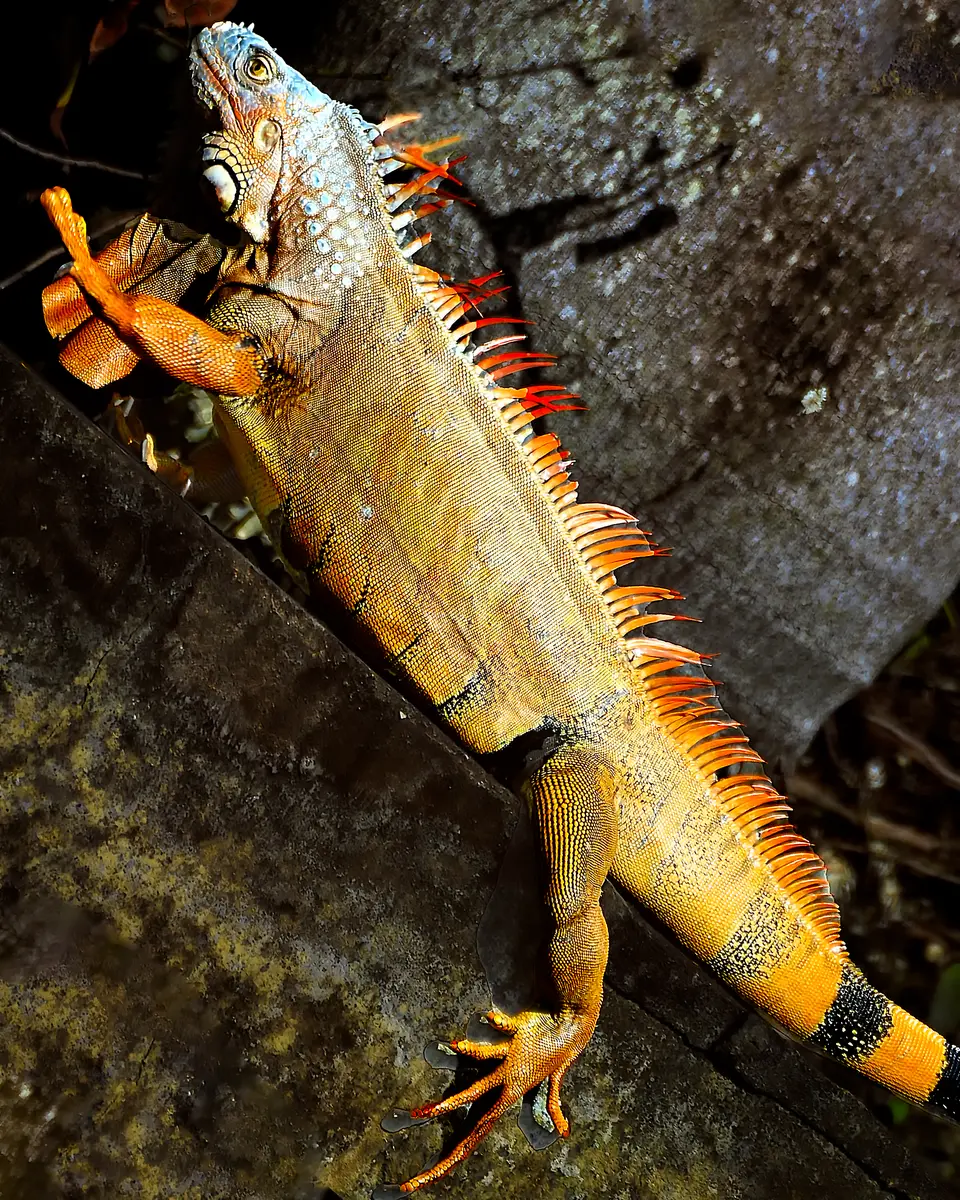
Its oldest account, told in versions that disagree, describes a businessman who saw three frog-faced bipeds by a road at 3.30 a.m. on 25 May 1955, one of them raising a wand that threw off sparks. The legend returned in March 1972, when the Loveland police officer Ray Shockey reported a lizard-like creature crossing the road at night near the Totes boot factory; about a fortnight later a second officer, Mark Matthews, shot an animal near the same spot. In 2016 Matthews told WCPO that it was a large iguana, three to three and a half feet long and missing its tail, that Shockey recognised it as the creature he had seen, and that the Frogman was a hoax. The zoologist Darren Naish has pointed out that the night of Shockey's sighting was cold enough for the road to be icy; Matthews thought the animal had kept warm beside the factory's cooling-water pipes. The 1955 account remains unexplained.
What is the history of Loveland Frog?
The Loveland Frogman is one of Ohio's best-loved cryptids, and its story has two chapters separated by seventeen years.
The first is in the early hours of 25 May 1955. A travelling salesman reported seeing, on the verge of an Ohio road, three small frog-like figures. One of them, by his account, was holding a wand-like object that threw off sparks. It is an extremely odd account, with an element — the glowing device — that ties it more to the ufology of the period than to cryptozoology.
The second chapter is the one that gave it credibility, because the witnesses were police officers.
In March 1972, officer Ray Shockey of the local police reported an encounter while driving at night beside the Little Miami river. He described a bipedal, lizard-like figure crossing the road: around four feet tall, with a frog-like face, webbed feet and leathery skin.
About a fortnight later another officer, Mark Matthews, came upon what he took to be a dead animal at the same spot.
That second police encounter, in the same place and within weeks, was what cemented the case: this was not a salesman reporting something strange, it was two serving police officers. Loveland has lived with its frog ever since.
Timeline: the documented record of Loveland Frog
- 25 May 1955 A travelling salesman reports seeing, in the early hours on an Ohio verge, three small frog-like figures, one holding a wand-like object throwing off sparks.
- March 1972 Officer Ray Shockey reports a bipedal, lizard-like figure crossing the road beside the Little Miami river: four feet tall, frog-like face, webbed feet and leathery skin.
- A fortnight later Officer Mark Matthews comes upon what he takes for a dead animal at the same spot. Two serving officers at the same place cement the case.
- August 2016 Prompted by a reported sighting at Lake Isabella, Matthews tells WCPO that the animal he shot in 1972 was a large iguana about three to three and a half feet long, missing its tail and probably someone's pet, and calls the Frogman story a hoax.
Is there a rational explanation for Loveland Frog?
The man who closed the 1972 half of this case was one of its two witnesses, and he did it in August 2016, after a couple playing Pokémon Go reported a giant frog at Lake Isabella.
Officer Mark Matthews told WCPO that Ray Shockey had phoned him one night in March 1972 after seeing something on Riverside Drive near the Totes boot factory and the Little Miami River. Later that month Matthews himself saw an animal run across Kemper Road near the same factory. In the station's account of the interview, "it wasn't walking upright and didn't climb over the guardrail as the urban legend of the Frogman goes. The creature crawled under the guardrail." He shot it, put the body in the boot of his patrol car and showed it to Shockey, who, Matthews said, recognised it as the creature he had seen too. It was a large iguana "about 3 or 3.5 feet long", and it was missing its tail, which is why Matthews had not known it at once.
"The thing was half dead anyway when I shot it," he said, and called the Frogman "a big hoax". He added that he had given the whole story, iguana included, to the author of a book of Ohio urban legends, and that the book ended the episode at the gunshot. The legend people repeat is that shortened version.
The explanation has one weak point, and the zoologist Darren Naish named it on Tetrapod Zoology in 2020. Shockey's sighting was at 1 a.m. on 3 March 1972, when it was "cold enough for the road to be icy", and in Naish's words "a big lizard would be hiding away somewhere, not out and about". Matthews had an answer before anyone asked: he thought the animal had been living beside the pipes that discharged the water used to cool the boot factory's ovens. Naish also notes an earlier version of the confession, an e-mail attributed to Matthews in which the account had been "blown out of proportion"; Ryan Haupt, in a Skeptoid episode of 2015, traced it to a 2001 article in X-Project Paranormal Magazine, and Naish calls its authenticity doubtful.
The iguana covers 1972 only. The 1955 account reaches us in versions that disagree with one another, and Naish lists them: an unnamed businessman or travelling salesman, named in Michael Newton's 2005 encyclopedia as Robert Hunnicut; three grey bipeds about three feet tall seen at 3.30 a.m. on 25 May 1955; in some tellings conversing, in others under a bridge, in some with one of them raising a wand that threw off sparks. That sparking device is what led some authors to treat the figures as aliens rather than animals.
Can you visit Loveland Frog?
Loveland is a city of 13,307 people at the 2020 census, spread over Hamilton, Clermont and Warren counties in south-western Ohio. Its centre is about 28 km (17.5 miles) north-east of downtown Cincinnati in a straight line. The pin on this file, at 39.26, -84.26, falls on Ash Street in the Forest Park neighbourhood, on the Clermont County side, about a kilometre south-south-east of the centre.
The 1972 sightings took place on the road beside the Little Miami river, and the town is built along the same river. The Little Miami Scenic Trail runs through it on the bed of the old Little Miami Railroad; the Wikipedia article on the trail gives it as 78.1 miles (125.7 km) of paved path, which it ranks as the fourth longest in the United States. Its first 13 miles, from Morrow to Loveland, opened on 16 May 1984. Loveland Bike Rental works from the trailhead in the historic downtown, and Loveland Canoe & Kayak hires boats for the river.
The town has had a Frogman Festival since 2023. The Loveland Daily reported that the first one drew nearly 2,000 visitors and was started by the local cartographer Jeff Craig, and that the 2026 edition was held on Saturday 7 March at the Oasis Conference Center, 902 Loveland–Miamiville Road, about 2.5 km south-south-east of the pin. Children aged twelve and under got in free. On 23 September 2026 the festival's website was announcing Frogman Festival V for 5 and 6 March 2027 at the same venue.
Loveland Castle (Château Laroche), at 12075 Shore Drive, is about 1.7 km north of the town centre. Its website says Harry Delos Andrews (1890-1981) bought the land in 1929 and started building on 5 June of that year. On 23 September 2026 the same site gave opening hours of 11:00 to 17:00. From 1 April to 30 September it opens daily; from 1 October to 31 March it opens on Saturdays and Sundays only. Admission was $5 per person and free for children aged five and under.
Sources consulted
- Darren Naish, «Lore of the Loveland Frog — análisis zoológico del caso» — Tetrapod Zoology, 2020 academic
- Discovery UK, «Encountering the Loveland Frog: a cryptid tale from Ohio» — Discovery UK, 2023 web
- James Leggate, «Officer who shot Loveland Frogman in 1972 says story is a hoax» — WCPO 9 News, 2016 newspaper archive
- The Portalist, «The strange case of the Loveland Frog, Ohio's amphibian cryptid» — The Portalist, 2022 web
Reviewed by V. Serrano on 2026-07-28 · How we verify our content
📎 Source: Folclore (curado)
💬 Field testimonies (0)
No testimonies yet. Add the first.
Add your testimony
🔒 Log in to add a testimony