🦶 CRYPTID SIGHTING · EXP. Nº0555
ACTIVE
Ozark Howler
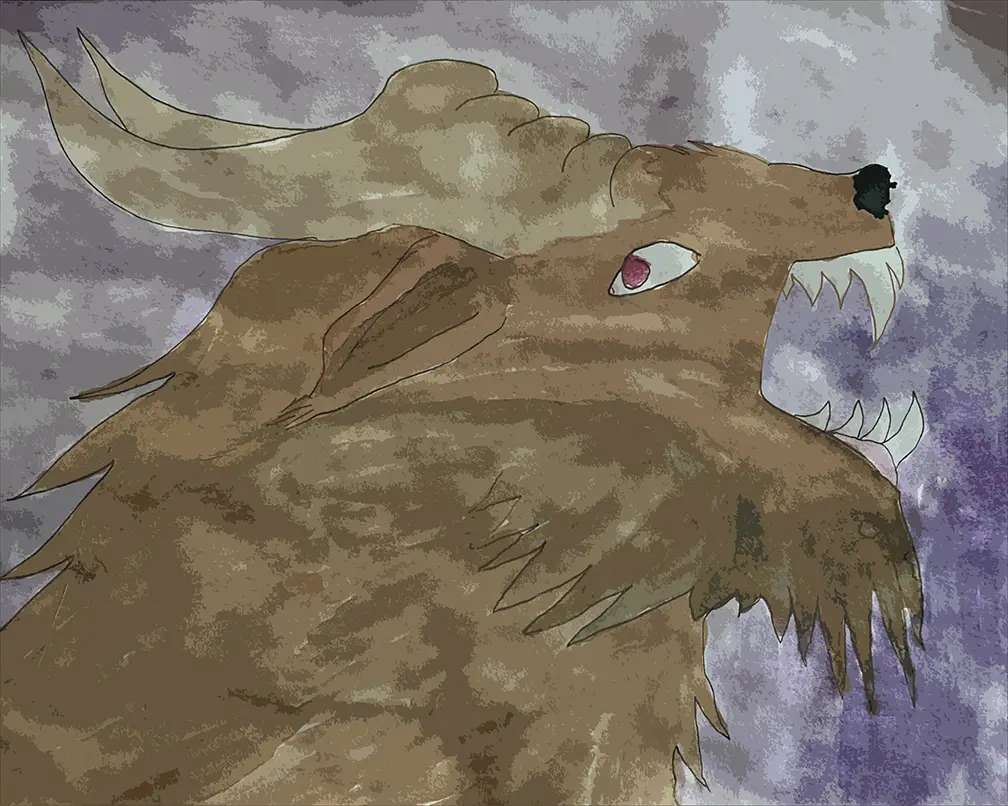
The Ozark Howler is said to be a bear-sized black beast with shaggy fur, glowing eyes, a goat-like beard and horns, whose cry carries down the hollows of Arkansas and Missouri on cold nights.
Where and when was Ozark Howler sighted?
- Location
- Ozark Mountains (Arkansas-Missouri-Oklahoma), United States
- Date sighted
- Unknown
- Coordinates
- 36.5, -93.2
- Last updated
LOCATION
What is Ozark Howler?
Almost uniquely among American cryptids, it has a datable birth. Early in 1998 a network of free web pages, mailing-list posts and invented bodies seeded it among cryptozoologists: an Ozark Howler Research Group, a breakaway Research Council, and a lead scientist called Itzakh Joach, read it aloud, of a university that does not exist. Two of those pages survive in the Internet Archive, and one of them manufactures the creature's past in a single archived sentence about witnesses who saw it decades earlier. The cryptozoologist Loren Coleman traced the aliases and reported a confession in May 1998, but his account was cut from his 1999 book and not published until 2006, by which time an unsourced Wikipedia article had been carrying the story for a year. The strange part is what is true underneath: the Ozarks really do have a tradition of an immense black cat known by its call. Vance Randolph wrote it down in 1951, and it is not this animal.
What is the history of Ozark Howler?
The Ozark Howler is described, wherever it is described, in the same terms: a beast the size of a bear, low and thick, with shaggy black fur, glowing eyes, a goat-like beard and a pair of horns, whose cry — somewhere between a wolf's howl and an elk's bugle — carries down the hollows of northern Arkansas and southern Missouri on cold nights. What makes it unusual among American cryptids is not the description. It is that the creature has something close to a birth certificate, and that parts of the original paperwork are still on file.
Early in 1998 a cluster of free web pages, mailing-list posts and invented institutions appeared almost simultaneously. There was an "Ozark Howler Research Group"; there was a breakaway "Ozark Howler Research Council", founded, one of the pages explained, "after several members of the Howler Research Group found that they had serious disagreements with the core Group organization over the interpretation of Ozark Howler evidence". There was a lead scientist, "Itzakh Joach, distinguished professor of Biology at Buffalo River University in eastern Oklahoma" — a university that does not exist, and a name that is a joke you have to read aloud. There were witnesses with names of the same family: Fred Sprout, George O. Choangle, Leigh Hardaman, P. T. Fuelle, R. Nixon, and a webmaster called David Gauner, which happens to be the German word for a swindler.
Two of those pages survive in the Internet Archive, and they are the best evidence in the whole case. A page titled "The Ozark Howler and The Eastern Cougar", captured on 24 February 1999, argues with Dr. Joach in the aggrieved register of a specialist journal — and then does the decisive thing: "I cannot concur with his description of sightings as 'recent'. In my research, I have interviewed many individuals who claim to have seen the howler during their youth many decades ago." That is the manufacture of a past, caught in the act. A second page, captured on 17 April 1999, carries George O. Choangle's first-person account of a near-collision on a tight curve near Hot Springs, Arkansas, a photograph of a paw print in snow that a friend took the next morning, and the line that made the creature communal: "a lot of the people, especially those from the country, started telling us about something they call the 'black howler', or 'ozark howler', or just 'howler'."
The bait worked in one direction only. On 24 April 1998 "Fred Sprout" wrote to the Ohio investigator Ron Schaffner reporting a big shaggy thing standing in a streambed near Branson, Missouri, that "really smelled, kind of like, I don't know, burnt onions". In May "Sprout" turned up on the eastern cougar mailing list. A "Jonathan C. Cook", claiming to be writing about the Howler for Strange Magazine, pressed the cryptozoologist Loren Coleman to put the animal in the reference book he was then writing with Jerome Clark; Strange's editor Mark Chorvinsky denied the assignment when asked. Coleman's account is that "Cook" had signed one message with the real name of a Memphis physician, that a telephone call to the doctor's office undid the pretence, and that late in May 1998 the hoaxer confessed on condition the doctor's name stayed out of it. In the version Coleman first published, the motive is a chat-room argument: "Visiting a skeptics' chat room on the internet one night a few months ago … I started talking about how ridiculous the whole Chupacabras mythology is." He wondered what would happen if he invented a cryptid; if enough people fell for it, that would "kind of [be fun to] undermine the credibility of monster tales like Bigfoot and the Chupa".
Then the exposure failed to happen. Coleman has written that his entry on the Howler was cut from Cryptozoology A to Z (Simon & Schuster, 1999) when the Fireside editors removed roughly a quarter of the manuscript and decided to drop the hoax material as a class. The one thing the hoaxer wanted — a printed encyclopedia entry — was denied him; the one thing that would have killed the story, a printed debunking, was denied to everyone else. Coleman did not publish the text until 16 November 2006, eight years late, on his blog. Coleman credits Chad Arment with having summarised the affair on two pages of a 2004 book, Cryptozoology: Science and Speculation. In between, on 7 November 2005, an anonymous editor created the Wikipedia article, without a single source, in the vocabulary of the hoax pages themselves — the Eastern cougar comparison, the horns, the call — and added a genealogy of its own, placing the animal "within the British tradition of dark dogs of death". Another editor flagged it for verification sixteen minutes later. The flag stayed; the article did not improve.
The story has kept moving since, and always in the same direction. On 15 December 2015 the Fayetteville station 40/29 News published photographs a viewer said were taken on the Yellow Rock Trail at Devil's Den State Park. On 23 October 2024 Garden & Gun ran an affectionate feature. On 21 April 2026 an editor gave the Wikipedia article an "Origins" section tracing the creature to an eighteenth-century Daniel Boone anecdote. The Howler now has a brewery carrying its alternative name — the Black Howler Beer Company, on Arkansas Highway 12 in Gentry — and a place in children's books about tornadoes and in literary novels. It has, in other words, close to the life its inventor said he wanted for it, minus the one book he was aiming at.
Timeline: the documented record of Ozark Howler
- 1892 Six lumbermen stranded by high water at Gurdon, Arkansas, invent the Concatenated Order of Hoo Hoo, an order 'conceived in a spirit of horseplay' whose officers bore titles such as Grand Snark of the Universe, and which then spread across the timber country. Recorded on page 214 of the Federal Writers' Project guide to Arkansas. A century before the Howler, joke institutions were already an Ozark timber industry.
- 5 February 1897 The Arkansas echo of Little Rock and the Forrest City times both print the word 'gowrow' on the same day, the earliest of six appearances of that tall-tale Ozark monster in the digitised American press. Cited here as the control that shows what an old Ozark creature leaves behind in newsprint.
- 29 October 1946 The only occurrence of the string 'Ozark howler' in Chronicling America before 1998: the Washington Daily News prints a Scripps-Howard column predicting Republican gains in Missouri 'if the anti-Administration wind turned out to be a real Ozarks howler'. It is a metaphor for a gale, not an animal.
- 1951 Vance Randolph publishes We Always Lie to Strangers. Its chapter on fabulous monsters records the whistling wampus of Waldron, Arkansas, 'an immense black cat with supernatural intelligence' that whistles from cedar thickets, plus the wowzer, the gally-wampus and the wampus-cats of Roark Creek. The word 'howler' does not appear anywhere in the book.
- Early 1998 Free web pages, mailing-list posts and invented organisations begin seeding the Ozark Howler among cryptozoologists: an Ozark Howler Research Group, a breakaway Research Council, and 'Itzakh Joach, distinguished professor of Biology at Buffalo River University in eastern Oklahoma', a name to be read aloud, at a university that does not exist.
- 24 April 1998 'Fred Sprout' e-mails the Ohio investigator Ron Schaffner a sighting near Branson, Missouri, of a big shaggy thing that 'really smelled, kind of like, I don't know, burnt onions'. In May the same name appears on the eastern cougar mailing list.
- Late May 1998 Loren Coleman traces the aliases to one correspondent, 'Jonathan C. Cook', after the man signs a message with the real name of a Memphis physician. Coleman reports that 'Cook' confessed on condition the doctor's name was kept out, and quotes him: 'Visiting a skeptics' chat room on the internet one night a few months ago … I started talking about how ridiculous the whole Chupacabras mythology is.'
- 24 February 1999 The Internet Archive captures the page 'The Ozark Howler and The Eastern Cougar', in which one invented researcher disputes another and manufactures the creature's past in a single sentence: 'I cannot concur with his description of sightings as recent. In my research, I have interviewed many individuals who claim to have seen the howler during their youth many decades ago.' It is the oldest surviving piece of the hoax, and neither Coleman nor Wikipedia has ever cited it.
- 17 April 1999 The Internet Archive captures the companion page signed 'George O. Choangle', with its account of a near-collision near Hot Springs, Arkansas, and a photograph of a paw print in snow. The account carries no year: the '[1997]' that circulates inside the quotation was inserted by Loren Coleman in 2008.
- 1999 Cryptozoology A to Z, by Loren Coleman and Jerome Clark, appears from Simon & Schuster without the Howler. Coleman has written that the Fireside editors cut about a quarter of the manuscript and dropped the hoax entries as a class, so the hoaxer failed to get his book entry and the reading public failed to get the debunking.
- 7 November 2005 An anonymous editor creates the English Wikipedia article without a single source, reusing the hoax pages' own framing (the Eastern cougar comparison, the horns, the call) and adding a pedigree of its own: the Howler belongs 'within the British tradition of dark dogs of death'. Another editor tags it for verification sixteen minutes later.
- 15 December 2015 40/29 News in Fayetteville publishes photographs a viewer says were taken on the Yellow Rock Trail at Devil's Den State Park. The Arkansas Game and Fish Commission tells the station it knows of no documented sightings and that a biologist ranks the Howler with Bigfoot, but that it 'couldn't comment on the legitimacy of these photos'. The word 'hoax' belongs to the station's own headline.
- 14 September 2019 The Wikipedia article, by then some 13,000 bytes of accumulated lore, is cut to about a thousand on grounds of fringe sourcing. The purge removes the mythology and the debunking together: the mention that Chad Arment had identified the affair as a hoax, present in the article at least from 2017, goes with it and has not returned.
- 12 August 2020 A Wikipedia contributor uploads two original drawings of the Howler to Wikimedia Commons under a free licence and adds them to the article the same day. They are drawings made in 2020 to illustrate an encyclopedia entry, not documents, and they are now the images most often reproduced as 'the' Ozark Howler.
- 21 April 2026 An 'Origins' section is added to the Wikipedia article stating that 'the creature's origins may come from a late 18th century report by Daniel Boone'. The cited source, a Garden & Gun feature of 23 October 2024, says only that 'some internet sleuths believe' it. A hedged rumour becomes an encyclopedic origin in a single edit, four months before this file was written.
Is there a rational explanation for Ozark Howler?
The honest verdict has two halves, and the second one matters as much as the first.
The name is new, and the archives say so with unusual clarity. Searching the Library of Congress newspaper collection Chronicling America (digitised United States papers to 1963) for the phrase "Ozark howler" on 14 August 2026 returned exactly one hit, and repeating the query returned the same one: page 20 of the Washington Daily News for 29 October 1946, where a Scripps-Howard correspondent writes that the Republicans might pick up several Missouri seats "if the anti-Administration wind turned out to be a real Ozarks howler". A gust of political weather, not an animal. The controls in the same corpus on the same day: "wampus cat", 226 hits; "gowrow" — the tall-tale Arkansas monster — six, the earliest two in Arkansas papers on 5 February 1897. A creature with a nineteenth-century Ozark pedigree leaves newsprint behind it. This one leaves none. Open Library's full-text search inside books gives the same shape: six books contain the phrase "Ozark Howler" and every one of them was published after 1998, most after 2010; the control terms "gowrow" (35 books) and "whistling wampus" (3) show the index is working.
The strongest single control is Vance Randolph, the standard collector of Ozark lore. The full text of We Always Lie to Strangers (Columbia University Press, 1951), whose chapter on fabulous monsters is the obvious place for such an animal, contains "wampus" 18 times, "gowrow" 24 times and "booger" 10 times. It contains "howler" zero times.
That is the first half. The second half is that the theme Randolph records is entirely real, and it is not this animal. On pages 58 and 59 he sets down what a timber worker near Waldron, Arkansas, told him about "the whistling wampus, also known as the whistler … an immense black cat with supernatural intelligence, which lured woodsmen to their doom by whistling at them from dark cedar thickets". Nearby he collects the wowzer of Sallisaw, Oklahoma, a super-panther that bites the heads off cattle; the amphibious gally-wampus of central Missouri; the wampus-cats of Roark Creek, reported to him by G. H. Pipes; and a full-blown panther scare in Stone County in 1945 that some maintained was an abandoned collie. A big black cat-shaped thing in the Ozarks, known chiefly by the noise it makes at night, is old, documented and well attested. The Ozark Howler is a 1998 name stuck onto a real tradition — which is a different and less lurid thing than an invented tradition, and much more common.
Randolph also supplies the model for how to treat a claim of ancient origin, in a sentence written seventy-five years ago about a neighbouring monster: "The old folks allege that the whoo-hoo story is of Indian origin, but the Indians whom I interviewed say that they never heard of any such nonsense."
That is worth holding up against what has happened lately. Garden & Gun's 2024 feature says, carefully, that "some internet sleuths believe the legend of the Howler has been around since the late 1700s or early 1800s, when Daniel Boone spoke of killing a ten-foot-tall hairy creature called a Yahoo". On 21 April 2026 the English Wikipedia article, citing that feature, printed instead: "the creature's origins may come from a late 18th century report by Daniel Boone". The hedge, the attribution and the internet sleuths are gone; a magazine's report of a rumour has become an encyclopedia's statement of possible origin. Taken at face value, besides, Boone's Yahoo is a ten-foot hairy hominid, not a horned black cat.
The same article distorts its other source in the same direction. The 40/29 News report of 15 December 2015 says the Arkansas Game and Fish Commission knew of no documented sightings, that a biologist ranked the Howler with Bigfoot, and — explicitly — that the agency "couldn't comment on the legitimacy of these photos"; the word "hoax" is the station's, in its own headline. Wikipedia has the Commission saying "that the images sent to the station were a hoax". The named institutional voice on record is milder and more useful: Keith Stephens of the Commission, quoted in 2024, advises treating a Howler exactly as one would treat a black bear — "just back away slowly. Let them be."
Two cautions about the source everyone leans on, this file included. First, almost the entire hoax narrative rests on one link in the chain: what Loren Coleman published about a private conversation. Comparing his two versions is instructive. The text he printed on 16 November 2006 — presented as his unpublished 1998 manuscript entry — contains neither of the two details most often repeated from it. The claim that the hoaxer "bet other skeptics he could fool cryptozoology writers", and the claim that he "planted 'old sighting' reports … to 'predate' the timing of their mischief", both appear for the first time in Coleman's rewritten first-person version of 19 March 2008, the second of them explicitly as an argument against Wikipedia. The bet remains uncorroborated and should not be quoted as part of the 1998 confession. The planting, by contrast, does not need Coleman at all: the page archived on 24 February 1999 does it in writing, and Coleman never cited that page as evidence.
Second, no physical evidence has been produced. As of 14 August 2026 I have found no published photograph, cast, recording, hair or tissue sample of an Ozark Howler subjected to analysis by a named laboratory or agency, and the only images ever put to an authority — the 2015 Devil's Den photographs — were the ones that authority declined to authenticate.
Can you visit Ozark Howler?
The Ozark Howler has no address anywhere in the Ozarks. Nothing there is attached to a verified encounter with it: no cave; no bridge; no stretch of road; no cabin. This file records no verified encounter at all, and the places ever named for the creature come from the 1998 web pages or from the December 2015 photographs that the Arkansas Game and Fish Commission declined to authenticate. The coordinates carried by this entry, 36.5 N and 93.2 W, are a centroid dropped on the Ozark Plateau.
Devil's Den State Park is the single specific place in the whole affair, because the December 2015 photographs were said to have been taken on its Yellow Rock Trail. The park lies at 11333 West Arkansas Highway 74, West Fork, Arkansas 72774, in the Lee Creek valley; the telephone is +1 479-761-3325. It is one of the most intact Civilian Conservation Corps sites in the United States, with 1930s stone-and-timber cabins still in use. Entry costs nothing, though the swimming pool charges separately in summer. On 9 September 2026 the state's page listed 18 full-service cabins; 9 camper cabins; 107 campsites; a visitor centre open daily from 8 a.m. to 5 p.m., closed on Thanksgiving Day, on Christmas Eve, on Christmas Day. That page has moved since this file was written: arkansasstateparks.com now redirects to arkansas.com.
Buffalo National River, whose name the hoaxers borrowed for their imaginary university, runs through the Arkansas Ozarks. It charges no entrance fee, and overnight camping is paid at self-registration boards. The Senior and Access America the Beautiful passes halve the campsite rate, as nps.gov gave it on 14 August 2026. Around much of that same country lies the Ozark–St. Francis National Forest, into which the trails of Devil's Den run out.
Practical advice on what actually lives there is easier to come by than advice on the Howler. Keith Stephens of the Arkansas Game and Fish Commission, asked by Garden & Gun in 2024 what to do on meeting one, said it should be treated exactly as a black bear would be: "just back away slowly. Let them be." Black bears are numerous in the Arkansas Ozarks. Bobcats are common and seldom seen; Vance Randolph noted in 1951 that the Ozark bobcat rarely weighs more than thirty pounds.
The Black Howler Beer Company at 2353 Arkansas Highway 12, Gentry, Arkansas, carries the hoax's alternative name for the creature. Its own website offers no explanation of the name and no cryptid lore at all, as checked on 14 August 2026.
Sources consulted
- Anonymous ('Ozark Howler Research Council'), «The Ozark Howler and The Eastern Cougar (angelfire.com/tn/ozhowler), archived snapshot of 24 February 1999: one of the 1998 hoax pages, containing the manufactured claim of sightings from decades earlier» — Internet Archive Wayback Machine, 1999 archive
- 'George O. Choangle' (pseudonym), «Have you seen the Ozark Howler? (members.tripod.com/~ozarkhowler), archived snapshot of 17 April 1999: the 'George O. Choangle' account and the photograph of a paw print in snow» — Internet Archive Wayback Machine, 1999 archive
- Loren Coleman, «Ozark Howler: Faux Cryptozoologie. Publishes, for the first time, the entry on the Howler written for the 1998 Coleman-Clark manuscript and cut from the published book» — CryptoZooNews (originally posted on Cryptomundo), 16 November 2006, 2006 report
- Loren Coleman, «Outing the Ozark Howler. Coleman's rewritten first-person version, which adds the 'bet' and the 'planted old sightings' absent from his 2006 text» — CryptoZooNews (originally posted on Cryptomundo), 19 March 2008, 2008 report
- Vance Randolph, «We Always Lie to Strangers: Tall Tales from the Ozarks, chapter on fabulous monsters, pp. 56-59 (whistling wampus, wowzer, gally-wampus, wampus-cats; the word 'howler' does not occur in the book)» — Columbia University Press, New York, 1951 book
- Library of Congress, «Chronicling America, Library of Congress. Phrase searches of 14 August 2026: 'Ozark howler' 1 hit (Washington Daily News, 29 October 1946, p. 20, a political metaphor), controls 'wampus cat' 226 and 'gowrow' 6, the earliest two in Arkansas papers of 5 February 1897» — Chronicling America: digitised United States newspapers to 1963, 2026 newspaper archive
- Federal Writers' Project, Works Progress Administration, «Arkansas: A Guide to the State, p. 214: the Concatenated Order of Hoo Hoo, invented at Gurdon in 1892 'in a spirit of horseplay'. The volume Randolph cites, and a control search in which 'wampus', 'howler' and 'gowrow' return zero against 172 hits for 'Ozark'» — Hastings House, New York (American Guide Series), 1941 book
- Staff, «'Ozark Howler' sighting at Devils Den? Game & Fish say photos are a 'hoax'. The Arkansas Game and Fish Commission knew of no documented sightings and 'couldn't comment on the legitimacy of these photos'» — 40/29 News, Fayetteville, Arkansas, 15 December 2015 (consulted via the Internet Archive), 2015 newspaper archive
- Wikipedia contributors, «Ozark Howler: full revision history of the English Wikipedia article, created 7 November 2005 unsourced, stripped of the hoax material on 14 September 2019, given an 18th-century Daniel Boone 'Origins' section on 21 April 2026» — English Wikipedia (revision history consulted via the MediaWiki API, 14 August 2026), 2026 archive
- PetuniaJoan, «File:Ozark Howler in Fog.jpg. File page recording an original drawing, 'own work', dated 11 August 2020 and uploaded 12 August 2020 under CC BY-SA 4.0» — Wikimedia Commons, 2020 web
- Helen Bradshaw, «Meet the Ozark Howler, the South's Most Cryptic Cryptid. 'Some internet sleuths believe' the Boone story; Keith Stephens of the Arkansas Game and Fish Commission advises treating a Howler like a black bear» — Garden & Gun, 23 October 2024, 2024 web
- Arkansas State Parks, «Devil's Den State Park, official page: address, visitor centre hours, cabins and campsites, Yellow Rock Trail (consulted 14 August 2026)» — arkansasstateparks.com, 2026 web
- National Park Service, «Buffalo National River, Fees & Passes: no entrance fee, campground fees payable at self-registration boards (consulted 14 August 2026)» — nps.gov, 2026 web
Reviewed by V. Serrano on 2026-08-14 · How we verify our content
📎 Source: Enigma Atlas
💬 Field testimonies (0)
No testimonies yet. Add the first.
Add your testimony
🔒 Log in to add a testimony