👻 HAUNTED PLACE · EXP. Nº9478
ACTIVE
Beechwood (Astor mansion)
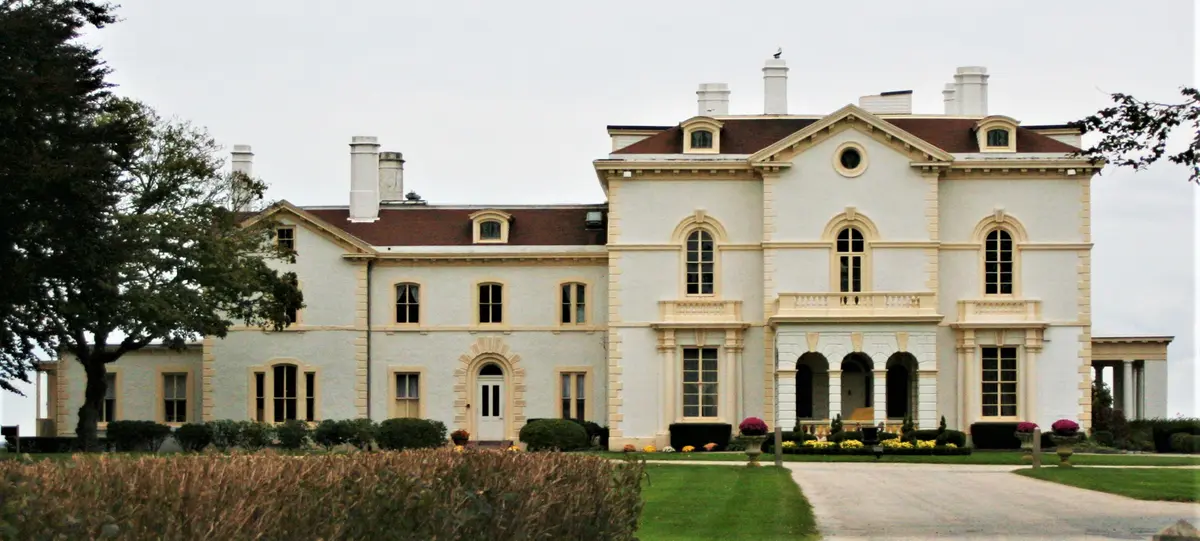
Beechwood is the Newport mansion whose ghost was on the payroll. For about three decades, until 2010, the Astor summer cottage on Bellevue Avenue ran as a Victorian living history museum: visitors were received as guests of Caroline Schermerhorn Astor in 1891, and the Beechwood Theatre Company played the family and the servants in costume, promising you might "meet Mrs. Astor herself in the ballroom".
Where is Beechwood (Astor mansion)?
- Location
- Rhode Island, United States
- Type
- House / mansion
- Coordinates
- 41.463, -71.305
- Last updated
LOCATION
Why is Beechwood (Astor mansion) said to be haunted?
Nothing in the museum's own website, in the pages the Internet Archive captured between 1998 and 2002, mentions a ghost, a haunting or an apparition; its Halloween event was a reading of Edgar Allan Poe. The famous "Four Hundred" belongs to Manhattan rather than to this ballroom, which Richard Morris Hunt only added in the 1880s, and Mrs. Astor died at her Fifth Avenue house in New York in 1908, not here. The house itself is the better story: built in 1851 for the merchant Daniel Parish, burned in 1855, rebuilt, remade by Hunt, and bought in 2010 by Larry Ellison, who restored it at a reported cost above 100 million dollars and closed it to the public.
What is the history of Beechwood (Astor mansion)?
Beechwood was not built for the Astors, and the family that made it famous owned it for less than half of its life.
The house went up in 1851-1852 for Daniel Parish, a New York merchant, to designs by Andrew Jackson Downing and Calvert Vaux, the partnership that shaped American picturesque taste. Downing did not live to see it finished; he died in a steamboat disaster in July 1852. The National Park Service inventory of the Bellevue Avenue Historic District still lists the house flatly as "Beechwood, by Downing & Vaux, 1851-1852", and credits no other architect for it, while crediting Richard Morris Hunt by name for four neighbouring houses. Fire destroyed the building in 1855. A replica was raised about two years later, set closer to the Cliff Walk and further back from Bellevue Avenue than the original had stood.
William Backhouse Astor Jr. bought the estate at the start of the 1880s for his wife, Caroline Webster Schermerhorn Astor, who insisted on being called "the Mrs. Astor". The year is not agreed: Newport's own planning documents and the house's former museum both say 1881, while the standard monograph on the property is cited for 1880.
What the Astors commissioned matters more than when they bought. They hired Richard Morris Hunt, and Hunt did not merely redecorate. He added a large ballroom at the rear, wrapped it in a monumental arched loggia along the south and east fronts above the Cliff Walk, and closed the sequence with a glassed-in palm court. Beechwood's ballroom is Astor-era construction: it was not in the house that Downing and Vaux designed.
Caroline Astor used the cottage some eight weeks a year. She withdrew from society in 1906 and died on 30 October 1908, in her late seventies, at her Fifth Avenue home in Manhattan. She did not die at Beechwood. The house passed to her son John Jacob Astor IV, who married Madeleine Talmadge Force in the Beechwood ballroom in 1911 and drowned with the Titanic the following year.
Much of what Hunt built has since been subtracted. A later remodelling, dated by the Park Service inventory to the 1930s, covered the Italianate brick and brownstone in white stucco and removed the porches. In 1954 Hurricane Carol destroyed the loggia, which was replaced by a smaller and much plainer porch. By the time paying visitors were being shown around in the 1980s, the room at the centre of every story told about the house was a ballroom stripped of the architecture that had once framed it.
Timeline: the documented record of Beechwood (Astor mansion)
- 1851-1852 Beechwood is built for Daniel Parish, a New York merchant, to designs by Andrew Jackson Downing and Calvert Vaux. The federal inventory of the Bellevue Avenue Historic District records the house under their names alone.
- 1855 Fire destroys the house. A replica is built about two years later, moved closer to the Cliff Walk and set further back from Bellevue Avenue.
- 1880 or 1881 William Backhouse Astor Jr. buys the estate for his wife Caroline. Newport's planning file and the house's own former museum give 1881; the standard monograph is cited for 1880. The two datings have never been reconciled.
- 1880s The Astors hire Richard Morris Hunt, who adds the large rear ballroom, an arched loggia along the south and east fronts above the Cliff Walk, and a glassed-in palm court. The ballroom dates from this campaign, not from the original house.
- 16 February 1892 The New York Times publishes Ward McAllister's list of society under the headline "The Only Four Hundred". The list is a New York affair and, as Laura Claridge notes, carries 273 names rather than 400. It has no documented connection to the ballroom at Newport.
- 30 October 1908 Caroline Schermerhorn Astor dies at her Fifth Avenue home in Manhattan, having withdrawn from society two years earlier. She does not die at Beechwood, the house to which her ghost is usually attached.
- 1911 John Jacob Astor IV marries Madeleine Talmadge Force in the Beechwood ballroom, according to the house's own history page. He drowns with the Titanic the following year.
- 1954 Hurricane Carol destroys Hunt's loggia. It is replaced by a smaller and considerably plainer porch, stripping the ballroom of its original setting.
- 26-27 October 2002 The museum's own website advertises its full programme: the Astor Ball, Murder Mystery Tours, a Victorian Christmas, Children's Day and Edgar Allan Poe Day, at which the Beechwood Theatre Company retells Poe's tales for All Hallows Eve. Across 46 archived pages there is not one mention of a ghost at Beechwood.
- January 2010 Larry Ellison buys Beechwood for 10.5 million dollars. The living history museum closes and public access ends; the tours have never resumed.
- 5 January 2012 Plans filed at Newport City Hall propose the Beechwood Art Museum on the ground floor with a private residence above. The project description asserts that Hunt's ballroom had to hold Mrs. Astor's "400", repeating in an official file a legend that belongs to her Manhattan house.
- December 2017 Newport's building official issues a permanent certificate of occupancy after a restoration reported at well over 100 million dollars. In August 2018 the grounds are still bare and the promised museum has not opened.
Is there a rational explanation for Beechwood (Astor mansion)?
The ghost story attached to Beechwood has a likelier origin in the three decades the house spent as a museum.
For roughly three decades the mansion operated as a Victorian living history museum. Visitors were received as guests of Mrs. Astor in 1891, and members of the Beechwood Theatre Company, in costume and in character, played the family, their friends and the domestic staff. The museum's own promotional copy told visitors they might "get to meet Mrs. Astor herself in the ballroom". A travel guide of the period summed the experience up as "pure theatre". A hired actress in period dress receiving guests in the ballroom is a complete explanation for stories about Mrs. Astor still receiving in the ballroom, and it is the explanation the building's documented history actually supports.
The business itself never claimed a haunting. The museum's website, in the roughly seventy pages the Internet Archive captured between 1998 and 2002 (read again on 1 October 2026), contains no occurrence of "ghost", "haunted", "haunting", "phantom", "apparition", "seance", "paranormal" or "supernatural". "Spirit" appears in a wine and spirits merchant on the suppliers list and in the Poe Day invitation to "celebrate the spirit of All Hallows Eve". In the same pages "Astor" appears 497 times, "Beechwood" 470 and "ballroom" 48.
What it sold at Halloween was literature. The October programme was Edgar Allan Poe Day: on 26 and 27 October 2002 the Theatre Company invited visitors to "celebrate the spirit of All Hallows Eve" by re-telling "the eerie tales of Mr. Poe", with the note that the event was "not always recommended for children under the age of eight due to the somewhat graphic nature of the stories". Even a regional ghost guidebook, C. J. Fusco's Old Ghosts of New England, begins its Beechwood entry by explaining that "History is literally alive in Newport's Astors' Beechwood Mansion because" - and the sentence is about the actors.
A second error travels with the ghost, and it is a geographical one: the "Four Hundred" was a New York list, published in a New York newspaper. Ward McAllister handed his list to The New York Times, which printed it on 16 February 1892 under the headline "The Only Four Hundred: Ward McAllister Gives Out the Official List"; the biographer Laura Claridge notes that the published list carried 273 names. The familiar story that the number came from the capacity of Mrs. Astor's ballroom refers to her Manhattan house on Fifth Avenue, and even that is unproven: other venues of the day held about the same number. The written description of the restoration project filed at Newport City Hall states that Hunt's ballroom at Beechwood "had to be big enough to accommodate Mrs. Astor's famous '400' guests" - a Manhattan legend rehoused, on paper, in Rhode Island, and then inherited by everyone who has written about Beechwood since.
Can you visit Beechwood (Astor mansion)?
Beechwood cannot be visited. That is the single most important thing to know about it, and it is the point most often out of date elsewhere.
The living history museum closed when the estate changed hands. Larry Ellison, co-founder of Oracle, bought it in January 2010 for 10.5 million dollars, and the costumed tours ended with the sale, along with the eighty or so weddings, proms and functions the house had been hosting each year. The lawyer who represented the project in the city told the Newport Daily News that those events had been "a thorn in the side of the neighborhood". There has been no public access since.
Plans lodged at Newport City Hall in January 2012 proposed turning the ground floor into the Beechwood Art Museum, showing an eighteenth- and nineteenth-century collection in a residential setting, with a private home on the floors above and a non-profit, the Atlantic Arts Museum, as operator. The building work was completed: Newport's building official issued a permanent certificate of occupancy in December 2017, after a restoration the local press reported at well over 100 million dollars, and the city had collected more than a million dollars in permit fees. The museum, however, has not opened. When this entry was checked in August 2026 no website existed for either the Beechwood Art Museum or the Atlantic Arts Museum, neither domain resolving at all while control domains checked in the same pass answered normally, and Beechwood was not among the eleven houses that the Preservation Society of Newport County opens to the public.
Treat the old astors-beechwood.com address with suspicion. The domain lapsed after the sale and has since served parking pages and recycled copies of the defunct museum's site; it is not the voice of anything that currently operates.
The outside remains. The estate takes in 570 to 590 Bellevue Avenue, and its grounds run back to the Cliff Walk, the public coastal footpath, from which the rear of the house and its grounds can be seen. Bellevue Avenue houses that are genuinely open are what most visitors arriving in search of Beechwood end up seeing instead. The Preservation Society of Newport County runs The Breakers, Marble House, Rosecliff, The Elms, Chateau-sur-Mer, Kingscote, the Isaac Bell House and Chepstow, all within a short walk; Belcourt, further down the avenue at number 657, is privately owned and opens separately.
Sources consulted
- Carolyn Pitts, «Bellevue Avenue Historic District, National Register of Historic Places Inventory-Nomination Form» — Historic Sites Survey, National Park Service, 1976 report
- «Beechwood's owner has museum plan» — The Newport Daily News, 2012 newspaper archive
- Sean Flynn, «Neighbors irked by lack of landscaping at Larry Ellison's Beechwood» — The Newport Daily News, 2018 newspaper archive
- The Astors' Beechwood, «The Astors' Beechwood Mansion, Victorian Living History Museum (official website, archived)» — Internet Archive Wayback Machine, 2002 archive
- Laura Claridge, «Emily Post: Daughter of the Gilded Age, Mistress of American Manners» — Random House, 2008 book
- Eric Homberger, «Mrs. Astor's New York: Money and Social Power in a Gilded Age» — Yale University Press, 2002 book
- Mary Lister, «Case Studies in Museum, Zoo, and Aquarium Theater» — American Association of Museums academic
- C. J. Fusco, «Old Ghosts of New England: A Traveler's Guide to the Spookiest Sites in the Northeast» book
- Preservation Society of Newport County, «The Newport Mansions: properties open to the public» — 2026 web
Reviewed by V. Serrano on 2026-08-11 · How we verify our content
💬 Field testimonies (0)
No testimonies yet. Add the first.
Add your testimony
🔒 Log in to add a testimony