👻 HAUNTED PLACE · EXP. Nº9478
ACTIVE
Bremo Historic District
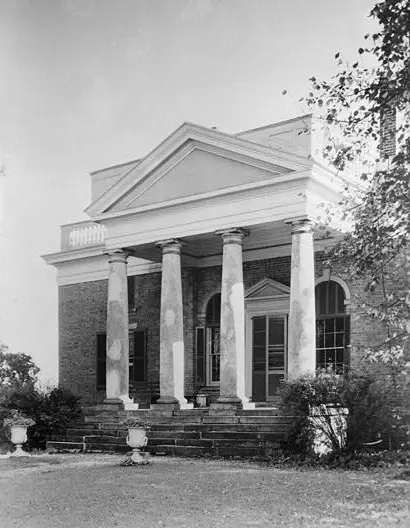
Bremo is not one house but three, strung along the James River in Fluvanna County, Virginia, and built between about 1803 and 1845 by General John Hartwell Cocke: planter, amateur architect, president of the American Temperance Union, co-founder of Thomas Jefferson's university, and the owner of well over a hundred enslaved people.
Where is Bremo Historic District?
- Location
- Virginia, United States
- Type
- House / mansion
- Coordinates
- 37.725, -78.33
- Last updated
LOCATION
Why is Bremo Historic District said to be haunted?
Bremo Recess came first; Upper Bremo, the Palladian mansion, was finished in 1820 with Jefferson's master carpenter John Neilson; Lower Bremo was rebuilt around 1844. The whole estate became a National Historic Landmark in 1971.
The ghost belongs to Bremo Recess, and it reached print in 1930, in Marguerite du Pont Lee's Virginia Ghosts: a doctor reading indoors notices a shadow fall across his book, looks up, and finds a woman in a green skirt standing over him. Lee gives her no name. Since 2010 the English Wikipedia article on Bremo has identified her as Cocke's first wife, Ann Blaws Barraud Cocke, who died on 27 December 1816, citing a 2010 local newspaper article; the Wikipedia sentence names no witness. What the archive does hold are names: Peyton Skipwith, the Bremo stonemason freed in October 1833 and sent to Liberia, and the letters his children wrote back.
What is the history of Bremo Historic District?
Bremo is not a house. It is three houses, a stone barn, a temperance temple, two rammed-earth quarters for enslaved people and a chapel, spread over some 1,500 acres on the north bank of the James River in Fluvanna County, Virginia, and every one of them was raised under the eye of the same man.
John Hartwell Cocke was born in Surry County on 19 September 1780. He came of age in September 1801 as master of 5,691 acres of James River land, married Ann Blaws Barraud of Norfolk on 25 December 1802, and moved his family permanently to the inherited Fluvanna estate in 1809. The National Park Service nomination that made Bremo a National Historic Landmark describes three house groups built between 1803 and 1845: Bremo Recess first, put up around 1803-1809 as a plain frame house; Upper Bremo, the Palladian mansion, completed in 1820; and Lower Bremo, rebuilt about 1844, when Bremo Recess was also recast in the neo-Jacobean manner. The Virginia Department of Historic Resources notes that the Recess and Lower Bremo were modelled on Bacon's Castle in Surry County, a Cocke family house.
Cocke drew and redrew Upper Bremo himself, and took advice from Thomas Jefferson, whose Central College board he joined in 1816 and whose university he helped build over thirty-five years as a visitor. But the nomination is blunt about who actually designed the mansion: "the final architect was actually John Neilson, a master carpenter who had worked for Mr. Jefferson at Monticello", and it was Neilson "who interpreted all of the ideas and sketches received or drawn by Cocke and who gave the house its final appearance".
Cocke spent the rest of his life on reform. He chaired the founding meeting of the Agricultural Society of Albemarle in 1817. He called alcohol "the most prolific source of evil on earth", presided over the Temperance Society of Virginia from 1834 and over the American Temperance Union from 1836 to 1843, and built a Greek Revival temple over a spring beside the canal so that bargemen would drink water instead. In an 1843 letter he named temperance, the eradication of tobacco and the colonisation of former slaves in Africa as "the three objects nearest my heart in this life".
And he owned people. Eighty-nine aged twelve or over in 1816; 107 in 1830; 135 across Virginia and Alabama by 1860. He was a vice-president of the American Colonization Society from 1819 until his death and founded a Fluvanna branch in 1825, because he believed emancipation was worthless without deportation. He also acted on the belief that his slaves had souls: they were meeting for worship at Bremo by 1821; in 1825 he put up a brick building for their religious and educational instruction; his second wife Louisa Maxwell Holmes Cocke taught them to read through the 1820s; he hired teachers from the North for a more formal school, and Louisa took the work back when Virginia outlawed the employment of teachers for Black people in 1831. The schoolroom survives in Upper Bremo's west wing. In 1835 he built the chapel that is still, according to its own National Register nomination, the only known slave chapel in Virginia.
The archive keeps the names the plantation would otherwise have swallowed. In October 1833 Cocke manumitted his stonemason, Peyton Skipwith, and Skipwith's family; the manumission paper is in the Cocke Family Papers at the University of Virginia. Eight Skipwiths sailed for Liberia. Peyton's wife was Lydia Randall; his daughter Matilda was nine years old on the ship. From Monrovia, Peyton (d. 1849), Diana, Nash, Matilda and James wrote back to the man who had owned them, and their letters survive because the Cocke family kept them. Peyton's first, dated "Monrovia Liberia Febuary the tenth 1834", begins simply: "Dear Sir I embrace this oppertunity...". From Louisa Cocke's diary comes another name, and the whole contradiction in one sentence: on 14 January 1828 she wrote of a child called Betsey, "I hope to train her up for heaven, and there it will never be asked what colour her skin was of while upon earth".
Cocke's biographer Martin Boyd Coyner called him "a lonely outpost of freedom's ferment, a figment of New England reform, a harbinger of Victorian morality and the Bible Belt, paradoxically ensconced in Neo-Classical magnificence on the banks of the James River, master of human slaves". By the 1860s Cocke had abandoned even his gradualism and concluded that slavery was "of Divine Origin". He died on 24 June 1866 and was buried at Bremo Recess, beside his two wives.
Timeline: the documented record of Bremo Historic District
- 25 December 1802 John Hartwell Cocke marries Ann Blaws Barraud of Norfolk. The couple live in Surry County until 1809, when they move permanently to the inherited Fluvanna plantation.
- c. 1803-1809 Bremo Recess is built as a small frame house. According to the National Historic Landmark file, Cocke and his family lived there while Upper Bremo was under construction.
- 27 December 1816 Ann Blaws Barraud Cocke dies, two days after her fourteenth wedding anniversary. That same year Cocke pays tax on eighty-nine enslaved people aged twelve or over.
- 1820 Upper Bremo is completed. The nomination names John Neilson, Jefferson's master carpenter at Monticello, as the man who gave the house its final appearance.
- 1825 Cocke erects a brick building at Bremo for the religious and educational instruction of the enslaved, who had already been gathering for worship since 1821. The same year he founds a Fluvanna branch of the American Colonization Society.
- 14 January 1828 Louisa Maxwell Holmes Cocke writes in her diary of a child called Betsey: "I hope to train her up for heaven, and there it will never be asked what colour her skin was of while upon earth." It is one of the few names of an enslaved child at Bremo recorded in a contemporary document.
- 1831 Virginia outlaws the employment of teachers for Black people. Cocke's Northern teachers stop and his wife Louisa takes the classes back herself.
- October 1833 Cocke manumits his stonemason Peyton Skipwith and his family and sends them to Liberia; the manumission paper survives in the Cocke Family Papers at the University of Virginia. Eight members of the Skipwith family sail. Matilda Skipwith is nine years old.
- 10 February 1834 Peyton Skipwith writes to Cocke from Monrovia: "Dear Sir I embrace this oppertunity...". He and his children Diana, Nash, Matilda and James keep writing for decades; the letters were published in 1978 as Dear Master.
- Autumn 1835 The Cockes dedicate the new board-and-batten chapel built that year in the chapel field at Lower Bremo. Its 1979 National Register nomination calls it the only structure known to have been used for that purpose in Virginia.
- 24 June 1866 Cocke dies and is buried at Bremo Recess beside his two wives, having concluded in his last years that slavery was "of Divine Origin".
- 14 February 1884 The slave chapel, moved from Lower Bremo to the village of Bremo Bluff, is consecrated as Grace Church by Bishop Alfred M. Randolph. It became the parish hall after a new brick church was built in 1924.
- 1930 Marguerite du Pont Lee publishes Virginia Ghosts in Richmond. Its chapter "Recess-Bremo" is the earliest printed account of the apparition we have been able to date: a doctor reading indoors looks up to find a woman in a green skirt. Lee gives her no name.
- 11 November 1971 Bremo is designated a National Historic Landmark, two years after its listing on the National Register (12 November 1969, reference 69000241). The nomination form had been signed at the National Park Service on 21 August 1971.
Is there a rational explanation for Bremo Historic District?
The oldest printed account of the Bremo apparition that can be dated is the chapter "Recess-Bremo" in Marguerite du Pont Lee's Virginia Ghosts, first published in Richmond in 1930 (the text quoted here is from the 1966 Virginia Book Co. reprint, pp. 121-123). Lee opens with the house: "Recess-Bremo, on the James River in Fluvanna County, was built in 1803 by Gen. John Hartwell Cocke, who occupied it while building his more pretentious mansion, Upper Bremo, one mile away." The apparition arrives a page later in a small domestic scene. "After reading a while Dr. Greene noticed a shadow pass over his book. Looking up, a woman stood before him wearing a green skirt."
Lee gives that woman no name, no date and no explanation. The name now attached to her comes from the English Wikipedia article on Bremo, which since an edit of 15 December 2010 has said that Cocke's first wife "died in December 1816 and was buried at Bremo Recess, where her ghost has reportedly been sighted wandering in the house". The source it gives is an article by Kristin Sancken, "Ghostly Legends of Fluvanna County", in the Fluvanna Review of 27 October 2010; the Wayback Machine holds no capture of the address Wikipedia gives for it (checked on 4 October 2026). The Virginia Haunted Houses website repeats the identification almost word for word: "her ghost has been seen wandering the house ever since". Neither the Wikipedia sentence nor the website names a witness or gives the date of a sighting, and neither mentions the green skirt.
Ann Blaws Barraud Cocke died on 27 December 1816, two days after her fourteenth wedding anniversary, according to the Dictionary of Virginia Biography, which also records that Cocke was buried in 1866 "near the remains of his two wives in the family plot at his Bremo Recess plantation". The National Historic Landmark nomination says that "while Upper Bremo, the main residence, was being built, General Cocke and his family made their home at Bremo Recess", and Upper Bremo was completed in 1820, so the household was living at the Recess when she died. Neither document says in which room or house she died, and neither mentions an apparition. Lee's chapter appeared 114 years after her death; the identification with her, 194 years after it.
The Virginia Department of Historic Resources says the three Bremo properties are "still owned by Cocke's descendants"; the 1971 nomination had listed Francis C. Orf as the owner of Bremo Recess. The department's register page adds that many listed properties "are private dwellings and are not open to the public". Lee's Dr. Greene is the only witness named in the three texts that tell the story.
Can you visit Bremo Historic District?
Bremo is private property and it is not open to visitors. There is no ticket office, no tour and no published schedule, and there never has been.
The Virginia Department of Historic Resources records that the three estates are "still owned by Cocke's descendants", and attaches to its register entry the standard notice that applies here in full: many listed properties are private dwellings, are not open to the public, and owner privacy should be respected. Upper Bremo, Lower Bremo and the Bremo road frontage carry preservation easements held by the Virginia Board of Historic Resources, which protect the buildings but confer no right of access. The houses sit off U.S. Route 15 north of the John H. Cocke Memorial Bridge, roughly 2.4 miles west of the highway; the approaches are private drives. Do not attempt to reach them.
There is an honest alternative, and it is the more important building. The Bremo Slave Chapel, put up in 1835 in the chapel field at Lower Bremo, was moved to the village between 1882 and 1884 and consecrated as Grace Church on 14 February 1884; when a new brick church was built in 1924 the chapel was shifted a little to the north and became the parish hall. It stands today beside Grace Episcopal Church at 754 Bremo Bluff Road, Bremo Bluff, Virginia 23022, in the middle of the village and visible from the road. It is listed separately on the National Register (reference 80004189) and is described in its nomination as the only known slave chapel in Virginia. Anyone wanting to see something of Bremo should go there rather than towards the houses, and should contact the parish before assuming the building is open.
For the houses themselves, the substitute is the archive. The Historic American Buildings Survey documented Bremo in 1940 and deposited the records with the Library of Congress; the photographs are catalogued under the survey number HABS VA,33-FORKU.V,1 and are in the public domain. The National Historic Landmark file is a free PDF from the National Park Service, and the Bremo Slave Chapel nomination is a free PDF from the Virginia Department of Historic Resources. Between them they contain floor plans, elevations and photographs of buildings no visitor is going to see in person.
Sources consulted
- W. B. Norton III, National Park Service, Office of Archeology and Historic Preservation, «National Register of Historic Places Inventory - Nomination Form: Bremo, Bremo Recess, and Lower Bremo (Bremo Historic District)» — United States Department of the Interior, 1971 report
- Virginia Historic Landmarks Commission staff (Tucker Hill, Executive Director), «National Register of Historic Places Inventory - Nomination Form: Bremo Slave Chapel» — Virginia Department of Historic Resources, 1979 report
- Jennifer R. Loux and the Dictionary of Virginia Biography, «John Hartwell Cocke (1780-1866)» — Encyclopedia Virginia, Virginia Humanities, 2020 academic
- Randall M. Miller (ed.), «Dear Master: Letters of a Slave Family» — Cornell University Press, 1978 book
- Marguerite du Pont Lee, «Virginia Ghosts, chapter "Recess-Bremo"» — The William Byrd Press, Richmond (1930); reprint Virginia Book Co., Berryville, 1966, pp. 121-123, 1930 book
- Virginia Department of Historic Resources, «Bremo Recess & Lower Bremo (Bremo Historic District), DHR file 032-0002» — Virginia Landmarks Register Online, 2024 report
- Tom W. Shick, «Behold the Promised Land: A History of Afro-American Settler Society in Nineteenth-Century Liberia» — Johns Hopkins University Press, 1980 book
- Janet Duitsman Cornelius, «Slave Missions and the Black Church in the Antebellum South» — University of South Carolina Press, 1999 book
- Wikipedia contributors, «Bremo Historic District — sentence identifying the ghost as Anne Blaws Barraud Cocke, added on 15 December 2010 and citing Kristin Sancken, "Ghostly Legends of Fluvanna County", Fluvanna Review, 27 October 2010» — English Wikipedia, revision 1372751880 (2 September 2026), 2010 web
- Real Haunts, «Bremo Historic District — Bremo Bluff VA real haunted places (Ann's ghost "seen wandering the house ever since")» — Virginia Haunted Houses (virginiahauntedhouses.com), consulted 4 October 2026, 2026 web
Reviewed by V. Serrano on 2026-08-11 · How we verify our content
💬 Field testimonies (0)
No testimonies yet. Add the first.
Add your testimony
🔒 Log in to add a testimony