👻 HAUNTED PLACE · EXP. Nº9475
ACTIVE
Carroll A. Deering
On the morning of Monday 31 January 1921 the five-masted schooner Carroll A. Deering was found hard aground on Diamond Shoals, off Cape Hatteras, with every sail set and slatting itself to ribbons, her boats gone from the davits, and neither Captain Willis B. Wormell nor the eleven men reported with him was ever seen again.
Where is Carroll A. Deering?
- Location
- North Carolina, United States
- Type
- Ship
- Coordinates
- 35.262, -75.492
- Last updated
LOCATION
Why is Carroll A. Deering said to be haunted?
Two days earlier a crewman who was not Captain Willis B. Wormell had hailed the Cape Lookout lightship to report that the schooner had lost both anchors. Heavy seas kept the surfmen off her for days; when a boarding party from the cutter Seminole finally got aboard, the only living thing they found was a parrot below decks. What followed is what makes this case unusual: five departments of the United States government investigated it at once, under Herbert Hoover's assistant Lawrence Richey, largely because the captain's daughter Lula Wormell took the evidence to Washington herself. The famous message in a bottle turned out to be a hoax, confessed in August 1921 by a fisherman who wanted a job in the Lighthouse Service.
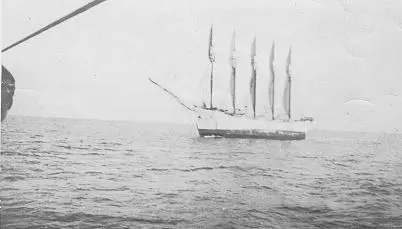
What is the history of Carroll A. Deering?
The Carroll A. Deering was a five-masted wooden schooner of the Deering fleet of Portland and Bath, Maine, barely a year off the building stocks when she was lost. She sailed from Portland in November 1920 for Rio de Janeiro, cleared Rio for Norfolk in December, and put into Barbados for orders; receiving none that changed her instructions, she carried on north. Her master was Captain Willis B. Wormell, a New England shipmaster whom the United States government itself described in writing as "experienced as a navigator and thoroughly reliable".
What happened next is documented almost hour by hour, because the State Department wrote it down and sent it round the world. On Saturday 29 January 1921 the schooner passed the Cape Lookout lightship off North Carolina at about five miles an hour. A man aboard her hailed the lightship — not the captain, the lightship's own master later insisted when he was shown Wormell's photograph — and reported that the Deering had lost both anchors, asking to be reported to her owners. A short time afterwards a steamer came past, close aboard, flying no colours. The lightship master signalled her repeatedly, by flags and by Morse lamp, to take a message ashore. She did not answer, and went on into the dark.
On Sunday evening 30 January the surfmen of the lifesaving station on the beach made their last look of the day across the shoals and saw nothing. On Monday morning the Deering was lying in the sand of Diamond Shoals with every sail set and slatting itself to ribbons, her boat gear hammering loose over the side, and her boats and her people gone. The lifesavers were beaten back by wind and sea all day. Not until early February could a party from the cutter Seminole get aboard, after two failed attempts in the heavy swell. The only living thing they found was a parrot below decks. The cutter Manning concluded she could not be salvaged and turned for Norfolk, searching inshore on the way for the captain and eleven men.
The case then acquired something almost no ghost story has: a federal file. Five departments of the United States government — Commerce, State, Navy, Justice and the Treasury — worked on it at once, and Herbert Hoover's special assistant at Commerce, Lawrence Richey, was put in charge. What pushed them was not folklore but a woman: Lula Wormell, the captain's daughter, who carried the evidence to Washington herself and whose name has been quietly dropped from most retellings of her father's disappearance.
Timeline: the documented record of Carroll A. Deering
- November 1920 The five-masted schooner sails from Portland, Maine, part of the Deering fleet, bound for Rio de Janeiro. She is barely a year off the building stocks.
- December 1920 She clears Rio de Janeiro for Norfolk, Virginia, and puts into Barbados for orders. Receiving nothing that changes her instructions, she carries on north under Captain Willis B. Wormell.
- Saturday 29 January 1921 The Deering passes the Cape Lookout lightship at about five miles an hour. A man who is not the captain hails the lightship and reports both anchors lost. Shortly afterwards a steamer passes close aboard flying no colours and ignores the lightship's repeated signals.
- Sunday 30 – Monday 31 January 1921 The lifesaving patrols see nothing across the shoals on the Sunday evening. On the Monday morning the schooner is aground on Diamond Shoals with all canvas set and slatting to ribbons, her boat gear hammering overside, her boats and her crew gone. The surfmen are beaten back by wind and sea all day.
- Early February 1921 A party from the cutter Seminole gets aboard after two failed attempts in the heavy sea. The only living thing is a parrot below decks; the lifeboats are missing. The cutter Manning gives up the salvage and searches inshore for the captain and eleven men.
- 20 February 1921 A severe gale sweeps the coast — 48 miles an hour at Cape Henry — and Norfolk reports that the schooner, ashore three weeks, is breaking up under the high seas.
- 11 April 1921 A bottle is picked up near Cape Hatteras containing a note that the Deering has been captured by an oil-burning boat "something like chaser" and her crew handcuffed. Christopher Columbus Gray, a fisherman of Buxton, reports finding it.
- 21 June 1921 The State Department circulates the case to American consuls and diplomats worldwide, with orders to watch for any member of the Deering's crew. Justice Department agents say they have interviewed everyone who could throw light on it and remain as baffled as on the first day.
- 22 June 1921 Government investigators go over the wreck again. "We might as well have searched a painted ship upon a painted sea for sight of the vanished crew," one writes in his report. The hull is filled with sand and gulls are roosting on the beams that carried the ship's clock.
- 10 July 1921 A Norfolk dispatch by Harry P. Moore sets out Lula Wormell's own investigation: she took the note to the crew's homes in Maine, matched it against a letter by the engineer Herbert Bates, had handwriting experts confirm it and laid it before the Department of Commerce. She gives six reasons for believing the stranding unnatural, including a sledgehammer found on deck near the steering gear.
- 25–26 August 1921 Lawrence Richey returns from Cape Hatteras and the bottle note is officially branded a hoax. Christopher Columbus Gray admits writing it; Navy and Treasury handwriting experts match it to his hand. He had applied for a job in the Lighthouse Service and hoped a scandal would create a vacancy. Officials fall back on the plain explanation: the crew may have drowned trying to land in the boats.
Is there a rational explanation for Carroll A. Deering?
Start with the bottle, because it is the piece everyone quotes. On 11 April 1921 a note was picked up in a bottle near Cape Hatteras. The State Department's own circular gives it as: "Deering captured by oil-burning boat something like chaser, taking off everything, handcuffing crew, hiding all over ship. No chance to make escape. Finder please notify headquarters of Deering." Lula Wormell took that scrap round the crew's homes in Maine, matched the hand against a letter written by the schooner's engineer, Herbert Bates, had three handwriting experts confirm it and laid it before the Department of Commerce. It was on that evidence that five departments went to work.
The note was a fake. On 25 August 1921 Lawrence Richey came back from Cape Hatteras and announced that the man who "found" it, Christopher Columbus Gray, a fisherman of Buxton, North Carolina, had admitted writing it. Government handwriting experts of the Navy and Treasury matched the note to Gray's own hand. His motive was small and entirely human: he had applied for a post in the Lighthouse Service and hoped that a scandal reflecting on the Cape Hatteras staff and the Coast Guard would open a vacancy for him. When agents first came to question him he ran into the swamps. The 1921 press had printed at least three incompatible wordings of the note, one of which has a "large tanker or submarine" boarding the ship and putting the crew "in irons".
The famous meal in the galley deserves the same treatment. The State Department circular states flatly that "most of the provisions, clothing and supplies of the vessel had been removed". A widely syndicated report of June 1921 says the opposite — food on the tables in the galley and in the officers' mess, clothing in the lockers. Both date from 1921, both come from the months of the federal inquiry, and they cannot both be right. The same 1921 articles that describe the Deering also retell the Mary Celeste, whose boarding party famously found "the table set for dinner with hot coffee in the pot": the meal on the Deering's tables is printed beside the best-known meal in the folklore of abandoned ships.
The head count is not firm either. The Associated Press dispatch from Norfolk on 4 February 1921 says the cutter Manning went looking for "the captain and eleven men" — twelve aboard. A syndicated Washington report of June 1921 says the schooner "carried a crew of eleven officers and men" — eleven in all. Both figures come from reports of 1921.
The boring explanation was available from the first week and the government itself fell back on it in August 1921: the crew may simply have drowned trying to land in the boats. The boats were gone from the davits, and the schooner had lost both anchors, on the word of a man of her own crew. The National Park Service describes Diamond Shoals as "a treacherous, always-shifting series of shallow, underwater sandbars extending eight miles out from Cape Hatteras", and estimates the vessels lost near the cape, the "Graveyard of the Atlantic", at "over 1,000". Whether the weather was to blame is genuinely disputed: Lula Wormell argued that the gale of 25–27 January had blown itself out and that the 29th and 30th were fine, while the surfmen who watched the wreck could not reach it for days, and on 20 February a gale off the coast finished the hull off.
Finally, the Bermuda Triangle, a label attached to this wreck long afterwards by a named author. The name was coined in February 1964 by Vincent H. Gaddis in the pulp magazine Argosy, in an article that defined the area as a drawing instruction — a line from Florida to Bermuda, another from Bermuda to Puerto Rico, and a third back to Florida through the Bahamas — and that listed among the derelicts found "in or near the triangle" "the Carol Deering that ran aground at Diamond Shoals, North Carolina, in 1921". On Gaddis's own figure the wreck falls outside: Diamond Shoals lies at 35.3° N, about 330 km north of Bermuda's latitude and about 710 km north of the side drawn from Miami to Bermuda. NOAA adds that no official maps exist that delineate the boundaries of the Bermuda Triangle, and that the US Board on Geographic Names does not recognise it as an official name.
Can you visit Carroll A. Deering?
There is no wreck to visit: Diamond Shoals lies some eight miles off the cape, and the schooner was broken up where she stranded. A gale on 20 February 1921 was already taking her apart three weeks after she came ashore, and by June a government investigator described her filled with sand.
What survives of the Deering's end is the coast that took her. Cape Hatteras National Seashore charges no entrance fee, and the National Park Service fee page, read on 9 September 2026, states that "The Cape Hatteras Lighthouse is currently closed for climbing and will likely not open in 2026, due to restoration efforts", with the outdoor areas near it open around the clock. The climbing fee when it reopens is $8 for adults and $4 for seniors aged 62 and over and for children under 12 who clear 42 inches. Bodie Island Lighthouse, to the north, is open to climb at $10 and $5 on those same conditions.
The Graveyard of the Atlantic Museum, at 59200 Museum Drive, Hatteras, NC 27943, is the state museum of these shipwrecks. Its FAQ, read the same day, gives opening as Tuesday to Saturday from 10:00 to 17:00; it shuts on Sunday and Monday and on state holidays. Admission is free, with donation boxes in the lobby. It has its own car park taking RVs and trailers, overnight parking excepted; "The museum is fully accessible to those with mobility issues", two wheelchairs are available first come first served, and most audiovisual displays carry closed captions. The FAQ says "We recommend planning to stay for at least one hour". The telephone number is (252) 986-0720, and personal photography without flash is allowed, while tripods, selfie sticks and professional work need clearance from the site manager. The gallery reopened on 20 May 2024 after a renovation begun in late 2022, and Coastal Review wrote then that "A first-order Fresnel lens that had once been atop the Cape Hatteras Lighthouse dominates the exhibits".
The paperwork is at the Outer Banks History Center, 1 Festival Park Boulevard, Manteo, NC 27954, a state archive whose reading room opens Monday to Friday from 09:00 to 14:00. Its rules require "presentation of current photo identification" and keep bags and bulky clothing out of the research facilities. On writing instruments they state that "Pens, highlighters, and other writing instruments that create permanent marks shall not be permitted in the reading room", so pencil is the only option; the telephone number is (252) 423-5240. The federal correspondence the case generated is in the National Archives.
Sources consulted
- Evening Star, «World-Wide Search Begun for Crew of Schooner Deering» — Evening Star (Washington, D.C.), 21 June 1921, p. 16 — includes the State Department circular sent to consuls worldwide, 1921 newspaper archive
- Associated Press (Norfolk dispatch), «Gulls Follow Ship of Ghouls Adrift in Mist» — Alexandria Gazette, 4 February 1921, p. 7, 1921 newspaper archive
- Associated Press (Norfolk dispatch), «Searching for Crew Schooner Deering» — Daily Kennebec Journal (Augusta, Maine), 5 February 1921, p. 1, 1921 newspaper archive
- Beaufort, N.C. dispatch, «Ghost Ship of Diamond Shoals Another Big Mystery of the Sea» — The Cordele Dispatch and Daily Sentinel (Georgia), 18 March 1921, p. 2, 1921 newspaper archive
- Washington dispatch, 25 June 1921, «Mysterious Disappearance of U.S. Ships Laid to Communists» — East St. Louis Daily Journal, 26 June 1921, p. 12, 1921 newspaper archive
- Harry P. Moore, «Norfolk dispatch on Lula Wormell's investigation of the Carroll A. Deering» — The Washington Times, 10 July 1921, p. 3, 1921 newspaper archive
- The Independent, reprinting the Washington Herald, «Gray Is Author of Bottle Note» — The Independent (Elizabeth City, N.C.), 2 September 1921, p. 1, 1921 newspaper archive
- Evening Star, «Report that the pirate ship story has been officially branded a hoax» — Evening Star (Washington, D.C.), 26 August 1921, p. 7, 1921 newspaper archive
- Associated Press (Norfolk dispatch), «Severe Storm Sweeps Coast» — The Pensacola Journal, 21 February 1921, p. 1, 1921 newspaper archive
- United Press (Washington), «United Press report on the Coast Guard and Commerce Department search for the Deering's crew» — The Rock Island Argus and Daily Union, 22 June 1921, p. 1, 1921 newspaper archive
- The Springfield Republican, «A Mystery of the Sea (editorial)» — Springfield Weekly Republican (Massachusetts), 23 June 1921, p. 6, 1921 newspaper archive
- National Park Service, «Shipwrecks» — Cape Hatteras National Seashore, 2026 web
- National Park Service, «Fees & Passes» — Cape Hatteras National Seashore, 2026 web
- Graveyard of the Atlantic Museum, «Frequently Asked Questions» — North Carolina Department of Natural and Cultural Resources, 2026 web
- State Archives of North Carolina, «Visit the Outer Banks History Center» — North Carolina Department of Natural and Cultural Resources, 2026 web
- National Ocean Service, «What is the Bermuda Triangle?» — NOAA, U.S. Department of Commerce, 2010 web
- Vincent H. Gaddis, «The Deadly Bermuda Triangle (pp. 28-29, 116-118) — the article that coined the term, defining the area by three lines and listing 'the Carol Deering that ran aground at Diamond Shoals, North Carolina, in 1921' among derelicts found 'in or near the triangle'» — Argosy, 1964 newspaper archive
Reviewed by V. Serrano on 2026-08-11 · How we verify our content
💬 Field testimonies (0)
No testimonies yet. Add the first.
Add your testimony
🔒 Log in to add a testimony