👻 HAUNTED PLACE · EXP. Nº9478
ACTIVE
Harrisburg State Hospital
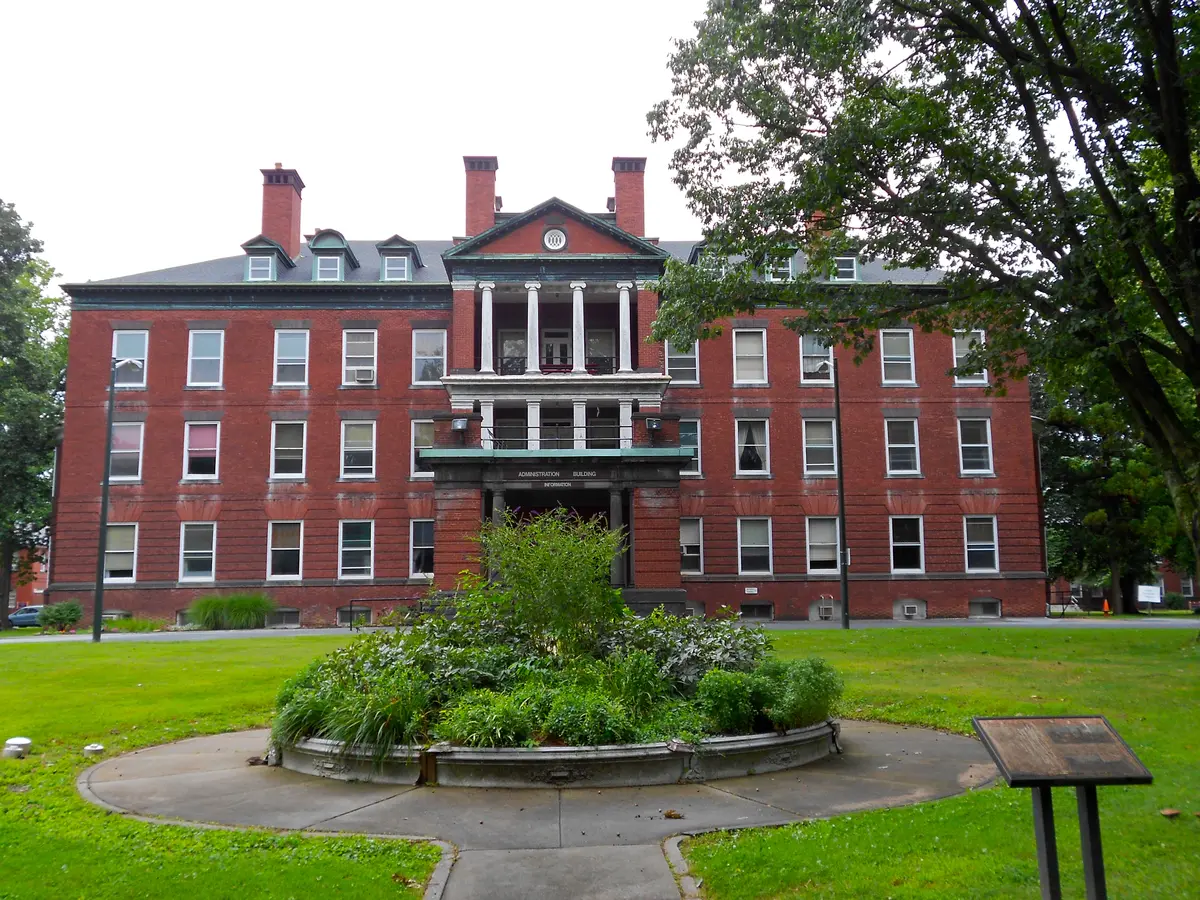
Harrisburg State Hospital opened in 1851 as the Pennsylvania State Lunatic Hospital, the state's first treatment facility for the mentally ill, to designs by John Haviland, and was rebuilt from 1893 on the cottage plan by Addison Hutton and John Dempwolf.
Where is Harrisburg State Hospital?
- Location
- Pennsylvania, United States
- Type
- Hospital / asylum
- Coordinates
- 40.283, -76.873
- Last updated
LOCATION
Why is Harrisburg State Hospital said to be haunted?
It was renamed Harrisburg State Hospital in 1921, held more than 3,000 patients by 1947 and closed on 27 January 2006. State agencies then used its buildings until they left in 2021. In August 2024 Pennsylvania's Department of General Services announced a joint laboratory complex of about $450 million on the grounds, keeping four historic buildings: the Administration Building, the Chapel, the Dix Museum and Dixmont Cottage. A fire destroyed one of the old hospital buildings on 9 December 2024, and according to the City on the Hill history site the former patient buildings were demolished in 2025 and 2026. On television, the paranormal series Ghost Nation devoted two episodes to it in February 2021, whose summaries name no witness, death or date.
What is the history of Harrisburg State Hospital?
Harrisburg State Hospital opened in 1851 as the Pennsylvania State Lunatic Hospital, and pennlive described it in 2019 as the state's first treatment facility for the mentally ill. City on the Hill, a history site kept by a local photographer who has written on the hospital, dates its establishment to 14 April 1845, after lobbying by the reformer Dorothea Dix, under the name Pennsylvania State Lunatic Hospital and Union Asylum for the Insane. A nine-member board of trustees was to appoint a superintendent, buy land and build near Harrisburg, and the name was shortened in 1848, when $50,000 was appropriated to begin construction. The architect was John Haviland; Governor William F. Johnston laid the cornerstone of the Main Building on 7 April 1849, the hospital opened on 1 October 1851, and the first patient was admitted on 13 October.
From 1893 the hospital was rebuilt on the cottage plan, to designs by the Pennsylvania architects Addison Hutton and John Dempwolf. The superintendent, Henry Orth, set a ratio of half an acre per patient, so 210 acres were bought on top of the 292 the hospital already owned, and the new hospital was designed for 1,000 patients. The new Administration Building was finished in May 1895. Patients worked on the farm and in the hospital's shops, and the site's history page credits that work with making the hospital nearly self-sufficient. On 31 May 1921 the name was changed to Harrisburg State Hospital. The patient population passed 3,000 in 1947, according to the same timeline. The National Park Service lists the Pennsylvania State Lunatic Hospital in the National Register of Historic Places under reference 86000057, with 1851, 1894 and 1935 as its significant years.
In 1972 unpaid patient labour came to an end, and the farm with it, and from the 1970s the population fell with new drugs and the return of care to the community. Governor Ed Rendell closed the hospital on 27 January 2006; WGAL reported in 2024 that the closure affected 258 residents. The Department of General Services took over the property and state agencies moved into many of its buildings. Pennlive reported in April 2019 that the state spent $5 million a year maintaining the 295-acre site and that a 2017 appraisal had valued it at around $2 million, and that Dauphin County's redevelopment authority would market it. According to City on the Hill, the last state agencies left by 1 December 2021 and the county deal expired in January 2022 with nothing built.
On 21 August 2024 the department announced a joint laboratory complex of about $450 million on the grounds, with restoration of four historic buildings: the Dix Museum, the Administration Building, the Chapel and Dixmont Cottage. On the night of Monday 9 December 2024 a fire destroyed one of the old hospital buildings; WGAL reported that the hydrants had been turned off because of leaks and that the building would have to come down. City on the Hill identifies it as the Cherrywood Building and records the demolition of the other former patient buildings between early 2025 and August 2026.
Timeline: the documented record of Harrisburg State Hospital
- 1848 The Pennsylvania State Lunatic Hospital is established with $50,000 appropriated for construction; Dorothea Dix's lobbying is the driving force behind the asylum's creation.
- October 6, 1851 The first patient is admitted to the Pennsylvania State Lunatic Hospital. The Main Building, designed by John Haviland in the Kirkbride Plan style, houses administration, staff, and 250 patients initially.
- 1921 The institution's name is changed from Pennsylvania State Lunatic Hospital to Harrisburg State Hospital. The Board of Public Charities is abolished and the Department of Public Welfare is created to administer all state hospitals.
- January 8, 1986 Harrisburg State Hospital is listed on the National Register of Historic Places (NRHP reference #86000057).
- October 7, 1987 Pennsylvania Historical and Museum Commission designates the site with a historical marker.
- January 27, 2006 Harrisburg State Hospital closes. The patient population has declined due to new medicines and deinstitutionalization.
- 2017 The appraised worth of the campus is $2 Million. The campus costs $5 Million annually to maintain as of 2019 and is up for sale to developers.
- December 2024 One building on the Harrisburg State Hospital campus is destroyed in a fire.
Is there a rational explanation for Harrisburg State Hospital?
City on the Hill lists two television series among the films and programmes about the hospital: Ghost Lab and Ghost Nation. Ghost Nation, on the Travel Channel, gave it two episodes, "Murder at the Asylum" and "Tortured Soul Asylum", first aired on 20 and 27 February 2021. The episode summary for the first, as published on TVmaze, says the team "uncovers gruesome deaths and captures solid evidence that the ghosts of the asylum are indeed restless"; neither summary names a death, a witness or a date.
Deaths at the hospital need no ghost to explain them. The site held more than 3,000 patients by 1947, according to the City on the Hill timeline, and had its own morgue from 1903; deaths over 155 years of operation are what a hospital of that size records.
The picture of a long-abandoned asylum does not fit the dates either. After the hospital closed in January 2006, the Department of General Services took over the campus and state agencies moved into its buildings; City on the Hill puts the number of state employees working there in 2017 at about 800, and dates the departure of the last agencies to 1 December 2021, months after the Ghost Nation episodes were broadcast. The summary of the first episode speaks of "the impending demolition of several buildings"; the department announced the laboratory complex in August 2024, and City on the Hill, which says the plans call for demolishing every former hospital building except four, dates the demolitions from early 2025.
The one event on the site in recent years that left a public record is the fire of 9 December 2024. WGAL reported that the hydrants had been turned off because of leaks and quoted the Harrisburg fire chief, Brian Enterline, on the cause: "All options are on the table." The cause was not established in that report.
The footsteps and sudden cold attached to the hospital in ghost lists come without names or dates. City on the Hill describes the campus after 2021 as kept by a skeleton maintenance crew, with roof leaks, some severe, and buildings open to vandals.
Can you visit Harrisburg State Hospital?
The former hospital grounds lie on Cameron Street at Arsenal Boulevard, Harrisburg, Pennsylvania 17103, about 2.2 km (1.4 miles) north-north-east of the State Capitol. Wikipedia gives the campus as 295 acres (119 ha) in Dauphin County, most of it in Susquehanna Township. The land belongs to the Commonwealth of Pennsylvania and is in the hands of its Department of General Services (DGS). In April 2019 PennLive reported a deal between the state and Dauphin County to open the site to developers.
On 21 August 2024 DGS published the final design for a joint laboratory complex of about $450 million on more than 30 acres of the grounds: a 300,000-square-foot laboratory to be shared by four state departments (Health, Agriculture, Environmental Protection, and Conservation and Natural Resources) and a separate forensic laboratory for the Pennsylvania State Police. The department's schedule has site preparation from early 2025, construction in phases from early 2026 and occupancy in late 2029. Four of the hospital buildings are to be restored as part of the project: the Administration Building, the chapel, Dixmont Cottage and the Dix Museum. DGS describes the grounds as "a dormant site since 2006", the year the hospital closed.
On the night of 9 December 2024 a vacant three-storey building on the grounds, off Beech Street, caught fire at about 22:40 and was brought under control around 02:00; by morning crews were pulling it down to reach hot spots, CBS 21 reported, with the Capitol Police among the first agencies on the scene. The DGS project pages, read on 23 September 2026, describe construction and restoration work and make no provision for public visits; the grounds are state property under construction.
The documents are public. The hospital's records are in the Pennsylvania State Archives in Record Group 23, the Department of Public Welfare, which includes an admission card file for 1885-1952. Susan M. Zacher's nomination put the hospital on the National Register of Historic Places on 8 January 1986 (reference 86000057), and the Pennsylvania Historical and Museum Commission marker followed on 7 October 1987. Thomas Industries keeps an online collection of books, films and archival material about the hospital under the title "City on the Hill".
Sources consulted
- Susan M. Zacher, «National Register of Historic Places Registration: Pennsylvania SP Pennsylvania State Lunatic Hospital» — National Archives and Records Administration, 1985 archive
- Pennsylvania Historical & Museum Commission, «PHMC Historical Markers Database» — Historical Marker Database, 2013 archive
- Matt Miller, «Former Harrisburg State Hospital will be 'the next hot development site' under deal struck by the state, Dauphin County» — pennlive, 2019 newspaper archive
- Rachael Lardani, «Fire tears through old Harrisburg State Hospital» — WGAL, 2024 newspaper archive
- Thomas Industries Inc., «City on the Hill — Harrisburg State Hospital: historia y cronología del hospital (1845-2026) en el sitio de un fotógrafo aficionado autor de un libro sobre el hospital» — hsh.thomas-industriesinc.com, 2026 web
- Wikipedia contributors, «Pennsylvania State Lunatic Hospital — Archiplanet» — archiplanet.org, 2026 web
- Pennsylvania Department of General Services, «DGS Unveils Final Joint Laboratory Plans for Former Harrisburg State Hospital Property — complejo de unos 450 millones de dólares y restauración de cuatro edificios históricos» — pa.gov (nota de prensa), 2024 web
- National Park Service, «Pennsylvania State Lunatic Hospital — registro del National Register Information System (NRIS 86000057; años significativos 1851, 1894 y 1935)» — NPGallery, 1986 archive
- TVmaze, «Ghost Nation — episode list (season 2: «Murder At The Asylum», 20 February 2021; «Tortured Soul Asylum», 27 February 2021)» — tvmaze.com, 2026 web
- TVmaze, «Ghost Nation 2x19, «Murder At The Asylum» — episode summary» — tvmaze.com, 2026 web
Reviewed by V. Serrano on 2026-08-22 · How we verify our content
💬 Field testimonies (0)
No testimonies yet. Add the first.
Add your testimony
🔒 Log in to add a testimony