👻 HAUNTED PLACE · EXP. Nº9477
ACTIVE
Morrill Hall (University of Maryland)
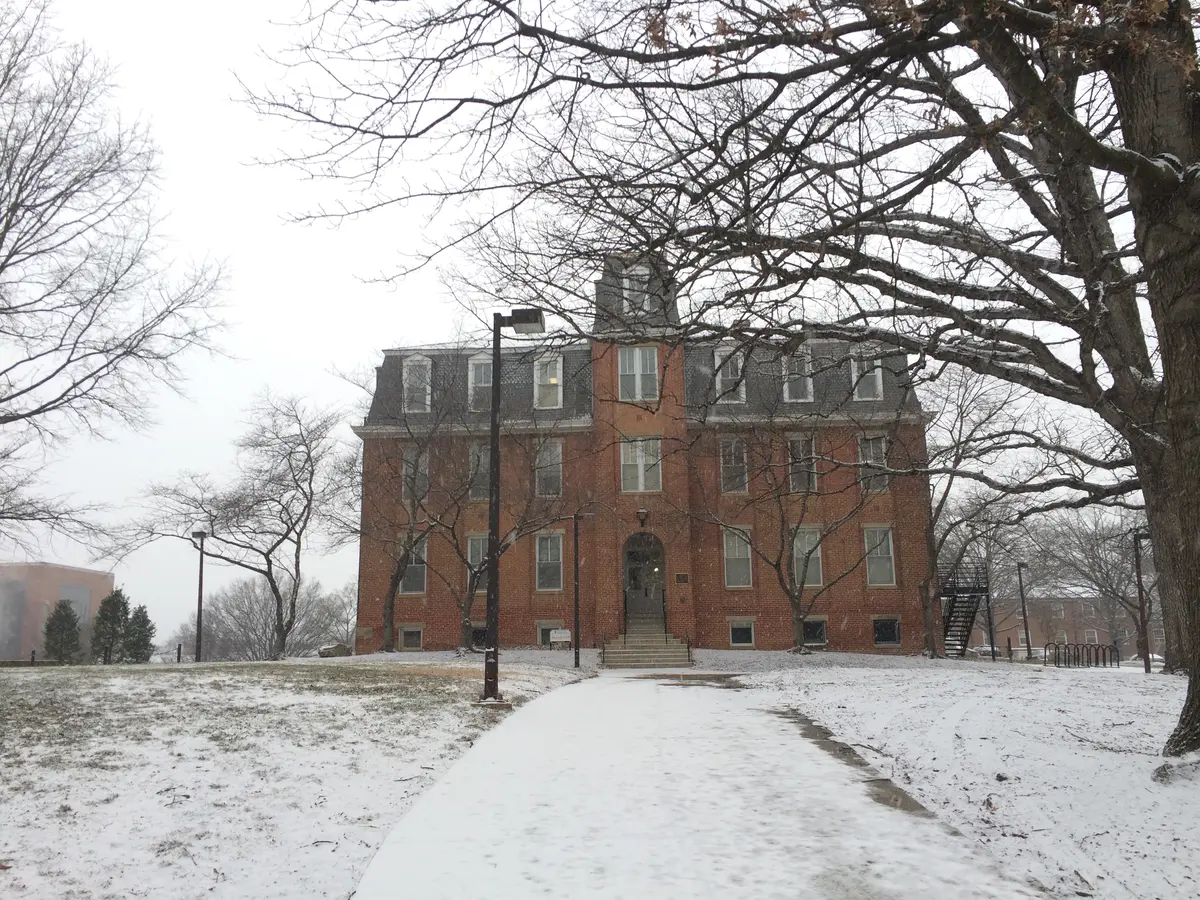
Morrill Hall went up in 1898 as Science Hall, on the knoll that the first students of the Maryland Agricultural College nicknamed the Acropolis, and it is the oldest academic building still in use at the University of Maryland.
Where is Morrill Hall (University of Maryland)?
- Location
- Maryland, United States
- Type
- School / university
- Coordinates
- 38.984, -76.944
- Last updated
LOCATION
Why is Morrill Hall (University of Maryland) said to be haunted?
On the night of 29 November 1912 a fire that began during an impromptu Thanksgiving dance destroyed the Barracks and the Administration Building along with every dormitory and most of the college's records; firemen, students and neighbours worked through the night to save the buildings that stood nearby, this one among them, and nobody was hurt or killed. What people report here is oddly precise, and most of it happens outdoors: the sound of marching feet on the old drill field, where cadets of a compulsory military programme once shouldered their rifles for hours to work off demerits, and the smell of smoke indoors where there is no fire. The university publishes the legend and its explanation on the same page — in 2005 it recorded that drilling for a new air conditioner had released fumes and ash left over from the 1912 fire — and its own archives note that nobody is known to have died here.
What is the history of Morrill Hall (University of Maryland)?
The building now called Morrill Hall stands on the knoll at the head of College Avenue, nicknamed "the Acropolis", on which the original campus was built.
Charles Benedict Calvert sold that land, 420 acres of his Riversdale plantation, to the investors of the Maryland Agricultural College by a deed dated 28 April 1858 and recorded at Upper Marlboro. On 6 October 1859 the campus was dedicated and the first thirty-four students began classes. What kept the college alive through its bankrupt years was a piece of federal legislation: Lincoln signed Justin Morrill's Land Grant Act in July 1862, and in February 1864 the Maryland legislature voted to accept the Morrill grant. The act carried a condition that shaped the ground outside this particular building for the next sixty years — military training was compulsory. The students were organised into a corps of cadets divided into companies, each with its own commander, and part of the drill field they used lay immediately outside the future Morrill Hall. That field was also where punishment was served: a cadet who collected demerits had to shoulder his rifle and march back and forth across it for hours to work them off.
The Civil War reached these grounds twice in 1864. On 24 April 1864 General Ambrose Burnside and six thousand men of the Union's Ninth Army Corps camped on the college land on their way to reinforce Grant in Virginia. On 11 July 1864, as part of Jubal Early's Confederate raid on Washington, General Bradley T. Johnson and four hundred men spent the night there, Johnson using the Rossborough Inn as his headquarters. The University Archives is explicit about what did not happen: "we have no record of soldiers dying on campus".
The building itself belongs to a later and far duller boom. The Hatch Act of 1887 brought an agricultural experiment station and $15,000 a year; between 1887 and 1892 the college budget rose roughly 500 per cent, paying for new buildings, more faculty and more students. Science Hall, which the Maryland Inventory of Historic Properties form of 2007 gives as the building's former name, went up in 1898 and cost, according to the university's own timeline, "about $24,000". It is a three-storey brick block, seven bays wide and six deep, in the Second Empire style: a straight-sided mansard roof in square-butt and fishscale slate, pedimented dormers on every elevation, and a four-storey entry tower over a double-leaf nine-light door set in a semicircular brick arch. The Maryland Inventory of Historic Properties form of 2007 records the architect as "Unknown" and, more awkwardly, notes that "a date stone on the southeast corner of the structure indicates a c. 1892 construction date", six years earlier than the 1898 of the university's own timeline. The disagreement has a plausible cause, and it is the same event that gave the building its ghost story: the college's records burned.
They burned on the night of Friday 29 November 1912. Around forty cadets had stayed on campus over the Thanksgiving weekend and had arranged an impromptu dance on the first floor of the Administration Building. At about 10:30 p.m. the Cadet Major was told that a blaze had started high in the same building, between the third and fourth floors. The cadets escorted their dates out and went back in, some carrying out documents and furniture, others throwing their possessions from the windows. The Hyattsville fire brigade fought a stiff wind until the campus water supply ran out. By morning the Barracks and the Administration Building — the two largest buildings on campus, standing where LeFrak Hall and the South Campus Dining Hall are now — were a total loss. Newspaper reports put the damage at $150,000; the university's own timeline later appraised it at $250,000. The fire destroyed every dormitory and half the classrooms and offices; most of the college records were lost too. Nobody was hurt and nobody died. According to the university archivist, the firemen worked through the night with the students and with residents of the surrounding community to save the other campus buildings nearby, Morrill Hall among them. President Richard W. Silvester, in office since 1892, resigned shortly afterwards, described by the Archives as "broken-hearted".
The surviving building is named after Justin Smith Morrill, "a Vermont politician who wrote the first Land Grant Act". It went on to house, in turn, agriculture and horticulture (c. 1912), entomology, zoology and language and literature (c. 1918), the School of Liberal Arts (c. 1919), and vegetable pathology, veterinary science, civil engineering and psychology (c. 1966). Today Building 040 is 16,277 gross square feet of general-purpose academic space shared by units of the College of Behavioral and Social Sciences: the Maryland Population Research Center, the Office of Academic Computing Services, economics, criminology and criminal justice, and hearing and speech sciences.
Timeline: the documented record of Morrill Hall (University of Maryland)
- February 1864 The Maryland legislature votes to accept the Morrill land grant, the money that keeps the bankrupt Maryland Agricultural College alive. With it comes compulsory military training, a corps of cadets and the drill field that will later lie outside Morrill Hall.
- 24 April 1864 General Ambrose Burnside and six thousand men of the Union's Ninth Army Corps camp on the college grounds on their way to reinforce Grant in Virginia.
- 11 July 1864 As part of Jubal Early's Confederate raid on Washington, General Bradley T. Johnson and four hundred men spend the night on the grounds, Johnson using the Rossborough Inn as his headquarters. The University Archives records no soldier dying on campus.
- 1898 The building is put up for about $24,000; the university's timeline calls Morrill Hall the oldest academic building still in use.
- 29 November 1912 Fire breaks out at about 10:30 p.m. during an impromptu Thanksgiving dance in the Administration Building. The Barracks and the Administration Building are destroyed with every dormitory, half the classrooms and offices and most of the college records; nobody is hurt. Firemen, students and neighbours work through the night to save the nearby buildings, Science Hall among them.
- 2002 The Maryland Ghosts and Spirits Association visits the campus and reports the presence of numerous spirits in the building. An October article in The Diamondback that same month carries a paranormal specialist's inspection of Morrill and the belief that cadavers were once dissected there.
- 28 October 2003 A University of Maryland press release lists Morrill Hall among the campus's haunted sites: smoke smelled in the vents with no source, noises late at night, human remains found by workers under a sink during a renovation — and mysterious guano in the attic.
- 11 October 2005 The university's next Halloween release gives the phenomenon its explanation: workers installing an air conditioner had called firefighters about strange odours, and it was determined that the drilling had released fumes and ashes left over from the 1912 fire.
- 2009 The university erects a marker on the wall to the right of the main door: "Built in 1898... The building survived a devastating fire in 1912 which destroyed adjacent structures. Morrill Hall remains the oldest academic building in continuous use."
- 12–13 May 2012 A four-person Maryland Paranormal Research team works Morrill Hall and the Rossborough Inn with its Carriage House, concentrating on Morrill's third floor. It publishes audio it interprets as replies and states that the results cannot prove ghosts exist.
- 3 October 2012 The University Archives publishes the legend in its own words: marching feet reported outside the building, on the old drill ground where punished cadets shouldered rifles for hours to work off demerits, plus smoke at odd times and strange odours in the basement.
- 2018 An adviser in the College of Behavioral and Social Sciences, who never locked her office, arrives one Monday to find it locked. After the Lock Shop opens it, her books are off the shelves and spread across the floor in a semicircle. It is the most recent first-hand report the Archives has published.
Is there a rational explanation for Morrill Hall (University of Maryland)?
The most useful sceptic here is the University of Maryland itself, and it did the work in public.
The signature phenomenon of Morrill Hall is the smell of smoke where there is no fire. The university's own Halloween release of October 2005 also explains it: a few years earlier, workers installing a new air conditioner had called in firefighters to check strange odours, and "it was determined that drilling had released fumes and ashes left over from the disastrous Thanksgiving fire of 1912". The explanation and the ghost story appear in the same release. The 2003 release adds the other mundane half: alongside the noises heard late at night, staff had found "mysterious guano in the building's attic".
The deaths that ghost stories normally need are missing, and the archives say so. Nobody was hurt or killed in the 1912 fire, in either the university timeline's account or the archivist's. Of the Civil War encampments of April and July 1864 the University Archives writes plainly: "Although we have no record of soldiers dying on campus, the ghost of a Confederate soldier is said to walk these grounds" — and that soldier is attached to the Rossborough Inn, which existed in 1864. Morrill Hall was built in 1898, thirty-four years after those encampments, so no soldier of either army can have died inside it.
The marching feet are reported outside, where the Archives place part of the old military drill ground: from the 1860s the Morrill Act made military training compulsory, and cadets who had collected demerits marched back and forth there for hours to work them off. The Archives illustrate the story with a photograph of cadets on that ground in 1914, with Morrill Hall behind them.
What remains is a small number of dated, specific reports and two organised investigations. The 2002 visit of the Maryland Ghosts and Spirits Association appears in the Archives' 2020 post in one sentence: the association "detected the presence of numerous spirits in this building". The Maryland Paranormal Research team that worked the third floor on 12 and 13 May 2012 characterised what it recorded as a haunting, and wrote in the same report that its audio findings "cannot prove the existence of ghosts" and "at most" are "indicative or suggestive" of paranormal events. And the campus's own culture supplies the last ingredient. Anne Turkos, the university's former archivist, who according to The Diamondback compiled the campus ghost stories in the Archives' blog and guided a campus ghost tour, put the point better than any sceptic: the value of the tales, she told the paper in 2019, is that "by telling ghost stories, it sometimes gives a bit of history".
Can you visit Morrill Hall (University of Maryland)?
Morrill Hall is Building 040 of the University of Maryland at College Park. The Facilities Management building inventory, read on 24 September 2026, gives it 16,277 gross square feet, a construction year of 1898 and a renovation in 1994. Its space is assigned to units of the College of Behavioral and Social Sciences, among them the Maryland Population Research Center, which has the largest share, and the departments of economics, criminology and criminal justice, and hearing and speech sciences. The state inventory form of 2007 places the building on a sloping site in the southern part of the campus, east of Preinkert Drive, in the area called Morrill Quadrangle, with a paved parking area and driveway behind it to the west. The same form records that the interior "was not accessible at the time of the survey".
The main front is the east elevation. The form describes a three-storey building seven bays wide and six deep, under a straight-sided mansard roof in square-butt and fishscale slate, with pedimented dormers on every side and a four-storey tower at the centre of the east front. The Historical Marker Database places the university's marker, erected in 2009, "at the main (east) entrance to Morrill Hall", on the west side of the "Grove", and a photograph of August 2009 shows it on the wall to the right of the doorway. Its text ends: "Morrill Hall remains the oldest academic building in continuous use." When the Maryland Paranormal Research team worked in the building on 12 and 13 May 2012, it thanked the university's Film Office, the Public Safety staff who "provided safety recommendations and escort services" and the University Historian for arranging the visit.
The University Archives writes that the Barracks and the Administration Building, destroyed in the fire of 29 November 1912, stood "where LeFrak Hall and the South Campus Dining Hall stand now". The same post of October 2020 describes the Rossborough Inn, built between 1804 and 1812, as the oldest building on campus and at that date occupied by Undergraduate Admissions staff, and links to the university's online ghost tour. That tour is a public ArcGIS map journal published by UMD's GIS service; its record gives a last modification on 31 October 2022, and it was still online on 24 September 2026. The nearest Metro station, College Park-University of Maryland on Calvert Road, is about 1.5 km (0.95 miles) east-south-east of the building in a straight line.
Sources consulted
- Anne Turkos, «Spooky (Terrapin) Tales» — Terrapin Tales, University of Maryland Archives, 2020 archive
- University of Maryland Archives, «Ghostly Encounters: The marching cadets at Morrill Hall» — Terrapin Tales, 2012 archive
- University of Maryland, College Park, «Haunted Maryland 2005» — University news release (via Newswise), 11 October 2005, 2005 report
- University of Maryland, College Park, «Is The University of Maryland Haunted?» — University news release (via Newswise), 28 October 2003, 2003 report
- Talia Richman and Ellie Silverman, «A haunting in College Park» — The Diamondback, 24 October 2013, 2013 newspaper archive
- C. J. Lawrence, «Fearless ideas and fearful locations: How ghost stories explain campus history» — The Diamondback, 31 October 2019, 2019 newspaper archive
- Saleh Van Erem, EHT Traceries, «Maryland Inventory of Historic Properties Form PG: 66-035-06, Morrill Hall» — Maryland Historical Trust, 2007 report
- University of Maryland (inscription), «Morrill Hall marker, erected 2009 by the University of Maryland» — Historical Marker Database, marker 21915, 2009 archive
- University of Maryland, «University of Maryland Timeline» — urhome.umd.edu, archived 28 June 2010, 2010 archive
- University of Maryland Archives, «Fire! Fire! M.A.C. in Flames» — Terrapin Tales, quoting the Reveille yearbook of 1913, 2016 archive
- Maryland Paranormal Research, «University of Maryland Ghost Expedition (2012), 12-13 May 2012» — Maryland Paranormal Research, 2012 report
- University of Maryland Facilities Management, «Building Inventory: 040 - Morrill Hall» — UMD Facilities Management building inventory, 2026 report
- EHT Traceries, «University of Maryland, College Park (PG: 66-035), community survey» — Maryland-National Capital Park and Planning Commission, 2007 report
- University of Maryland GIS (UMD_GIS), «UMD Ghost Tour — online map journal of the campus ghost stories, linked from the University Archives (last modified 31 October 2022)» — ArcGIS Online, item f2909aeeafe241579abdabfaa14a3287, 2022 web
Reviewed by V. Serrano on 2026-08-18 · How we verify our content
💬 Field testimonies (0)
No testimonies yet. Add the first.
Add your testimony
🔒 Log in to add a testimony