👻 HAUNTED PLACE · EXP. Nº9478
ACTIVE
Tennessee State Prison
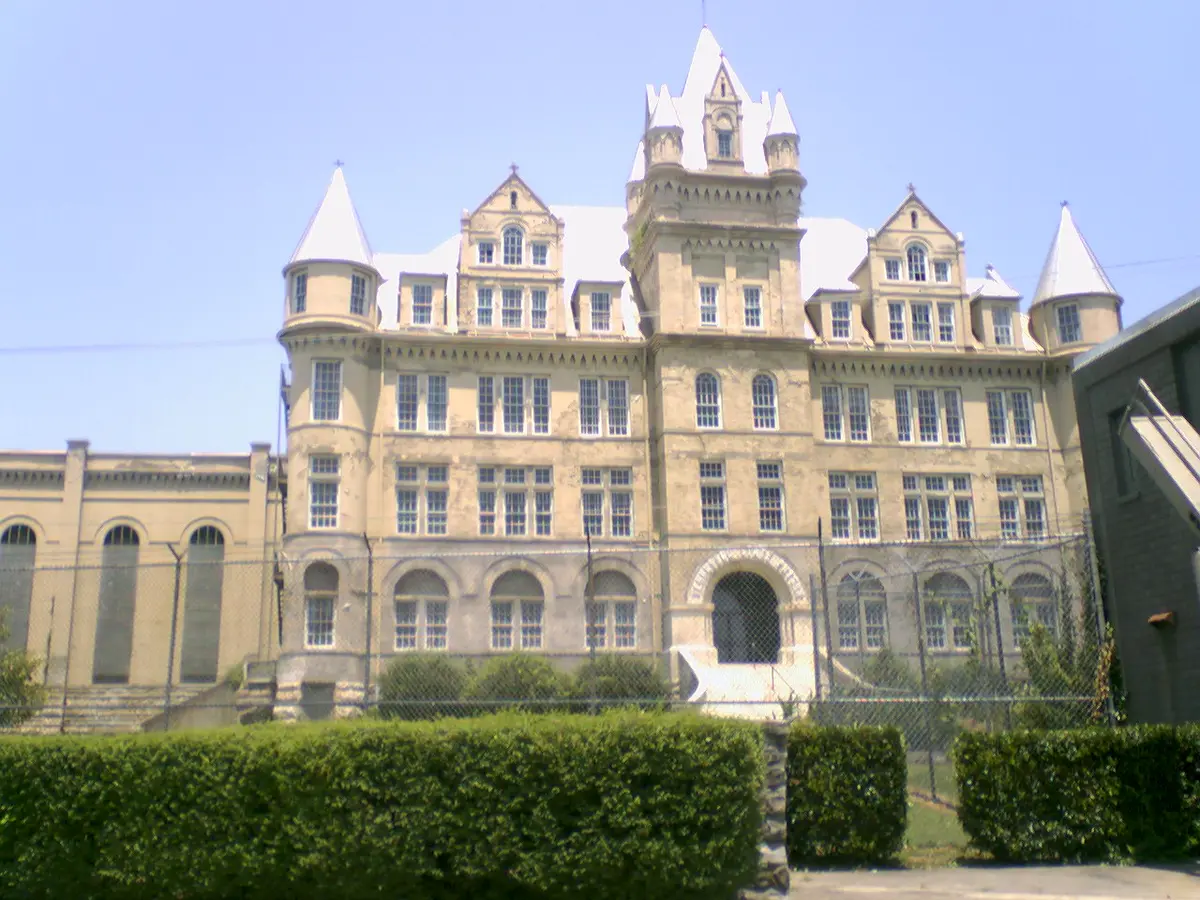
Tennessee State Prison opened at Cockrill Bend, west of Nashville, on 12 February 1898.
Where is Tennessee State Prison?
- Location
- Tennessee, United States
- Type
- Prison
- Coordinates
- 36.177, -86.865
- Last updated
LOCATION
Why is Tennessee State Prison said to be haunted?
It had 800 cells, each built for one man, and it admitted 1,403 prisoners on its first day. The overcrowding never went away: in 1982 a federal judge found men living two to a cage with about 23 square feet each, and it was that ruling, not decay, that finally emptied the building. It closed in June 1992, and a 1993 injunction bars the state from ever housing prisoners here again. Between 1916 and 1960 every execution in Tennessee, 125 of them, was carried out inside these walls. A widely repeated story has an inmate electrocuted here in 1913 during a riot. It is impossible: Tennessee had no death penalty at all between 1913 and 1915, and the electric chair was not used until July 1916. The ghost reports are just as thin. We found no named guard, officer, reporter or film crew member behind any of them, only a 2006 television series and the listicles that copied it. The prison is state property, storm-damaged since 2020, and closed to the public.
What is the history of Tennessee State Prison?
The Tennessee State Prison exists because miners went to war over convicts.
After the Civil War the state rented its prisoners out. In 1865 the legislature hired three directors to set up a convict leasing system to cover the cost of running the penitentiary, and by 1870 Tennessee convicts were leased to the Tennessee Coal, Iron and Railroad Company — the first arrangement of its kind in the country, according to the state's own archivists. The racial arithmetic of that business is documented and blunt: before the war, African American prisoners rarely exceeded five per cent of the penitentiary population; in the first year after it they were fifty-two per cent, and by 1869 they were sixty-two per cent of 551 inmates.
The men who broke the system were not reformers but coal miners. On 14 July 1891 some three hundred of them attacked the stockades at Briceville, freed the leased convicts and put them on trains to Knoxville. Governor John P. Buchanan sent the militia; the raids continued through 1892 at Tracy City, Inman and Oliver Springs, where the outnumbered militia surrendered and the stockade was burned. Buchanan lost his party's nomination and the governorship. His successor, Chief Justice Peter Turney, campaigned on ending the leases, and in 1893 the legislature passed the Penitentiary Act: abolition of convict leasing when the existing contracts expired, and two new prisons.
One of them opened at Cockrill Bend, on twelve hundred acres west of Nashville, on 12 February 1898. It had eight hundred cells, each designed for one man. That same day it admitted 1,403 prisoners. Overcrowding was not something that crept up on this building; it was there before the first night ended, and it never left.
The old 1831 penitentiary off Church Street was demolished that June and its stone reused in the new outbuildings, which housed a foundry, hosiery mills, a tannery, a shoe shop, a saddlery, soap and tobacco works and a baby-carriage plant, with a 1,200-acre farm, dairy, cannery and slaughterhouse alongside. The American Prison Association met in Nashville shortly after the opening and was given a tour; among the visitors was Theodore Roosevelt, who declared the place would put "Tennessee at the head of the nation in modern prison construction."
It is best remembered for executions, and here the record has to be read carefully. A 1910 act forced hangings behind walls instead of in the street. In 1913 the legislature replaced hanging with electrocution — and then Tennessee went two full years with no death penalty at all. The chair was installed at the Main Prison in 1916, and used for the first time on 13 July of that year on Julius Morgan, a young Black man convicted of rape. Between 1916 and 1960 every execution in Tennessee, 125 of them, took place inside this prison; the warden kept the names in a ledger. The last was William Tines, on 7 November 1960.
The end came from a federal courtroom. In Grubbs v. Bradley, decided on 11 August 1982, Chief Judge L. Clure Morton found that the prison, built for a maximum of 1,600, was regularly holding more than 1,900 men, and wrote that inmates were "double celled in tiny cages like so many animals in a zoo, with an average of about 23 square feet in which each man lives, sleeps, performs his bodily functions." Riverbend Maximum Security Institution opened nearby in 1989 to replace it; the old prison closed for good in June 1992. On 14 May 1993 Judge Thomas A. Higgins entered a permanent injunction barring the state from ever housing inmates there again, while expressly allowing the site to be used for other purposes. In the same opinion he recalled that a former warden had once boasted publicly that all it took to run a Tennessee penitentiary was "a shotgun, a strap and a checkbook."
Timeline: the documented record of Tennessee State Prison
- 1870 Tennessee leases its convicts to the Tennessee Coal, Iron and Railroad Company. The state archives describe it as the first convict leasing programme in the country; by 1869 African Americans already made up 62 per cent of the 551 men held in the penitentiary.
- 14 July 1891 Three hundred miners attack the convict stockades at Briceville and put the leased prisoners on trains to Knoxville, opening the Coal Creek War. Governor John P. Buchanan sends the militia; the raids run on into 1892.
- 1893 After Peter Turney wins the governorship promising to end the leases, the legislature passes the Penitentiary Act: convict leasing is to be abolished when existing contracts expire, and two new prisons are to be built.
- 12 February 1898 The new prison opens at Cockrill Bend with 800 single-occupancy cells and admits 1,403 prisoners on its first day, creating immediate overcrowding that lasts the rest of the century.
- Later in 1898 The American Prison Association meets in Nashville and tours the new penitentiary. Among the visitors is Theodore Roosevelt, who declares it will put "Tennessee at the head of the nation in modern prison construction."
- 4 August 1902 Sixteen inmates dynamite a hole in the outer wall and escape. Ed Carney, serving seventeen years for robbery, is shot dead by guards. Nashville editorials condemn officials for letting it happen within sight of the Capitol.
- 1913 The legislature replaces hanging with electrocution as part of a wider reform that also creates parole. Tennessee then goes two full years, 1913 to 1915, with no death penalty at all — which is why no one could have been electrocuted here in 1913.
- 13 July 1916 The electric chair, installed at the Main Prison that year, is used for the first time on Julius Morgan. A Tennessee weekly reports it days later under the headline "Electric Chair Used for First Time." All 125 executions carried out in Tennessee between 1916 and 1960 take place in this prison.
- 7 November 1960 William Tines is executed, the 125th and last person put to death in Tennessee before the 1972 Supreme Court ruling. The chair falls silent for 47 years.
- 11 August 1982 In Grubbs v. Bradley, Chief Judge L. Clure Morton finds the prison — built for 1,600, holding over 1,900 — unconstitutionally overcrowded, with inmates "double celled in tiny cages like so many animals in a zoo" in about 23 square feet each.
- June 1992 The prison closes for good, three years after Riverbend Maximum Security Institution opened to replace it. On 14 May 1993 Judge Thomas A. Higgins enters a permanent injunction barring the state from ever housing inmates there again, while allowing other uses of the site.
- 1999 The Green Mile reaches cinemas. Contrary to the legend, its death row was a set: director Frank Darabont said in the production notes that no interior in the film, bar the warden's office, was anything other than built from scratch.
- 3 March 2020 An EF-3 tornado that begins in western Davidson County strikes the abandoned prison before crossing Nashville. A forty-yard stretch of the eighteen-inch perimeter wall comes down and the old records building is destroyed; correction commissioner Tony Parker urges people to stay away because the structures are unsafe.
Is there a rational explanation for Tennessee State Prison?
Start with the claim that circulates most: that an inmate named James Sarver was electrocuted here in 1913 during a prison riot. It cannot be true, and the reason is a matter of public record.
1913 is the year the Tennessee legislature swapped hanging for electrocution — and, on the department of correction's own account, the state then had no death penalty at all between 1913 and 1915. The chair was not installed at the prison until 1916, and its first use was on 13 July 1916. A Tennessee weekly reported it plainly that month: "The electric chair at the state prison was used for the first time July 13, when Julius Morgan, a negro, convicted of criminal assault, committed near Dyersburg, was electrocuted." No one could have been electrocuted in Tennessee in 1913, in a riot or otherwise. Nor does any James Sarver appear in the state's execution ledger, in its memorial to staff killed on duty, or in searchable Tennessee newspapers of the period. The name looks invented; the date looks like a statute year mistaken for an execution year.
The ghost stories are on firmer-sounding but no better ground. We could not find a single named witness — no guard, no officer, no Nashville newspaper account, no interview with a crew member — attached to any specific incident inside this building. What we did find is a broadcast lineage: in 2006 VH1's Celebrity Paranormal Project filmed two episodes here and, as the show's convention required, did not name it, calling it "The Walls Maximum Security Prison." Nearly everything repeated since about voices on death row traces back to that kind of television and to dark-tourism listicles rather than to anyone who worked here.
The filming detail cuts the other way too. The death row that most people picture from The Green Mile was not this prison's. Director Frank Darabont was explicit in the production notes: "There isn't a single interior in this movie, with the minor exception of the warden's office, that wasn't designed and built from scratch." Ernest Goes to Jail did the same — a production designer built two tiers of cells and an electrocution room inside a Nashville warehouse, and only three days of shooting actually happened at the penitentiary. Crews spent far less time inside these galleries than the legend assumes.
As for the noises: since March 2020 this has been a storm-damaged stone shell with a hole in its perimeter wall, no glazing, no power and pigeons in the roof. Buildings like that creak, boom and echo. And the site does not need ghosts to be disturbing. Twenty-three square feet per man, 125 electrocutions, a leasing system that filled the cells along colour lines — all of it is documented, and all of it is worse than anything a television crew has claimed to hear here.
Can you visit Tennessee State Prison?
The prison stands at 6404 Centennial Boulevard, Nashville, Tennessee 37209, in the Cockrill Bend loop of the Cumberland River about six miles west of downtown. It is state property and has been shut since June 1992. The 1993 federal decree in Grubbs v. Bradley left it as a building the state may put to other uses but may never again hold prisoners in. There is no ticket office and no public tour of any kind.
The Department of Correction does run a tour programme, and on 9 September 2026 its published terms covered working prisons only. They take applications from academic and non-profit groups and from government agencies; they require a request no less than one month in advance; participants must be 18 or over and carry a valid school or state issued ID; students must be accompanied by chaperones. Approval is case by case; group size may be limited and a tour is "subject to cancellation at the discretion of the warden". Requests go to an individual prison from the department's list of operating facilities.
Riverbend Maximum Security Institution, an operating maximum security prison, sits a couple of miles away on the same Cockrill Bend road, so the ground here is monitored state land. The March 2020 tornado brought down a forty-yard section of the eighteen-inch perimeter wall and destroyed the building holding the old records. It filled the courtyard with brick and overturned vehicles outside. Entering is criminal trespass under Tennessee law, on land adjoining an active correctional facility.
The Gothic gatehouse and its towers can be seen and photographed from Centennial Boulevard, which is a public road. The exteriors also survive on film in Ernest Goes to Jail (1990) and The Green Mile (1999). The prison's own paperwork is at the Tennessee State Library and Archives in Nashville as Record Group 25, covering 1831 to 1992: convict registers, letter books, board minutes and payrolls; most of it is microfilmed and open to researchers apart from the employee files.
Sources consulted
- David R. Sowell, «Prison Records, State of Tennessee, 1831-1992: Record Group 25» — Tennessee State Library and Archives, 2005 archive
- Chief Judge L. Clure Morton, «Grubbs v. Bradley, 552 F. Supp. 1052 (M.D. Tenn. 1982)» — United States District Court, Middle District of Tennessee, 1982 report
- Tennessee Department of Correction, «Death Penalty in Tennessee / Executions» — Official state records, 2026 report
- Unsigned, «Negro Electrocuted: Electric Chair Used for First Time When Julius Morgan Dies» — The Fayette Falcon (Somerville, Tenn.), 21 July 1916, p. 2, 1916 newspaper archive
- James B. Jones, Jr., «Convict Lease Wars» — Tennessee Encyclopedia of History and Culture, 2017 book
- Judge Thomas A. Higgins, «Grubbs v. Bradley, 821 F. Supp. 496 (M.D. Tenn. 1993)» — United States District Court, Middle District of Tennessee, 1993 report
- Travis Fedschun, «Nashville tornado struck Old Tennessee State Prison, where 'The Green Mile,' 'Walk the Line' were filmed» — Fox News, 2020 newspaper archive
- National Weather Service, Nashville, «March 3, 2020 Tornadoes and Severe Weather (storm survey)» — NOAA / National Weather Service, 2020 report
- American Film Institute, «Ernest Goes to Jail (1990) — production and location notes» — AFI Catalog of Feature Films, 1990 archive
- Warner Bros. / CinemaReview, «The Green Mile — About the Production (production notes)» — Studio production notes, archived, 1999 archive
- Frank Lee and Robert Rogers, «Tennessee State Prison» — Tennessee Encyclopedia of History and Culture, 2017 book
Reviewed by V. Serrano on 2026-08-11 · How we verify our content
💬 Field testimonies (0)
No testimonies yet. Add the first.
Add your testimony
🔒 Log in to add a testimony