👻 HAUNTED PLACE · EXP. Nº9478
ACTIVE
The Grove (Stilley-Young House)
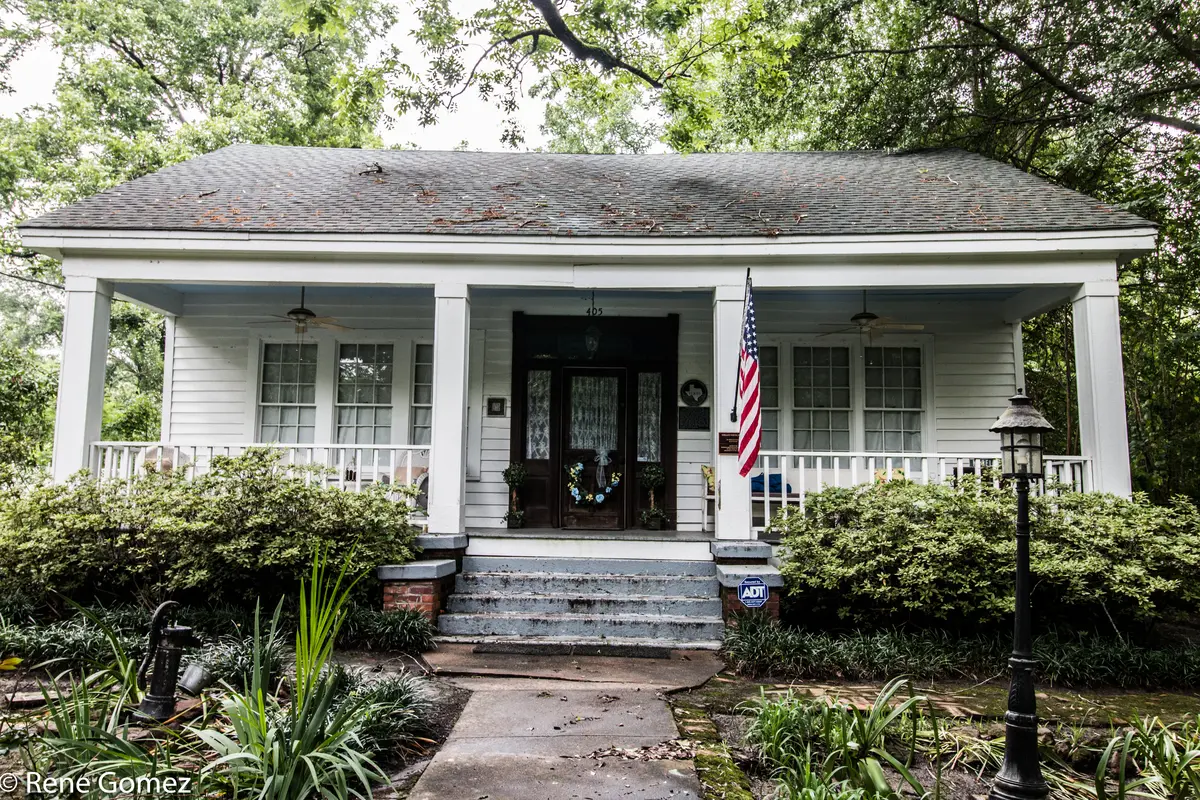
A one-storey Greek Revival house of 1861 at 405 Moseley Street in Jefferson, Texas, listed on the National Register of Historic Places as the Stilley-Young House and marked as a Recorded Texas Historic Landmark.
Where is The Grove (Stilley-Young House)?
- Location
- Texas, United States
- Type
- House / mansion
- Coordinates
- 32.756, -94.351
- Last updated
LOCATION
Why is The Grove (Stilley-Young House) said to be haunted?
Neither designation is for its ghosts: the Register lists it under Architecture and Ethnic Heritage/Black, and the state marker is mostly about Charlie Young, the barber born into slavery who bought the house with his wife Daphne in 1885 and whose family kept it for ninety-eight years. The town around it is the reason the house survives. Jefferson became an inland port by accident, when a vast log jam on the Red River raised the water; when the jam was cleared in 1873 and the railway bypassed the town, the boom stopped dead and the nineteenth century stayed standing. Today the house is a private home whose owners, the authors Mitchel and Tami Whitington, bought it in March 2002 and run ten-dollar guided tours, publish books about it and send out a monthly newsletter of ghostly happenings. They report a Lady in White, a figure in the garden and objects that move. It is often called the most haunted house in Texas, a phrase the owners' tour page quotes from GMC, The Magazine, in autumn 2004.
What is the history of The Grove (Stilley-Young House)?
The Grove is a one-storey wood-frame house at 405 Moseley Street, in the Alley Addition of Jefferson, Marion County, Texas. Its formal name on the National Register of Historic Places is the Stilley-Young House, and the two halves of that name carry the whole story: a cotton broker who built it, and an African American family who kept it for ninety-eight years.
Why a town this small has so many intact nineteenth-century houses goes back to a log jam. For centuries the Red River was blocked by the Great Raft, a tangle of driftwood the National Register file describes as over a hundred miles long and dense enough to ride a horse across. It backed water up into the bayous and lakes of north-east Texas and turned Jefferson, on Big Cypress Bayou above Caddo Lake, into an ocean port by accident: a steamboat could run from New Orleans to Shreveport, cross Caddo Lake and tie up at Jefferson's riverfront. By 1870 Jefferson had 4,180 people and was the sixth largest city in Texas; it peaked at about 7,297 in 1872, shipping more than 75,000 bales of cotton a year.
It was in that boom that the house went up. Washington Frank Stilley, born in Louisiana on 7 February 1835, was a cotton broker who worked the river between Louisiana and the port of Jefferson; the Jefferson Jimplecute carried advertisements for his business in the 1860s. On 21 June 1860 he married Minerva Fox, daughter of a cotton planter near Marshall who shipped his crop through Jefferson; the Marion County marriage records name the Rev. Sol O'Dell as officiant. Her father paid for the house and, according to the National Register nomination, put it in Minerva's name. It was finished in 1861 — a date fixed not by a deed but by the newspaper found packed into the parlour walls as insulation, dated 1861. It had five rooms, front and rear galleries and a detached kitchen out the back, in a plain Greek Revival that the nomination, writing of cotton merchants with roots in Louisiana, calls "undoubtedly a sign of success".
The name is older than any of its famous owners. A bird's-eye-view map of Jefferson drawn by H. Brosius in 1872 shows the house standing in a stand of native pecan trees, and neighbours took to calling it "Mr Stilley's house in the grove", then "the Rock's house in the grove", then simply The Grove. The Colonel Daniel and Lucile Grove who owned it from 1983 are, as the nomination itself notes, a coincidence.
Jefferson's luck ran the other way in 1873. Henry Miller Shreve's crews had cleared the original Great Raft by 15 February 1839, but a second raft formed upstream, and its removal in 1873 dropped water levels across the region and made Jefferson unreachable by the big steamers. The same year the Texas and Pacific Railway was completed on a line that bypassed the town. By 1885 the population had fallen to about 3,500. Frank Stilley's brokerage went under; Minerva died in 1880 and was buried in Oakwood Cemetery, and Frank sold up and moved west. The next owner, D. C. Rock, was a bridge builder — a trade the falling rivers had created and then destroyed — and by 1885 he too was gone.
On 6 March 1885 Charles and Daphne Young bought the house. Both had been born into slavery. Charlie Young was born in 1858 on a plantation near Clarksville, Texas; after emancipation he moved to Jefferson with his mother, began shining shoes in a barbershop at eight, was apprenticed by its owner Joe LePara and given his own chair at fourteen. He opened on Polk Street in 1890 and moved to Austin Street in 1898, and he became the town's leading barber, cutting the hair of Jefferson's white elite and charging a dollar when the going rate was twenty-five cents. His shop was lined with personalised shaving mugs, each client's name in gold letters. He wore a Prince Albert coat, a starched white shirt and patent leather shoes; a customer recalling him in the Jimplecute in 1983 wrote that "Charlie looked more like an ambassador from Nigeria than like a barber in a small East Texas town". He played clarinet in Hamilton Walker's band, which the region hired for weddings and galas, and he was a trustee of Cedar Grove, Jefferson's African American cemetery. He died on 31 December 1938; his obituary ran on the front page of the Jimplecute.
Daphne Finch Young, born in Mississippi in 1864, made the garden. The National Register surveyors could still trace her beds of day lilies and tiger lilies in 2005, laid out along brick paths in an English style. When she died in 1955 her funeral was held on the front porch so that she could be near her garden one last time. Their daughters were teachers; the family held the house until 1983, and a scholarship at Jefferson High School was endowed in the name of the youngest, Mable.
After the Youngs the house passed to the Groves, who never moved in; the Colonel fell ill and his widow sold. The chef Patrick Hopkins bought it in 1991 and ran it as a restaurant called The Grove until 1998, catering to a tourist trade that by 1991 was Jefferson's leading industry. The house then stood empty for four years. Mitchel and Tami Whitington bought it in March 2002 as their home. Mitchel Whitington, an author of books on haunted Texas, prepared the National Register nomination himself with help from the Texas Historical Commission; the house was listed on 28 September 2005 and given a Recorded Texas Historic Landmark marker in 2006. Neither designation is for its ghosts. The Register lists it under Architecture and under Ethnic Heritage/Black, and the state marker, catalogued under "African American topics", spends most of its text on Charlie Young and his gold-lettered shaving mugs.
Timeline: the documented record of The Grove (Stilley-Young House)
- 15 February 1839 Henry Miller Shreve's crews pull away the last of the original Great Raft on the Red River. The log jam had backed water into the bayous of north-east Texas and made Jefferson reachable by steamboat; a second raft soon forms upstream.
- 21 June 1860 Cotton broker Washington Frank Stilley marries Minerva Fox, daughter of a planter near Marshall, the Rev. Sol O'Dell officiating according to Marion County marriage records. Her father finances a house for the couple and puts it in her name.
- 1861 The house is completed with five rooms, front and rear galleries and a detached kitchen. The date rests on newspaper dated 1861 found packed into the parlour walls as insulation.
- October 1868 The Stockade Case: a mob of seventy to a hundred hooded men shoots Republican delegate George W. Smith inside the Jefferson jail. Two of the four Black men held with him, Lewis Grant and Richard Stewart, are killed; two escape. Ghost accounts later place the killings on Moseley Street, which the record does not support.
- 1872 H. Brosius draws a bird's-eye-view map of Jefferson showing the house surrounded by native pecan trees. Neighbours call it "Mr Stilley's house in the grove", and the name sticks. The town peaks at about 7,297 people the same year.
- 1873 The second Red River raft is removed and the Texas and Pacific Railway is completed on a line that bypasses Jefferson. Water levels fall, the steamers stop coming, and by 1885 the town's population is down to about 3,500 — the collapse that froze its nineteenth-century streets in place.
- 6 March 1885 Charles and Daphne Young, both born into slavery, buy the house. Charlie Young becomes Jefferson's leading barber, charging a dollar when the going rate is twenty-five cents; Daphne lays out the English-style garden whose lily beds survive. The family will hold the house for ninety-eight years.
- 31 December 1938 Charlie Young dies. His obituary runs on the front page of the Jefferson Jimplecute under the headline "Charlie Young, Local Colored Barber Who Shaved Jefferson's Citizens for Half Century, Is Dead". Daphne Young dies in 1955; her funeral is held on the front porch so she can be near her garden.
- 1991 Chef Patrick Hopkins buys the house and opens it as a restaurant called The Grove, which runs until 1998. The nomination gives the same year for tourism becoming Jefferson's leading industry.
- March 2002 Mitchel and Tami Whitington buy the house as their home. Mitchel, an author of books on haunted Texas, will write its National Register nomination himself; the couple open the house to paying guided tours and publish a monthly newsletter of ghostly happenings.
- 28 September 2005 The Stilley-Young House is listed on the National Register of Historic Places (ref. 05001105) under Architecture and Ethnic Heritage/Black. The nomination, prepared by the owner on 1 March 2005, does not mention ghosts.
- 2006 The Texas Historical Commission awards marker 13675, a Recorded Texas Historic Landmark. Catalogued under African American topics, its text is largely about Charlie Young, his Prince Albert suit and the gold-lettered shaving mugs of his customers.
- 25 April 2009 The English Wikipedia article on The Grove is created by a single editor whose first sentence declares the house "the most haunted place in Texas", with no citation.
Is there a rational explanation for The Grove (Stilley-Young House)?
The house is a business. A one-hour guided tour costs ten dollars, the owners publish books about it and sell them from an online shop, and a free monthly newsletter carries the latest happenings. The ghost stories on the house's own website are the owners' accounts and their guests', published by the people who sell the tour.
The superlative "the most haunted house in Texas" travels as a quotation, and the owners' own website is more careful than its reputation: the front page says The Grove "has been said to be one of the most haunted locations in the Lone Star State", and the tour page calls it "the most haunted house in Jefferson". The absolute version is quoted on their tour page from GMC, The Magazine, autumn 2004, and their front page cites a 2014 ViralNova listicle that picked one haunted place per state. The English Wikipedia article has said "the most haunted place in Texas" since it was created on 25 April 2009, in the very first sentence typed by a single editor, with no citation.
The historical hook does not hold either. Ghost accounts tie The Grove to the Stockade Case, the October 1868 murder of the Republican delegate George W. Smith and his Black companions. The version in ghost books has the mob taking the men out and killing them "along Moseley Street", the street of the house. The Handbook of Texas entry by Max S. Lale says Smith was shot inside the jail by seventy to a hundred hooded men, that two of the four Black prisoners were killed — Lewis Grant and Richard Stewart — and that two escaped. The house's own National Register nomination agrees the four were taken into the woods. What links the house to the case is a map: "Plan of the City of Jefferson, Texas, Prepared For Use of the Military Commission", drawn by Lieutenant S. Graham on 1 May 1869, on which the property is annotated "Mr. Stilley's Home". The nomination describes it as "a map showing all of the concerned properties" in the case.
Smaller checks fail in the same direction. The oldest piece of ghost evidence offered is that T. C. Burke bought the house in 1882, moved his family in and moved straight out; the owners' website gives his explanation in two different wordings on two different pages — "We can't live there…" on one, "They couldn't live in that house!" on the other — and no source at all. Several published accounts describe wails from upstairs, a staircase and an actress coming down the stairs, in a building the National Register describes as one storey. And the tragic figure of the ghost tour, "Miss Louise", the daughter who supposedly spent her whole life in the house calling the police about prowlers, is hard to reconcile with the nomination Whitington himself wrote, which says Louise married a Dr T. E. Speed and had a daughter in 1910, and that it was her sister Mable, who never married, who lived in the house until her death in 1983.
The recorded evidence offered is electronic voice phenomena: the owners' EVP page posts recordings, one of them captured in front of the house by the Unknown Paranormal investigation group during the Historic Jefferson Ghost Walk, and the voice saying "I miss my family", quoted from Texas Monthly on the tour page, came from a tape recorder a woman held out during a tour. An EVP is a faint, ambiguous recording assigned a meaning after the fact, which is the textbook condition for hearing words in noise. The timing points the same way: the accounts on the owners' ghost page that come with a witness and a moment are recent: Mrs. Grove, who "reportedly" woke to "a black swirling mass" while the Groves owned the house, which they bought in 1983, and a lady in white seen in the hallway while Patrick Hopkins was getting his restaurant ready to open, after buying the house in 1991, the year the nomination gives for tourism becoming Jefferson's leading industry. The older stories on the same page, T. C. Burke leaving in 1882 and Louise Young telling her friends about the "haints", come without a source.
Can you visit The Grove (Stilley-Young House)?
The Grove is a private house at 405 Moseley Street, Jefferson, Texas 75657. It stands on the west side of Line Street a few blocks from downtown. Its National Register nomination of 2005, reference 05001105, places it "just outside the boundaries of Jefferson's downtown historic district (NR 1971)" on a half-acre lot of native pecan trees, the oldest of them then well over 130 years old. The house also carries Recorded Texas Historic Landmark marker 13675.
The owners run an hour-long guided tour of the house. Their website on 9 September 2026 gave the price as $10 a person and the booking number as 903.665.8018, and stated that "advance reservations are required for all tours". The times posted that day were Saturday at 2pm and Sunday at 11am, under a note that "there are no weekday tours at this time" and that times occasionally vary with other events in town.
Three house rules are published on the same page: no children under ten years of age; no pets except trained certified service dogs; no smoking, vaping or tobacco products anywhere on the premises. Visitors are asked to park on the street directly in front of The Grove rather than in front of the neighbours' houses.
The front door is up a flight of steps. The National Register description records "a central wood stair framed by brick piers" leading to an integral porch of four box columns. The nomination advertises no ramp or lift anywhere on the property.
Two documents behind this house are held a few streets away at the Jefferson Historical Society and Museum: the 1872 bird's-eye view of the city drawn by the mapmaker H. Brosius, which shows the house among its pecans; and the plan drawn by Lieutenant S. Graham on 1 May 1869 for the Stockade Case. Cedar Grove, the African American cemetery deeded by Daniel Alley, holds the Young family plot; Charlie Young was one of its trustees.
Sources consulted
- Mitchel Whitington, with Hannah Vaughan (Texas Historical Commission), «National Register of Historic Places Registration Form: Stilley-Young House, Jefferson, Marion County, Texas (ref. 05001105)» — United States Department of the Interior, National Park Service, 2005 report
- Texas Historical Commission, «Stilley-Young House, Recorded Texas Historic Landmark marker 13675 (Atlas no. 5507013675)» — Texas Historic Sites Atlas, 2006 archive
- Max S. Lale, «Stockade Case» — Handbook of Texas Online, Texas State Historical Association, 1996 academic
- Texas State Historical Association, «Jefferson, TX (Marion County)» — Handbook of Texas Online, 1952 academic
- Mitchel and Tami Whitington, «The Grove — Jefferson, Texas: official site (tour, ghosts and media pages)» — thegrove-jefferson.com, 2026 web
- Edith S. McCall, «The Attack on the Great Raft» — American Heritage of Invention & Technology, 1988 newspaper archive
- English Wikipedia contributors, «The Grove (Jefferson, Texas): page creation and revision history» — Wikipedia, 2009 archive
- Victoria Reitano, «Haunted Historic Houses: The Grove (slide 4 of 14)» — This Old House online, 2008 web
Reviewed by V. Serrano on 2026-08-11 · How we verify our content
💬 Field testimonies (0)
No testimonies yet. Add the first.
Add your testimony
🔒 Log in to add a testimony