👻 HAUNTED PLACE · EXP. Nº9478
ACTIVE
Tokeland Hotel
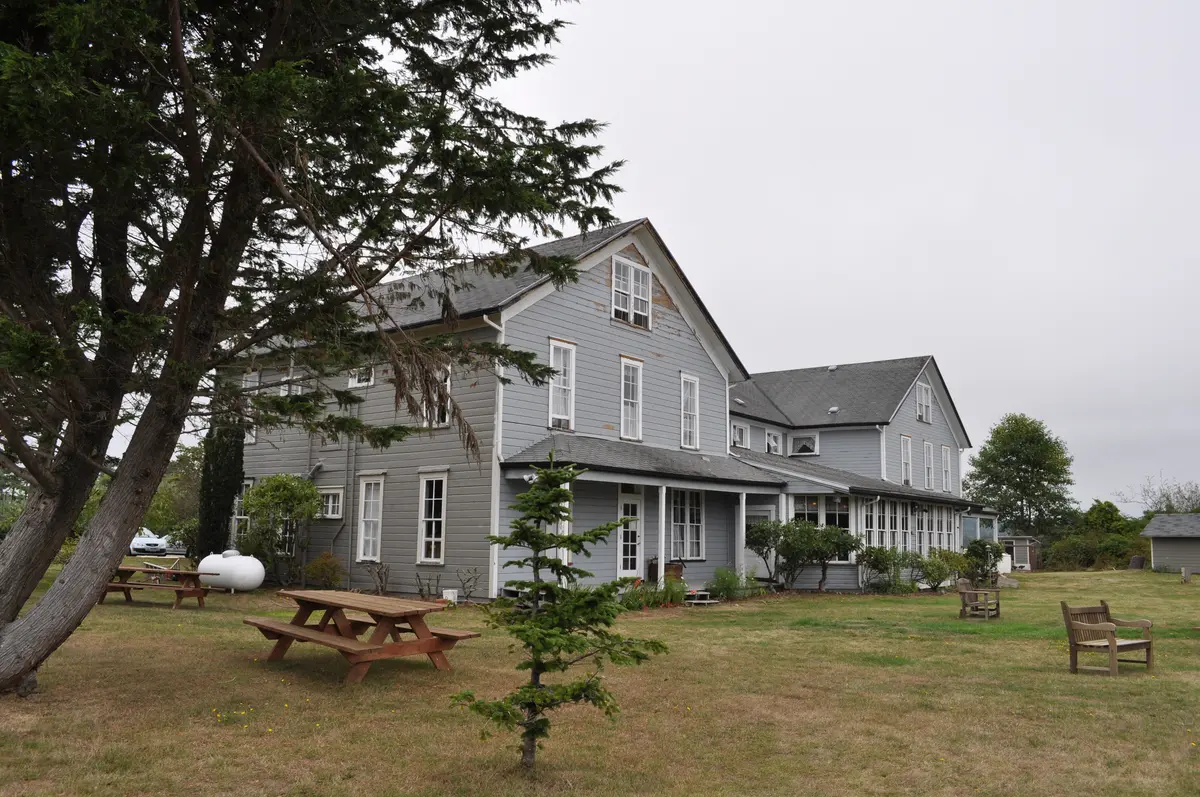
The oldest hotel in Washington State, as its owners call it, began in 1885 as a farmhouse on a peninsula between the Pacific and Willapa Bay, and only opened to travellers as the Kindred Inn in 1899.
Where is Tokeland Hotel?
- Location
- Washington, United States
- Type
- Hotel / inn
- Coordinates
- 46.708, -123.985
- Last updated
LOCATION
Why is Tokeland Hotel said to be haunted?
Its ghost story is famous and its documentation is nil. Charley, in the version the hotel has told since at least 1993, was a Chinese man smuggled ashore during the Exclusion years and hidden in the hollow behind the parlour fireplace; in the version its manager told a radio reporter in 2019, he was an escaped indentured servant who died there of carbon monoxide poisoning when a fire was lit. No name, no date, no death record, and nothing in the National Register file of 1977, which does mention the brothels of Aberdeen and what Prohibition guests were offered. What can be dated is the telling: the fireplace hideaway appears in The Seattle Times in 1993 with no ghost attached, apparitions surface in an amateur directory in 2002, and the name Charley first appears on the hotel's own website in 2003, inside a parenthesis that reads: Ask your innkeeper about Charley.
What is the history of Tokeland Hotel?
The land came before the hotel, and it came with a name that was already on it.
In 1858 George Brown settled on Toke Point, a low peninsula on the north shore of what was then called Shoalwater Bay. The point was thick with oysters and, in the words of the National Register nomination, "inhabited only by natives of the Willapa tribe"; one of them, Chief Toke, gave the place its name. Brown's daughter Elizabeth — Lizzie, always — was born at Bruceport in 1862 and grew up with the children of that community as her only playmates. The basket and artifact collection that came out of those friendships hung in the hotel until she died in 1931. Tokeland is still tribal ground: the Shoalwater Bay reservation, 334.5 acres set aside by executive order of President Andrew Johnson on 22 September 1866, is here, and the tribal centre serves the village around it.
William Stingly Kindred was born in Clatsop County, Oregon, in 1857, into a family that had come overland to Oregon Territory in 1844 and moved north to Puget Sound the following year with the party that founded Tumwater; his father, B. C. Kindred, was one of the first pilots on the Columbia River. William came up to Toke Point from his father's house in Portland in 1880, working on the construction of the North Cove life-saving station on the bay. That is where he met Lizzie Brown, and they married the same year.
In December 1884 he bought his father-in-law's 900-acre homestead outright, together with the dairy and the oyster business that went with it. The following year the couple built the farmhouse that is still the south wing of the hotel: two storeys of wood frame, roughly 40 by 65 feet, gabled, with a brick fireplace set into the north wall and a five-foot covered porch on the east side facing the bay. The lumber came by small boat from a mill at South Bend. The outside was clad in six-inch shiplap; the inside walls were vertical rough-sawn planks covered with burlap and then wallpaper.
That is 1885, and what it produced was a house. The hotel came fourteen years later. In 1899, with more and more travellers coming down the bay, the Kindreds added a second two-storey wing and opened their home to the public as the Kindred Inn; the name changed to Tokeland Hotel shortly afterwards. From 1898 to 1915 William served as Tokeland's postmaster and the hotel doubled as the village post office. A further wing in 1910 left the building C-shaped, brought gas lighting and a second large fireplace, and fixed the outline the place still has.
Their daughter Maude ran the modernisation. Through the 1920s and 1930s she put in plumbing, replaced the gas with electricity and pushed the dining room out to the edge of the east porches — which is why the elevation built as the front now works as the back. An advertisement in the Southwest Washington Labor Press of 29 August 1924 shows what the house was selling in Lizzie's last decade, under the headline "Surf bathing here with no undertow to fear": "Tokeland Hotel. Mrs. W. S. Kindred, Prop. Clam Digging. Crab Fishing. Enlarged Dining Room Capacity. Beautiful Surroundings. Most Pleasant Spot at the Resort. Special Rates by the Week. Make Reservations by Wire or Mail." Guests arrived on the steamers Reliable and Shamrock at the Toke Point dock until Depression-era roads from Aberdeen and then Raymond replaced them. The nomination is candid about Prohibition: remote and close to Canada, Willapa Bay was barely policed, and the hotel "reportedly offered attractions to guests beyond good food and comfortable lodging". When Prohibition ended in 1933, Maude had the resort clubhouse moved onto the lot next door and turned into a tavern and dance hall.
Lizzie died in 1931 and William in 1943, and the family's ownership ended with him. From 1950 the Hawthorne family ran the building mainly as a restaurant; it stood idle through the late 1960s and early 1970s. It was painted the barn red it wore for years in 1974. Halfred and Betty Smith were rehabilitating it room by room, serving meals at weekends, when Michael Sullivan of Western Washington University filed the National Register nomination on 25 May 1977. The state signed it on 15 December 1977 and the Tokeland Hotel was listed on 11 April 1978 under reference number 78002766. It is listed on the National Register; it is not a National Historic Landmark, a promotion the Seattle Times gave it in print in 1993 and which has been copied since.
By the late 1980s the building was shuttered and derelict again. Scott and Katherine White, a Seattle couple who had holidayed on this coast while their children grew up, bought it in 1989, spent seven months scrubbing, painting and repairing — a porcupine in a back room, a skunk in the basement, mushrooms growing out of an upstairs mattress — and reopened on Mother's Day 1990 with three habitable rooms. There were fifteen by 1993 and seventeen by 2001. They ran it, driving down from Seattle every Friday, until 2018, when they sold to Heather Earnhardt and Zac Young. Earnhardt moved the Wandering Goose, her Capitol Hill café in Seattle since 2012, into the dining room; the family now lives in Tokeland with five children and a working farm behind the hotel.
One correction, because this file carried the error for a year: the hotel was not built in 1889. That date is the hotel's own, and it is a slip for 1899. Jean Godden printed it in The Seattle Times on 7 March 1993 — "In 1889, the Kindreds expanded their farmhouse and opened the Kindred Inn" — and the hotel's website repeated it almost word for word from at least 2003 until the site was rebuilt in 2018. The nomination, compiled from county records and from interviews with the president of the Pacific County Historical Society, says 1899, and the present owners now say it too: "It wasn't until 1899 that they opened it to travelers as the Kindred Inn."
Timeline: the documented record of Tokeland Hotel
- 1858 George Brown settles on Toke Point, a peninsula on the north shore of Shoalwater Bay named for Chief Toke of the Willapa. His daughter Elizabeth, born at Bruceport in 1862, grows up with the children of that community; the basket collection she gathered from those friendships stays on display in the hotel until her death in 1931.
- 1885 After buying his father-in-law's 900-acre homestead, dairy and oyster business in December 1884, William S. Kindred and Elizabeth build a two-storey wood-frame farmhouse about 40 by 65 feet, with a brick fireplace in the north wall. It is a family home, not an inn; it survives as the south wing of the present hotel.
- 1899 The Kindreds add a second two-storey wing and open the house to the public as the Kindred Inn, renamed Tokeland Hotel shortly afterwards. This, not 1885 and not the widely repeated 1889, is the year the hotel begins. A third wing in 1910 leaves the building C-shaped and adds gas lighting and a second large fireplace.
- 29 August 1924 The Southwest Washington Labor Press of Hoquiam carries an advertisement headed "Surf bathing here with no undertow to fear": "Tokeland Hotel. Mrs. W. S. Kindred, Prop. Clam Digging. Crab Fishing. Enlarged Dining Room Capacity ... Special Rates by the Week. Make Reservations by Wire or Mail." It is a seaside resort selling shellfish and quiet, with no lore attached.
- 11 April 1978 The Tokeland Hotel is listed on the National Register of Historic Places, reference 78002766, on a nomination written by Michael Sullivan of Western Washington University and filed on 25 May 1977. In roughly 1,900 words drawn from county records, the Aberdeen World and the Pacific County Historical Society, the words Chinese, ghost, haunted and Charley do not appear once.
- Mother's Day 1990 Scott and Katherine White, who bought the derelict building in 1989, reopen it after seven months of repairs with three habitable rooms upstairs. There are fifteen by 1993 and seventeen by 2001. They run the hotel until 2018.
- 7 March 1993 Jean Godden's travel feature in The Seattle Times closes with the earliest datable version of the story, and it has no ghost in it: "The Scotts say Chinese immigrants once were smuggled into the area to work on the railroads. One favorite hiding place was in a large space concealed behind the fireplace. If you ask, they'll be glad to show you the historic hideaway." The words ghost, haunted, Charley and spirit appear zero times in the article.
- 13 December 2001 A second Seattle Times feature, by Connie McDougall, spends four paragraphs inside the Fireplace Room with the Whites and describes the brick hearth, the moose head and the absence of televisions. It contains no ghost, no Charley and no Chinese hideaway.
- June 2002 The Shadowlands Haunted Places Index, the main amateur directory of the era, lists the place for the first time: "Tokeland - Tokeland Inn - Reports of apparitions (dog, cat, and a Chinese man) and strange sounds." No name is given. Captures of the same page on 1 October 1999 and 1 April 2001 do not mention Tokeland at all, while listing Seattle thirteen and fifteen times.
- 30 October 2003 The earliest archived copy of the hotel's own About page carries the sentence that names the ghost, and it is a sales line: "(Ask your innkeeper about Charley!)" The paragraph stays word for word identical in every capture until the site is rebuilt after the 2018 sale.
- 23 October 2019 Feliks Banel interviews general manager Nic Krause for KIRO Radio. Krause gives the fullest version yet -- Charley as an escaped indentured servant who died of carbon monoxide poisoning in the space behind the fireplace, now the woodstore -- and demolishes the Room 7 legend in the same breath: "there's no clear reason why this is the case; that is, there's no known backstory of something terrible that happened in the room in the past." He dates the hotel's guest logbook of odd occurrences to the previous thirty or forty years.
Is there a rational explanation for Tokeland Hotel?
There is no document behind Charley. There is a datable trail behind the telling of Charley, and it is short.
Start with the oldest full account of the building, the National Register nomination filed in 1977. It runs to about 1,900 words, it is not squeamish -- it names the brothels of Aberdeen and says the hotel's Prohibition-era guests were offered more than food and lodging -- and in it the words Chinese, ghost, haunted and Charley appear zero times each. The controls in the same 1,900 words: Kindred nineteen times, Toke twenty-four, oyster three, Prohibition twice. It was compiled from county records, from the Aberdeen World and from interviews with the president of the Pacific County Historical Society, so it is exactly the document in which local lore would have surfaced if local lore had existed.
Then The Seattle Times, twice. Jean Godden's travel feature of 7 March 1993 gives its closing paragraph to precisely the material the legend is built from: "One final bit of Tokeland lore concerns the fireplace room. The Scotts say Chinese immigrants once were smuggled into the area to work on the railroads. One favorite hiding place was in a large space concealed behind the fireplace. If you ask, they'll be glad to show you the historic hideaway." No ghost, no death, no name -- the words ghost, haunted, Charley and spirit appear zero times in the article. Connie McDougall's feature of 13 December 2001 spends four paragraphs inside the same Fireplace Room, moose head over the mantel and all, and scores zero on the same four words.
The earliest dated apparition I can find is from June 2002, in the Shadowlands Haunted Places Index, the big amateur directory of the period: "Tokeland - Tokeland Inn - Reports of apparitions (dog, cat, and a Chinese man) and strange sounds." Still no name. The same page, archived on 1 October 1999 and again on 1 April 2001, does not mention Tokeland at all; the control is that those same two captures list Seattle thirteen and fifteen times, so the pages were live and full.
The name arrives on the hotel's own website. From the capture of 30 October 2003 to the last one before the 2018 sale -- fifteen years, byte for byte unchanged -- the About page carried this paragraph: "A bit of Tokeland lore: Early in the history of the hotel, Chinese immigrants brought in to work the railroads were smuggled through nearby Raymond and the favorite hiding spot was a large space behind the fireplace. (Ask your innkeeper about Charley!)" That parenthesis is the whole mechanism. The ghost was never published; it was an invitation to ask at the desk. Fifteen years of guests were sent to hear the story out loud, which is how a story acquires variants and loses its sources.
By 2019 it had acquired a death. Nic Krause, then the general manager, told Feliks Banel of KIRO Radio that Charley was "an indentured servant" who escaped, was hidden by the hotel in the small room behind the fireplace -- "it is still a small room ... now it's where we store the firewood" -- and that "they ended up lighting a fire, and he did die in the walls of the hotel of carbon monoxide poisoning." Note that this is not the story the hotel had been publishing: indentured servitude instead of railway labour, no smugglers, no ship, no swim ashore.
The dates do not hold either. The version the hotel published for fifteen years has Chinese railway labourers smuggled in "through nearby Raymond". The Raymond land company was formed in 1903 and the town incorporated in 1907; the Northern Pacific branch to South Bend had opened in the autumn of 1891. Chinese labour immigration had been illegal since the Exclusion Act of 1882, and Washington's Chinese residents had been driven out by mobs in Tacoma in November 1885 and Seattle in February 1886. What is documented in this county is quieter and earlier: the 1880 federal census records nine Chinese men, most in their twenties and thirties, sharing one house in South Bend and working in the sawmill.
Two details our earlier file carried should never have been in it. Room 7 was described as tied to an old unsolved death; asked about it in 2019, the hotel's own manager said the opposite -- that Room 7 draws the most reports and that "there's no clear reason why this is the case; that is, there's no known backstory of something terrible that happened in the room in the past." And the anecdotes attributed to the innkeeper Katherine White -- a hazy white figure on the second floor, a latch thrown on her in a storeroom -- circulate only on haunted-tourism sites, with no date, no interviewer and no publication; the two dated interviews with the Whites, in 1993 and 2001, contain no ghosts at all, and they sold the hotel in 2018. The ghost cat at least has a name attached: Elisa Law, in the same 2019 radio piece, who according to that piece also wrote the hotel's Wikipedia entry -- so the encyclopedia and the anecdote are one person.
The present owners are the mildest witnesses available. A sweep of their site in August 2026 found "haunted" once, as the wording of an FAQ question, and "ghost" once, inside the title of a press clipping; "paranormal" and "Charley" do not appear, against controls of eleven for Kindred and thirty-three for room. Their answer is their entire position: "Well, that's for you to decide but whatever kind of ghosts we have here are most definitely the playful and friendly type!"
One element of the story is physical and checkable, and it has been there the whole time: there is a hollow behind the parlour chimney. It is the woodstore now, and the staircase up to the guest rooms runs behind that room. A concealed space in a remote coastal house during the Exclusion years is not an implausible thing. A named man dying in it is a different claim, and nothing in the archive supports it.
Can you visit Tokeland Hotel?
The Tokeland Hotel works as a hotel and restaurant at 2964 Kindred Avenue, Tokeland, Washington 98590, on the north shore of Willapa Bay; the desk is on (360) 267-7006. The hotel's own site names Heather Earnhardt and Zac Young as its owners, and they bought it in 2018.
The rooms page, consulted on 23 September 2026, lists 17 rooms on the second floor sharing four hall bathrooms, two with standing showers and two with claw-foot tubs, and states "Stairs required · no elevator · shared baths not ADA-configured". The FAQ, consulted the same day, says there are no televisions, cable or DVD players and that bookings carry a two-night minimum unless otherwise noted. Check-in is at 16:00 and check-out at 11:00; a noon check-out costs $25, except at Penelope's Cabin. Designated rooms take dogs for a non-refundable $75 fee, and smoking or vaping of any kind carries a $400 cleaning charge. Two cabins, Walter's and Penelope's, are let separately and have their own hot tubs. The wood-fired hot tub at the hotel is booked at least 24 hours ahead, in 45-minute sessions between 19:00 and 22:00, and the two EV chargers cost $27 a session.
The restaurant is The Wandering Goose, in the hotel dining room. Its page gives breakfast and lunch from 8:00 to 14:00 and supper from 16:00 to 20:00, with the kitchen closed in between. It closes on Tuesdays and Wednesdays from September through May and shuts from 23 November to 25 December, reopening at 16:00 on 26 December. The FAQ adds that the hotel closes "for several days or weeks in the winter for repairs and rest". The Toke Point oysters on the menu come from the nearby estuary.
The hotel puts the drive at about two and a half hours from Seattle, three from Portland and an hour and a half from Olympia or Astoria.
West of the village is North Cove, whose Wikipedia coordinate lies 7.9 km (4.9 miles) west-north-west of the hotel. The article calls its shore, Washaway Beach, "the fastest-eroding shoreline on the West Coast", losing over 100 feet (30 m) a year, and says that by 2016 sixty residential properties and 537 parcels totalling over 2,018 acres (817 ha) had gone into the ocean. The hotel has its own chapter of that story. Nic Krause, then general manager, told KIRO Radio in 2019 that a storm in the 1970s washed away a small cemetery on hotel ground; duck hunters recovered three headstones, two of them for family of the hotel's owners -- Leonidas Norris, dead in his early twenties in a shooting accident, and Albert Brown, dead at nine after being caught in the mud on an incoming tide -- and, the remains having gone with the beach, the stones now stand as decoration at the hotel and the tavern next door. The third is plain and carries only the initials CLL; Krause wondered aloud whether it might be Charley's. On its FAQ the hotel answers the question of ghosts in one line: "Well, that's for you to decide but whatever kind of ghosts we have here are most definitely the playful and friendly type!"
Sources consulted
- Michael Sullivan, Western Washington University, «National Register of Historic Places Inventory -- Nomination Form: Tokeland Hotel (reference no. 78002766)» — United States Department of the Interior, National Park Service, 1977 report
- Tokeland Hotel, «Tokeland Hotel -- Mrs. W. S. Kindred, Prop. (advertisement, p. 5)» — Southwest Washington Labor Press (Hoquiam, Wash.), 29 August 1924, 1924 newspaper archive
- Jean Godden, «Tokeland: A Chance To Savor Yesteryear» — The Seattle Times, 7 March 1993, 1993 newspaper archive
- Connie McDougall, «The Tokeland Hotel: Destination nowhere offers good food and a cozy refuge» — The Seattle Times, 13 December 2001, 2001 newspaper archive
- Tokeland Hotel, «About The Hotel (tokelandhotel.com), archived capture of 30 October 2003» — Internet Archive Wayback Machine, 2003 archive
- The Shadowlands, «The Shadowlands Haunted Places Index -- Washington, archived captures of 1 October 1999, 1 April 2001 and 1 June 2002» — Internet Archive Wayback Machine, 2002 archive
- Feliks Banel, «Ghost cat, tombstones, and other reasons to visit Tokeland Hotel (interviews with general manager Nic Krause and Elisa Law)» — KIRO Radio / MyNorthwest, 23 October 2019, 2019 interview
- Jennifer Ott, «South Bend -- Thumbnail History (HistoryLink Essay 9589)» — HistoryLink.org, 26 September 2010, 2010 web
- Jennifer Ott, «Raymond -- Thumbnail History (HistoryLink Essay 9590)» — HistoryLink.org, 28 September 2010, 2010 web
- Tokeland Hotel, «Tokeland Hotel official site: History, The Hotel, Hotel Rooms, FAQs and The Wandering Goose (consulted 14 August 2026)» — tokelandhotel.com, 2026 web
Reviewed by V. Serrano on 2026-08-14 · How we verify our content
💬 Field testimonies (0)
No testimonies yet. Add the first.
Add your testimony
🔒 Log in to add a testimony