👻 HAUNTED PLACE · EXP. Nº9475
ACTIVE
Yuma Territorial Prison
Yuma Territorial Prison opened on 1 July 1876, when its first seven inmates moved into cells that prisoners had been put to work building, and it closed in 1909.
Where is Yuma Territorial Prison?
- Location
- Arizona, United States
- Type
- Prison
- Coordinates
- 32.727, -114.615
- Last updated
LOCATION
Why is Yuma Territorial Prison said to be haunted?
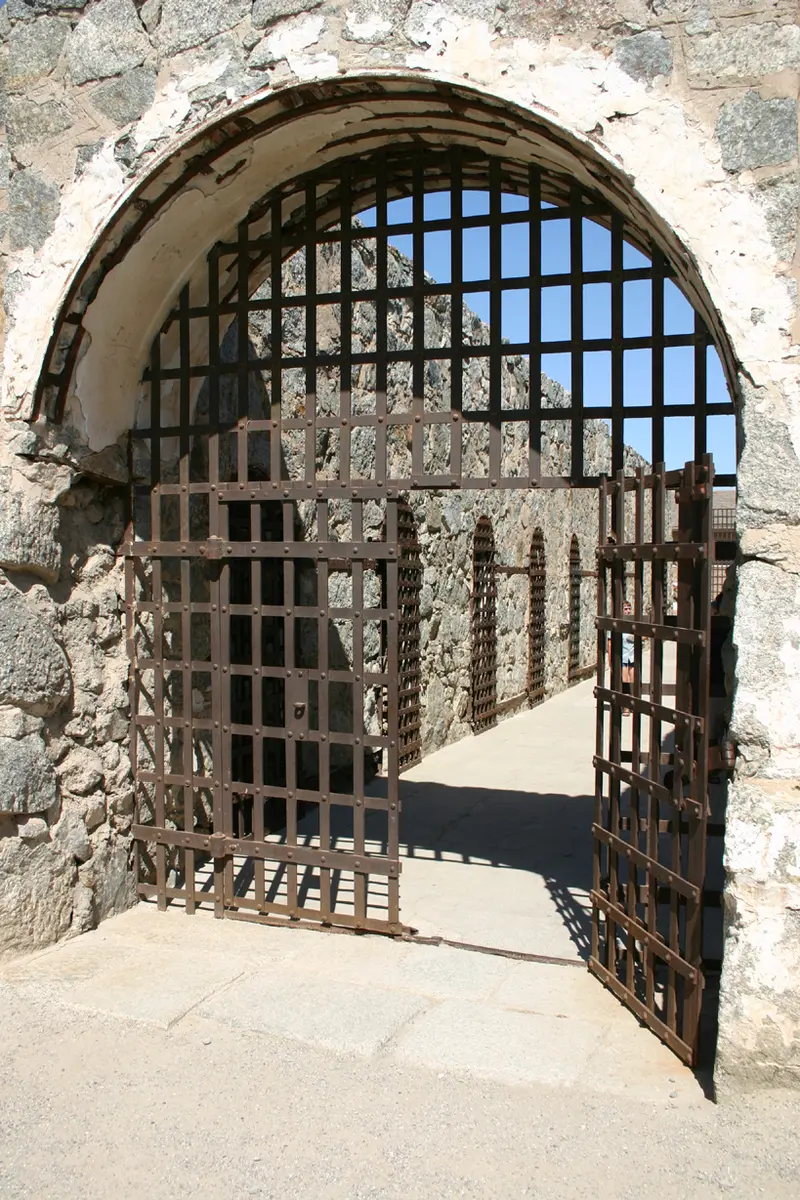
Its own town gave it two nicknames at once: the hell hole, for the desert heat and the tuberculosis that killed more men there than every escape and execution combined, and the Country Club on the Colorado, because it had electricity before Yuma did, along with showers, a hospital and the largest library in the Territory. The Dark Cell was not part of the plan; it was dug out of the granite in 1894, a windowless chamber with an iron cage inside it five feet high. On Thursday 27 October 1887 the convict Librado Puebla seized Superintendent Thomas Gates at the north sally port as a human shield and stabbed him, and a lifer named Barney K. Riggs ran into the crossfire, took a fallen revolver and shot Puebla dead. Four convicts died, none escaped, and Riggs was pardoned that December. Today the ruin is a state historic park that sells ghost tours — and the museum's own history pages, for years, never mentioned a ghost at all.
What is the history of Yuma Territorial Prison?
The Arizona Territorial Legislature authorised a prison at Yuma in 1875 and budgeted $25,000 for it. Ground was broken on 28 April 1876 on a granite bluff above the Colorado River, and — in a detail the site has never stopped repeating — some of the prisoners were put to work building their own cells. The first seven inmates moved in on 1 July 1876. The prison ran for thirty-three years and closed in 1909, when overcrowding forced the transfer of everyone still inside to a new prison at Florence, built under Superintendent Thomas Rynning, one of Theodore Roosevelt's Rough Riders.
Yuma carried two nicknames at the same time, and both were earned. Prisoners called it a hell hole: the summer heat, the ball and chain, the Snake Den, and tuberculosis, which killed more men there than every escape attempt, murder and execution combined. Yuma townspeople called it the Country Club on the Colorado, and resented it, because the prison had electricity from 1884 — the first place in town to have it — along with forced ventilation, two bathtubs and three showers, a hospital that from 1885 was the only one for miles, a library of some 2,000 volumes that was the largest in the Territory, and a prison band. Fifteen different men served as superintendent in thirty-three years. They were political appointees of the Territorial Governor, paid $250 a month.
The first woman admitted was Lizzie Gallagher, in 1878, the same year J. Lewis made the first escape; by 1891 the female population had grown enough that a separate cell and small yard had to be built. The Dark Cell was not part of the original plan. It was dug out of the granite in 1894, when discipline had become a problem: a windowless chamber cut into the rock with a strap-iron cage inside it, only five feet high, so that a man could sit or crouch but not stand.
The most violent day in the prison's history was Thursday 27 October 1887, and our previous version of this page got it backwards. At about nine in the morning, as Superintendent Thomas Gates was leaving through the north sally port, the convict Librado Puebla pinned his arms from behind and marched him out in front of him as a human shield. Seven other prisoners rushed out behind them. One of them, José López, broke open Gates's desk in the office, took a revolver and opened fire on the guard Hartlee at the tank station. Hartlee, under orders from Gates himself to shoot, hit Puebla twice; wounded, Puebla stabbed Gates. The guard Rule and Hartlee together shot López down. At that point Barney K. Riggs — a prisoner serving life — ran out into the crossfire, picked up the fallen revolver, walked up to Puebla as the knife came up again and shot him dead, then turned to the wounded superintendent. The yard captain, Fred Fredly, was meanwhile wrestling a convict named Rivera who was trying to drive a pick into his head; the two of them went twenty feet down the embankment together.
Four convicts were killed — Puebla, E. Bustamante, José López and J. Vásquez — one, A. Villa, was wounded, and three were unhurt. Not one man escaped. Gates survived his knife wound, and the neck injury troubled him for the rest of his life; the assistant superintendent who came running from inside the prison that morning, John Behan, was the former Cochise County sheriff who had been Wyatt Earp's adversary in Tombstone, and he replaced Gates as superintendent that same month. The Arizona Sentinel campaigned for Riggs from its next issue onward, the rest of the Territory's press joined in, and on a Saturday morning at the end of December 1887 Governor C. Meyer Zulick pardoned him. Riggs was shot dead at Fort Stockton, Texas, in 1902.
Gates came back for a second term, and it is from that term that the sharpest surviving document dates: the Rules and Regulations for the Government and Discipline of the Arizona Territorial Prison at Yuma, printed in Tucson in 1895 with his name on the title page. It forbids any officer to strike a convict except in self-defence, reserves all punishment to the superintendent's personal direction, and — across the whole booklet, which uses the word "prisoner" ninety-two times and "cell" twenty-one — never once mentions the Dark Cell, solitary confinement, the ball and chain or bread and water. Whatever happened in the rock chamber happened at one man's discretion, unwritten.
After 1909 the buildings were used by whoever needed them. Yuma Union High School, burned out of its own premises, rented four structures and held classes in the cellblocks and assemblies in the prison hospital from 1910 to 1914; when the Yuma team beat Phoenix in 1913 the losing Coyotes called them the Criminals, and the school board formally adopted the name in 1917. Yuma High is still the home of the Criminals. The county hospital used the site from 1914 to 1923. In 1927 the school paved its football field with adobe brick taken from the old prison walls. The Southern Pacific cut away the western third of Prison Hill for its new tracks. The Veterans of Foreign Wars leased the guards' quarters as a clubhouse from 1931 to 1960. Hoboes riding the freights slept in the cells through the 1920s and 1930s, and homeless families lived in them during the Depression. What is left standing today is what was left after all of that.
The first calls to preserve the ruin came in the early 1930s; in 1939 local residents began raising money for the guard tower and a museum on the site of the mess hall, and Clarisa Windsor ran the museum for the City of Yuma from 1941 to 1960. On 4 October 1960 the city sold the prison to the Arizona State Parks Board for one dollar, and the park opened to the public on 1 January 1961, with Windsor as its first manager. In 2010 the state's parks funding crisis nearly closed it; a local group, the Yuma Chain Gang, raised the money to keep it open, and the Yuma Crossing National Heritage Area has managed it ever since.
Timeline: the documented record of Yuma Territorial Prison
- 1875 The Arizona Territorial Legislature authorises a prison at Yuma and budgets $25,000 for it.
- 28 April – 1 July 1876 Ground is broken on the granite bluff on 28 April, with prisoners put to work building their own cells; the first seven inmates move in on 1 July.
- 1878 Lizzie Gallagher becomes the first woman admitted, and J. Lewis makes the prison's first escape.
- 1884 Electricity is installed — the first in Yuma — and townspeople begin calling the prison the "Country Club on the Colorado" for amenities they do not have themselves.
- Thursday 27 October 1887 The Gates riot. Librado Puebla seizes Superintendent Thomas Gates at the north sally port and stabs him; the lifer Barney K. Riggs picks up a fallen revolver and shoots Puebla dead. Four convicts are killed, one wounded, none escape. The Arizona Sentinel of 29 October names all eight men involved.
- 5 November 1887 The Sentinel reports Gates "rapidly growing better" and prints the campaign, joined by the Prescott and Phoenix papers, asking Governor Zulick to pardon Riggs.
- Late December 1887 "On Saturday morning Barney Rig[gs] received his pardon from Governor Z[u]lick", reports the Sentinel of Saturday 31 December. The prison museum's own note on Riggs dates the pardon to 31 December 1887.
- 1894 The Dark Cell is dug out of the granite: a windowless chamber with a strap-iron cage inside it only five feet high.
- 1895 The prison's Rules and Regulations are printed in Tucson with Thomas Gates, back for a second term, as superintendent. They ban corporal punishment except in self-defence, leave all discipline to the superintendent's discretion, never mention the Dark Cell, and charge visitors 25 cents to walk through, credited to the library fund.
- 1909 Overcrowding closes the prison; everyone still inside is moved to the new penitentiary at Florence, built under Superintendent Thomas Rynning, a former Rough Rider.
- 1913 · 1917 Yuma Union High School, teaching in the cellblocks since 1910, beats Phoenix at football; the losing Coyotes call the Yuma boys "the Criminals". The school board formally adopts the nickname in 1917 and Yuma High carries it still.
- 1927 The high school paves its football field with adobe brick taken from the old prison walls — the clearest single instance of the site being quarried by its own town.
- 1920s–1930s Hoboes riding the freight trains sleep in the cells and homeless families live in them through the Depression; the Veterans of Foreign Wars lease the guards' quarters as a clubhouse from 1931 to 1960.
- 1 January 1961 The park opens to the public after the City of Yuma sells the prison to the Arizona State Parks Board for one dollar on 4 October 1960. Clarisa Windsor, who had run the city museum since 1941, becomes its first manager.
- 2019 Readers of USA Today's 10Best poll vote the prison the best haunted destination in the United States. The museum's own note on the award quotes executive director Lowell Perry Jr. saying only: "It was a lot of fun. We had fun with it."
- 3 May 2025 The park runs a sold-out after-hours event, The Witching Hour, for National Paranormal Day: access until 03:00, a new paranormal hologram exhibit, palm readings and a late screening of The Conjuring.
Is there a rational explanation for Yuma Territorial Prison?
The most useful sceptic available here is the institution itself — and, more precisely, the difference between what it said about ghosts ten years ago and what it sells today.
The museum's own history pages, as archived between 2013 and 2020, run to some 25,000 characters across the timeline, the historical background, the notable-inmate files, the high-school history and a statistics page. They discuss the Dark Cell, the Snake Den, the ball and chain, tuberculosis and every suicide in the register. Not one of them mentions a ghost. The haunting is absent from the site's own account of itself.
What changed is datable. In 2019 readers of USA Today's 10Best poll voted the prison the best haunted destination in the country, and the museum's own post about the award quotes Lowell Perry Jr., executive director, saying only: "It was a lot of fun. We had fun with it." In a KYMA television report of 29 July 2021, the prison's historian and curator Tina Clark used the careful passive: it "is considered one of the most haunted places in Arizona". By 2025 the framing had hardened into product. On 3 May 2025 the park ran a sold-out after-hours event, The Witching Hour, with tickets to stay until three in the morning, a new Paranormal Hologram Exhibit, palm readings and a late screening of The Conjuring. Its Paranormal Hotspots Night for 9–10 May 2026 sells access to the cellblock from 21:00 to 02:00 for $50 a head and advertises "documented paranormal HOTSPOTS" — a word for which no document has been produced.
That commercial incentive is not a modern corruption. Rule 7 of the visitors' regulations printed in 1895, while the prison was still full, reads: "Visitors will be charged a fee of 25 cents for passing through the prison, which will be placed to the credit of the library fund." Yuma has been selling tickets to walk through this building for a hundred and thirty years.
The specific claims do not survive contact with a source. The version of this page we are replacing said that former park rangers report the motion sensors triggering in an empty cellblock; no named ranger, no date, no incident report exists for that, and it is gone. The best-known story — a small girl who pinches visitors in the Dark Cell — traces in the ghost literature to a blog post of August 2013, which is explicit that her family's presence in the prison during the 1930s is "speculated" and that the identification rests on "one psychic that visited the dark cell", unnamed. The claim that the pinching legend was fixed by a 1930s article in LIFE is one we went looking for and could not find in any account; the control is that the same writers do name a magazine when they have one, citing Arizona Highways for a different anecdote. The suicide attributed to a prisoner called John Ryan in cell 14 is likewise unsourced: the museum's statistics count six suicides among the 112 men who died in custody, but no record we could read names him.
The cold in the Dark Cell needs no ghost, and the mechanism is worth stating plainly rather than handing to unnamed experts. The chamber was dug into the granite of the hilltop and has no window. Rock has enormous thermal mass and conducts heat slowly, so a cavity inside it does not follow the air outside; it settles near the local annual mean temperature and barely moves across a day. Outside, Yuma's air can swing more than twenty degrees Celsius between dawn and mid-afternoon and exceed 45 °C in July. A visitor stepping out of that into a still, shaded, rock-walled box experiences a sudden drop that the skin reads as a draught, helped along by sweat evaporating in air that is not moving. It is the same physics that makes a cave feel air-conditioned, and it would happen in an identical chamber with no history at all.
What remains, honestly stated, is this: men were locked in that hole in the dark, some of them for weeks — the prison's own file on the convict John Gatlan records eighteen days — and 112 people died on the hill. The earliest datable, checkable appearance of the ghost stories that are now sold with the ticket is far more recent than any of that.
Can you visit Yuma Territorial Prison?
Yuma Territorial Prison State Historic Park stands at 220 North Prison Hill Road, Yuma, Arizona 85364, on the bluff above the Colorado at the old Yuma Crossing, and its telephone number is (928) 783-4771. State budget cuts threatened the park with closure in 2010, and the Yuma Crossing National Heritage Area stepped in to run it on behalf of the City of Yuma; that arrangement was formalised in 2016 in a fifteen-year agreement between the city and Arizona State Parks and Trails. The site remains a state historic park, and the staff on the ground work for the Heritage Area.
Hours and admission were checked again on 22 September 2026 and stood unchanged from the previous check of 14 August. The park opens seven days a week, from 08.30 to 16.00 between 1 June and 30 September and from 09.00 to 16.30 between 1 October and 31 May, and it closes on Thanksgiving Eve, Thanksgiving Day, Christmas Eve and Christmas Day. Admission is $10 for adults of 14 and over, $7 for young people of 7 to 13, and free for children of 6 and under.
The short summer hours follow the climate of the place. Yuma sits in the lower Sonoran desert, where the average daily high in July runs to about 42 °C (107 °F) and the city record stands at 51 °C (124 °F), set on 28 July 1995; most of the site is open ground without shade.
A guided tour, billed as the High Noon Tour, leaves daily at twelve and is covered by the admission price, as is the self-guided True Crimes Mystery card. The ground takes in the museum and its theatre, the cellblock, the Dark Cell, the sally port through which Gates was dragged in 1887, the New Yard and the prison cemetery on the hill. Parking at the main entrance is free, with a separate south lot for recreational vehicles and tow vehicles and overflow space below Cemetery Hill. The museum is wheelchair accessible, only service animals are admitted, and food brought from outside is not allowed.
Between 1910 and 1913 the abandoned prison housed Yuma Union High School, which held classes in the cellblock and assemblies in the old hospital; a Phoenix team it had beaten called the players "Criminals" in 1913, the school board adopted the nickname officially in 1917, and the school carries it still. The after-hours paranormal programme is sold separately from the daytime visit and appears on the calendar only at intervals. The most recent one advertised was Paranormal Hotspots Night, from 21.00 to 02.00 on 9 and 10 May 2026 at $50 a ticket; the events calendar consulted on 22 September 2026 carried no paranormal date ahead of it, the next entries being a Prison to Prison Beer Run on 17 October 2026 and Wild West Days on 30 January 2027.
Sources consulted
- Arizona Sentinel, «The Penitentiary: Desperate convicts attempt to escape (with the list of the eight prisoners implicated in the break)» — The Arizona Sentinel (Yuma, Arizona Territory), 29 October 1887, pages 2 and 3, 1887 newspaper archive
- Arizona Sentinel, «Superintendent Thomas Gates is rapidly growing better; the Territory's press asks Governor Zulick to pardon Riggs» — The Arizona Sentinel (Yuma, Arizona Territory), 5 November 1887, page 2, 1887 newspaper archive
- Arizona Sentinel, «On Saturday morning Barney Rig[gs] received his pardon from Governor Z[u]lick» — The Arizona Sentinel (Yuma, Arizona Territory), 31 December 1887, page 2, 1887 newspaper archive
- Board of Control of the Arizona Territorial Prison (Thomas Gates, Superintendent), «Rules and Regulations for the Government and Discipline of the Arizona Territorial Prison at Yuma» — Star Print, Tucson; scanned by the Library of Congress Early State Records Project, 1895 archive
- Charles R. Eatherly (ed.), «History of Yuma Territorial Prison State Historic Park» — Arizona State Parks: The Beginning; published on the Arizona State Parks website, archived 2008, 2008 book
- Yuma Crossing National Heritage Area, «Yuma Territorial Prison History Timeline» — Yuma Territorial Prison Museum official site, 2026 web
- Yuma Territorial Prison Museum, «Statistics: Tuberculosis, the Real Killer (112 deaths in custody, broken down by cause)» — yumaprison.org, archived 2 March 2017, 2017 web
- Yuma Crossing National Heritage Area, «Yuma High School History and the origin of the "Criminals" mascot» — Yuma Territorial Prison Museum official site, 2026 web
- Yuma Territorial Prison Museum, «Interesting Stories: Country Club on the Colorado, Hell Hole, the superintendents and the notable inmates (including Barney K. Riggs)» — yumaprison.org, archived pages, 2020 web
- Yuma Crossing National Heritage Area, «Paranormal Hotspots Night in Prison (9–10 May 2026, 21:00–02:00, $50) and The Witching Hour» — Yuma Territorial Prison Museum events, 2026 web
- Yuma Crossing National Heritage Area, «Yuma Territorial Prison Named Best Haunted Destination in the U.S.» — yumaprison.org, on the USA Today 10Best readers' choice award, 2019 web
- Arlette Yousif, «Special Report: Mysteries of the Yuma Territorial Prison» — KYMA, 29 July 2021 (interview with prison historian and curator Tina Clark), 2021 newspaper archive
- Yuma Territorial Prison State Historic Park, «Admission, hours and visitor information» — azstateparks.com and yumaprison.org, consulted 14 August 2026, 2026 web
Reviewed by V. Serrano on 2026-08-14 · How we verify our content
💬 Field testimonies (0)
No testimonies yet. Add the first.
Add your testimony
🔒 Log in to add a testimony