📜 LEGEND · EXP. Nº3657
ACTIVE
Madame LaLaurie's Mansion on Royal Street
Madame LaLaurie's Mansion on Royal Street is a legend from New Orleans, Louisiana, US — a folk story passed down over generations. This file collects its origins, its meaning and how it has been retold.
Where does the legend of Madame LaLaurie's Mansion on Royal Street come from?
- Location
- New Orleans, Louisiana, US
- Kind of legend
- Ghost story
- Coordinates
- 29.959, -90.065
- Testimonies
- 0
- Last updated
LOCATION
What is the legend of Madame LaLaurie's Mansion on Royal Street?
At 1140 Royal Street in New Orleans' French Quarter stands the mansion once owned by Madame Delphine LaLaurie, a socialite whose name became bound to one of the city's most chilling ghost legends after a fire broke out in her home in April 1834. According to contemporary newspaper accounts, firefighters who entered the burning house discovered enslaved people chained in the attic, showing signs of prolonged torture, a discovery that provoked a furious mob to ransack the mansion while LaLaurie reportedly fled the city and was never brought to trial. In the decades since, the house has been described by generations of New Orleans residents as one of the most haunted addresses in the city: passersby report hearing screams and chains rattling from the attic at night, ghostly figures at the upper windows, and a persistent chill in the rooms where the abuses allegedly took place. The legend has been retold and embellished many times over — through ghost tours, novels, and television — sometimes exaggerating details beyond the documented record, though the core of the atrocity is supported by period newspaper reports and later historical research. Today the mansion is privately owned, and local guides continue to recount LaLaurie's story as a cautionary tale blending real historical cruelty with a century of ghostly folklore.
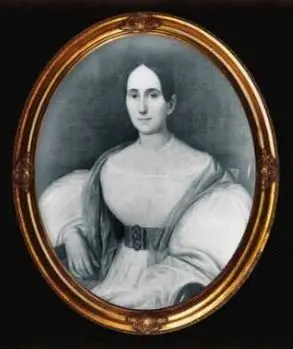
What is the history of Madame LaLaurie's Mansion on Royal Street?
Of all the entries in this atlas, this is the one that least needs embellishment. The crime happened and it is documented.
In 1832, Delphine LaLaurie moved with her third husband, Dr Leonard Louis Nicolas LaLaurie, into a neoclassical mansion in New Orleans at the corner of what are now Royal and Governor Nicholls streets. She was a woman of the city's Creole elite, socially prominent and entertaining widely.
Rumours about how she treated the people she held in slavery were already circulating before anything became public. The historian Carolyn Morrow Long has documented that LaLaurie had already been investigated in 1828 for cruelty towards enslaved people.
On 10 April 1834 a fire broke out in the kitchen and the slave quarters. Neighbours who came to rescue anyone still inside forced their way past LaLaurie and her husband, who were trying to prevent them entering the burning service wing.
Inside they found seven enslaved people, starved, chained and mutilated.
The city responded with a riot. A crowd stormed and wrecked the house. Delphine LaLaurie fled New Orleans, and her guilt went unquestioned in anyone's lifetime. She died in Paris in 1849.
The house still stands in the French Quarter and is one of the most pointed-out buildings in the city.
Timeline: the documented record of Madame LaLaurie's Mansion on Royal Street
- 1828 Delphine LaLaurie is investigated for cruelty towards enslaved people, six years before the fire. It is documented by the historian Carolyn Morrow Long in her archival work.
- 1832 She moves with her third husband, Dr Leonard Louis Nicolas LaLaurie, into the neoclassical mansion at the corner of Royal and Governor Nicholls.
- 10 April 1834 Fire breaks out in the kitchen and slave quarters. Neighbours force their way past the LaLauries' resistance and find seven people starved, chained and mutilated.
- Days later The city responds with a riot: a crowd storms and wrecks the house. Delphine LaLaurie flees New Orleans and her guilt goes unquestioned in anyone's lifetime.
- 1849 She dies in Paris after years of exile. From here the accounts of what happened begin to become increasingly fanciful and grotesque.
Is there a rational explanation for Madame LaLaurie's Mansion on Royal Street?
Here the sceptical task is delicate, because what has to be separated is not truth from lie but a real crime from its fantastical elaboration. And getting it wrong in either direction has a cost.
What is documented is not in dispute: the 1828 prior investigation, the fire of 10 April 1834, the neighbours forcing their way in against the LaLauries' resistance, the seven people found chained and mutilated, the riot and the flight. That is in the contemporary record and in Carolyn Morrow Long's archival work, which reconstructed the case from eyewitness testimony, documents and family correspondence.
What has grown since is something else. As Long notes, accounts of what happened have become increasingly fanciful and grotesque over the decades: ever more baroque tortures, people buried alive, limbs amputated and reassembled, secret chambers with impossible instruments. That material does not come from the historical record. It comes from tour routes, from mystery books and, more recently, from television.
And it is worth understanding what that escalation does, because it is not innocent. The more monstrous and implausible Delphine LaLaurie becomes, the more she resembles a fictional character and the less she resembles what she actually was: a woman of New Orleans high society doing, in an extreme version, what the system of slavery legally permitted thousands of owners to do. Turning her into a supernatural monster takes her out of the system. It makes her an exception, an aberration, almost a witch, instead of what the archive shows: the far end of a normal and legal practice.
It is also telling that the seven people found in that house are almost never named in the retellings. The legend has preserved the torturer in enormous detail and erased the victims completely.
Can you visit Madame LaLaurie's Mansion on Royal Street?
The house stands at 1140 Royal Street, on the corner of Governor Nicholls in the French Quarter of New Orleans. It is private property with no museum inside and no public access of any kind, so the building is seen from the pavement of one street or the other.
What that pavement looks at is largely a rebuild. The Vieux Carré Digital Survey, the Historic New Orleans Collection's building-by-building record of the quarter, files the property as Square 50, lot 22782-30, on a plot of 46 feet 10 inches along Royal Street by 90 feet along Governor Nicholls. The Vieux Carré Commission evaluation attached to that record opens by saying as much: "This impressive mansion, known as the Lalaurie or Haunted house, actually is not the same building that the infamous Madame Lalaurie inhabited." The same entry records that when the fire burned the house during Delphine LaLaurie's ownership "there was probably little left". It states that the building "was then rebuilt by Pierre Trastour, c. 1837-38 and assumed the appearance that it has today", with a third floor added later in the nineteenth century and the rear building on Governor Nicholls remodelled in the 1970s by the architects Koch and Wilson. The commission rates the main building blue and the rear service building yellow. That record was last updated on 30 November 1981; it was consulted on 9 September 2026.
The evaluation names the architect who rebuilt the house and mentions the fire. It does not mention the people who were held in it. The chain of title in the same file names owners only, down to a sale of 5 February 1969 to Dr Harry Russell Albright for $230,000. An earlier sale of 7 April 1965 passed the house between Frank and Anthony R. Occhipinti for $130,000.
The pavement outside is a fixed stop on the quarter's night walking tours, and those tours are regulated. The French Quarter Journal quotes the city code at Sec. 30-1489(3), "Tour groups shall be limited to 28 patrons per tour", and at Sec. 30-1489(5), "All tour groups shall be disbanded by 10:00 p.m. nightly."
Sources consulted
- Carolyn Morrow Long, «Madame Lalaurie, Mistress of the Haunted House» — University Press of Florida, 2012 book
- 64 Parishes, «Delphine Lalaurie — entrada enciclopédica documentada» — Louisiana Endowment for the Humanities, 2023 academic
- HISTORY, «Arson uncovers torture chamber in mansion of New Orleans enslaver, 10 April 1834» — HISTORY, 2023 newspaper archive
- New Orleans Historical, «The LaLaurie Mansion — ficha histórica del edificio» — University of New Orleans, 2022 archive
- BlackPast, «The LaLaurie Mansion, 1832» — BlackPast.org, 2021 academic
Reviewed by V. Serrano on 2026-07-28 · How we verify our content
📎 Source: Enigma Atlas
💬 Field testimonies (0)
No testimonies yet. Add the first.
Add your testimony
🔒 Log in to add a testimony