👻 HAUNTED PLACE · EXP. Nº1190
ACTIVE
Jefferson Davis Hospital
Jefferson Davis Hospital is a location reputed to be haunted in Houston, Texas, US. Its reputation comes from reported apparitions, unexplained phenomena and eyewitness accounts gathered over time.
Where is Jefferson Davis Hospital?
- Location
- Houston, Texas, US
- Type
- Hospital / asylum
- Coordinates
- 29.769, -95.369
- Testimonies
- 0
- Last updated
LOCATION
Why is Jefferson Davis Hospital said to be haunted?
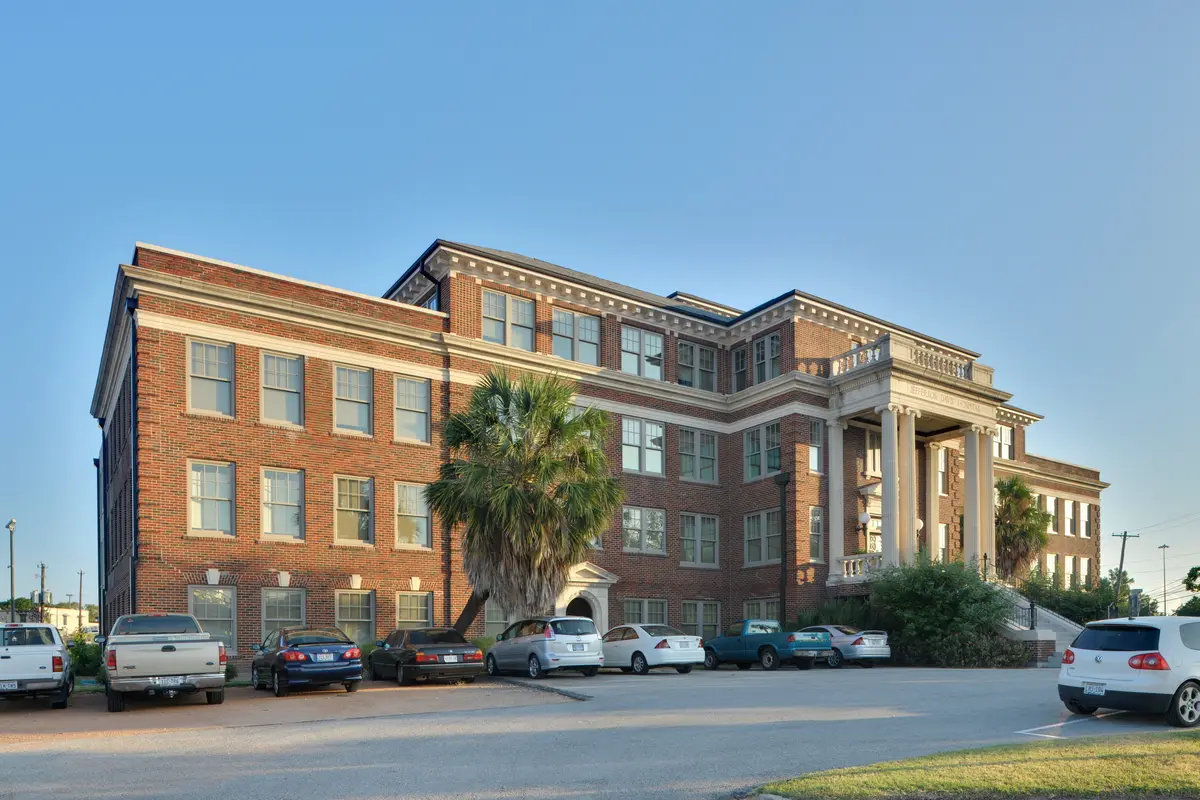
The building at 1101 Elder Street was a hospital for thirteen years. Houston and Harris County opened it in 1925 on five acres that had served as the city cemetery since 1840, and in 1937 a larger Jefferson Davis Hospital on Allen Parkway took over the work. That second building closed in 1989 and came down in 1999, and its dates are routinely pasted onto this one. The graves stayed where they were. Because no widespread removal took place, the basement was built above ground level, and the archaeological survey carried out for the 2004-05 conversion into the Elder Street Artist Lofts found sixty-four previously unknown graves without a single exhumation. The hospital was segregated by design: the original drawings put the wards for African American patients in that raised basement, along a double corridor, and the renovation architects marked the line of the vanished partition with a stripe in the floor. The dead under the building are documented Houstonians, among them paupers, epidemic victims, freed slaves and Confederate veterans.
What is the history of Jefferson Davis Hospital?
Houston bought five acres north of Buffalo Bayou from a trust set up by the Allen brothers for $750, and the deed for the Houston City Cemetery was received on 25 May 1840. The National Register nomination calls the ground "the only active city cemetery from c.1840 to c.1870". Working from city records for the Houston Press in 2000, Brian Wallstin listed its four divisions: a potter's field for "criminals, persons of infamous character, such as [those who] commit suicide, and [those] killed ... from a wound received in a duel"; the commons, for people "not otherwise provided for"; a section for blacks, who at the time were usually slaves; and plots sold to families. Cholera in 1866 and yellow fever in 1867 added to it, and after the Civil War, in the nomination's words, returned Confederate soldiers, freed slaves and occupying Federal troops "were often buried together in the city cemetery without regard to class, social status, or race". By 1879 the ground was closed to new interments. City Sexton R. F. Pannell reported in 1880 that the city's burial grounds were "so filled that there is not room in any of them for the burial of paupers without disturbing some graves".
In 1904 the city moved to rescind the land's designation as a burial ground so it could be sold for industrial development, and the City Council approved a resolution to subdivide the property and lay out streets. Mayor A. L. Jackson vetoed the idea under pressure from the Daughters of the Confederacy and the First Ward Division of the Houston Civic Club. The question came back in the 1920s, and on 5 February 1923, during Oscar Holcombe's first term as mayor, the city passed Ordinance No. 749 creating a board of managers for a city and county public hospital for charity patients, and the nomination records what happened next in one line: "Despite citizen protests, plans were approved to construct the hospital on the southeastern corner of the five-acre cemetery." A local chapter of the Sons of the Confederacy, which had been caring for part of the burial ground, went to court. Mark Denton, an archeologist with the Texas Historical Commission, told Wallstin that city officials read the judge's ruling to mean the hospital could go up as long as it avoided the portion where Confederate soldiers were thought to lie. "So they went ahead and developed the property without regard to anyone else's bodies or graves," Denton said. The council agreed to name the building for the president of the Confederacy, and at the dedication a bronze plaque was unveiled that read "In loving memory of our Confederate soldiers, whose sacred dust lies buried in the shadow of this building." Bruce C. Webb, writing in Cite in 2006, gives the same words as an inscription on the cornerstone.
City architect W. A. Dowdy designed a three-storey Classical Revival building on a raised basement, and the Russell Brown Company of Houston built it under a contract the Texas General Contractors Association bulletin put at $182,000, inside total costs of around $400,000. Dowdy's plans were drawn for 150 patients; the nomination and the city's landmark report both describe a capacity of 240 beds. The three dates in circulation for the opening all come from documents: the city report dates the dedication to 2 December 1924, the nomination says "Jefferson Davis Hospital opened on March 15, 1925", and the Handbook of Texas gives 6 April 1925. Representatives of the Jefferson Davis and Robert E. Lee chapters of the United Daughters of the Confederacy attended. The reason the basement sits above ground is on the state marker cast in 2008 and still standing at the door: "As there was no widespread removal of graves from the site, the building's basement was erected above ground."
The nomination is plain about who used that basement. "The hospital was segregated and it is know from the original drawings that the raised basement level offered services to African American patients. Also on this level is a double or segregated corridor." Webb read the same drawings and recorded what the restoration did with them: "on the ground floor a partition divided the corridor into separate wards and clinics for blacks and whites, an historical fact that the present-day architects noted by replacing the partition with a stripe on the floor." The plans also label two rooms on the second floor as the men's and women's insane wards.
The building served as a hospital for thirteen years. The city's landmark report puts the population growth at 111.4 percent between 1920 and 1930, to 292,352, and a larger Jefferson Davis Hospital by Alfred C. Finn and Joseph Finger went up on Buffalo Drive, now Allen Parkway. Wallstin dates the handover: "On January 1, 1938, its mission was transferred to a new hospital, also called Jefferson Davis, on Allen Parkway." Elder Street then held, in the marker's list, "a psychiatric hospital, juvenile detention ward, food stamp distribution center and records storage facility", and Wallstin adds a convalescent home, a venereal disease clinic and a drug treatment centre. The second Jefferson Davis Hospital closed in 1989 and came down in 1999; the Federal Reserve built on its site.
Elder Street emptied out in the late 1980s, and the damage to the cemetery had been done well before that. In 1986 a water-line trench for a $10 million expansion of a fire department maintenance yard next door cut through at least thirty graves. Armed guards were posted after it emerged that workers had taken bones and teeth for souvenirs, and Kenneth Brown of the University of Houston's anthropology department was called in, identified some of the remains as Confederate soldiers and accused the workers of taking "ghoulie souvenirs". Avenue Community Development Corporation and Artspace Projects Inc. of Minneapolis bought the property from Harris County, and Prewitt and Associates of Austin trenched fifteen areas of the grounds before construction. Webb gives the count: "All in all the archeological investigation resulted in the discovery of 64 previously unknown graves beneath and around the building". He adds that the archaeology consultants reported that careful planning let the rehabilitation proceed without any grave having to be exhumed and moved. The lofts opened in October 2005 with thirty-four live/work units, and took in artists and musicians displaced from New Orleans by Hurricane Katrina.
Timeline: the documented record of Jefferson Davis Hospital
- 25 May 1840 Houston receives the deed to five acres north of Buffalo Bayou from a trust set up by the Allen brothers, and the first interments in the Houston City Cemetery take place that year. Brian Wallstin gives the price as $750.
- 1879 The old cemetery is closed to further burials, after the city bought six acres near Glenwood Cemetery in 1875 and asked that interments stop. City Sexton R. F. Pannell reports the following year that the grounds are too full to bury a pauper without disturbing a grave.
- 1904 Houston City Council approves a resolution to subdivide the burial ground and lay out streets for industrial development. Mayor A. L. Jackson vetoes it under pressure from the Daughters of the Confederacy and the First Ward Division of the Houston Civic Club.
- 5 February 1923 The city passes Ordinance No. 749, creating a board of managers for a city and county public hospital for charity patients. The nomination records that plans for the cemetery site were approved despite citizen protests, and city architect W. A. Dowdy presents his drawings to the hospital board that year.
- 15 March 1925 Jefferson Davis Hospital opens, according to the National Register nomination. The city's landmark report dates the dedication to 2 December 1924 and the Handbook of Texas gives 6 April 1925 for the opening. Representatives of the United Daughters of the Confederacy, who had petitioned for the name, attend the ceremony.
- 1937 A new hospital on Buffalo Drive, now Allen Parkway, takes the name Jefferson Davis Hospital, and the Elder Street building stops being a general hospital after thirteen years. Wallstin dates the handover of its mission to 1 January 1938.
- 1968 The city paves over another portion of the burial ground while building a maintenance yard for fire trucks and ambulances. Wallstin records that there was no public outcry.
- 1986 A water-line trench for a $10 million expansion of the maintenance yard uncovers at least thirty graves. Armed guards are posted after workers are found to have taken bones and teeth, and Kenneth Brown of the University of Houston identifies some remains as Confederate soldiers, accusing the workers of taking ghoulie souvenirs.
- 1995 The Texas Historical Commission designates the whole cemetery a State Archeological Landmark. The nomination notes that the designation covers the site and the objects associated with the cemetery, and not the twentieth-century buildings above ground.
- 18 October 2001 The Houston Press prints Robert Hernandez's account of strange events at the probation office beside the hospital, and the listing for the REI Ghost Conference of 20 October at the Spaghetti Warehouse, $10 or $13 with lunch. The article warns readers that this building is a different one from the Allen Parkway hospital imploded in 1999.
- 2004 Prewitt and Associates of Austin trenches fifteen areas of the grounds ahead of the conversion. The investigation finds sixty-four previously unknown graves beneath and around the building, excavations are aborted wherever unmarked graves appear, and the consultants report that the work proceeded with no graves exhumed or moved.
- 10 August 2005 The building is listed in the National Register of Historic Places under reference 05000859, and the Elder Street Artist Lofts open in October with thirty-four live/work units, a $6.3 million project by Avenue Community Development Corporation and Artspace with W.O. Neuhaus and Associates as architects.
- 13 June 2013 The Houston Archaeological and Historical Commission hears file 13PL115 and recommends Protected Landmark designation for the hospital and its power plant building, which the City Council grants that November. The building had already been a City of Houston Landmark since 2002 and a Recorded Texas Historic Landmark since 2008.
- 25 April 2017 Harris County commissioners set a public hearing for 22 May on demolishing the hospital's nurses' quarters at 1225 Elder Street, after a January storm brought down a large section of its roof. County Engineer John Blount recommends demolition; the architectural historian Stephen Fox calls the complex the oldest example of health care in Houston still standing.
Is there a rational explanation for Jefferson Davis Hospital?
Half the haunting is attached to the wrong building. The Houston Press caught it in 2001, in a parenthesis: the original Jefferson Davis Hospital, "not to be confused with the later Davis hospital on Allen Parkway that was imploded in 1999". The English Wikipedia article still opens with the sentence "Jefferson Davis Hospital operated from 1924 to 1989", which is the Allen Parkway building's span, while its own body says that "the similarity between the two facilities, Jefferson Davis Hospital and Jefferson Davis on Allen Parkway, has been the source of confusion for many commentators, resulting in false rumors that Jefferson Davis Hospital was once a mental asylum."
Where the atmosphere is sold, the documents thin out. Ghost City Tours, which runs paid tours in Houston, files the site under "Built on the Bones of the Forgotten Dead" and calls it "The stunning Art Deco structure"; the nomination, the state marker and the city's landmark report classify the building as Classical Revival or Neoclassical. The same page says that "Electroshock therapy, hydrotherapy, and lobotomies were all performed at Jefferson Davis Hospital" during a span it gives as "from 1924 to 1938". Psychiatric use of this building is documented for the years after 1937, in the marker's list of later tenants. That page also puts the relocated burials at "about 200 bodies" and the cemetery population at "an estimated 3,000 to 10,000 bodies"; neither figure appears in the nomination, the marker, the landmark report or the archaeological summary Webb published.
The claim with the traceable birthday is the oldest one. Dylan Otto Krider printed in 2001 that the ground borders "black earth graves" possibly left by an English colony dating to the 1600s. Webb found the source and its fate five years later. Kenneth Brown, in 1986, had held out the possibility that some of the graves dated back to a 1600s English settlement, and Webb records that the hypothesis was never fully investigated or supported.
The phenomena were reported next door. Robert Hernandez joined the group Residual Energy Investigations after working at the probation office beside the hospital, and what Krider printed happened there: "noises in the attic, a woman spotted in the supposedly vacant upper stories that used to be a nurses' dormitory, and people entering the ladies' restroom never to be seen again", along with police dogs that refused to enter when a fire alarm was pulled. That probation office was the hospital's own nurses' quarters at 1225 Elder Street, and Harris County recommended it for demolition in 2017.
The commercial layer can be dated at both ends. Webb wrote in 2006 that "until recently, the old Jefferson Davis Hospital was a featured stop on the High Spirit Ghost Tour of Houston". Five years earlier the Houston Press had run the listing for the REI Ghost Conference on Saturday 20 October 2001 at the Spaghetti Warehouse, 901 Commerce Street, at "$10, $13 for lunch", with a "High Spirits" bus tour that cost extra and had limited seating.
The bodies that hold the paperwork say nothing about ghosts. In the thirty pages of the National Register nomination the word ghost appears once, and it is a term of art for door openings that "will remain as ghosts where they cannot be reused"; spirit appears once, in "the spirit of commerce brought by the Allen Brothers". Cemetery appears thirty-seven times in the same file and grave five times. The City of Houston's 2013 protected landmark report has cemetery ten times and zero occurrences of ghost, haunt, spirit, apparition or paranormal. The site's documented horror is in those files: a burial ground for the poor, dug through in 1968 for a fire truck yard and again in 1986 by men filling buckets.
Can you visit Jefferson Davis Hospital?
The address is 1101 Elder Street, Houston, Texas 77007. The building is the Elder Street Artist Lofts, thirty-four live/work apartments rented by Avenue, the nonprofit formerly called Avenue Community Development Corporation, on 713-985-4030. It is private housing without a museum, a ticket office or interior access for the public. The first-floor corridor is a gallery for the residents' work, and the rest of the building is their home.
The outside can be seen from Elder Street, and the National Register nomination describes the front as it still stands: "A grand staircase rises above the basement level to a large entry portico." The hospital's name is carved in the frieze above it. The Texas Historical Commission marker stands at the entrance; the Atlas record for marker number 15523 gives its condition as "In Situ", its location as "Elder Street Artist Lofts" and its private-property status as "No", so the text can be read from the public side.
The file is free and complete, and not where most people look for it. NPGallery serves National Register reference 05000859 as a 22,151-byte PDF whose only sentence reads "The PDF file for this National Register record has not yet been digitized." The Texas Historical Commission's Atlas serves the same reference as the full thirty-page nomination, with the drawings and photographs, at atlas.thc.texas.gov/NR/pdfs/05000859/05000859.pdf. The 2013 protected landmark report is on the city's own site, and Bruce C. Webb's account of the archaeology is in Cite 68.
The ground itself is regulated. The Texas Historical Commission designated the cemetery a State Archeological Landmark in 1995, and the nomination sets out what that means for anyone who digs there. The owners and the City of Houston "work closely with the Texas Historical Commission to ensure that graves discovered in the course of work on the site (either demolition or new construction) are recorded and the remains are re-interred according to local and state regulations."
Two of the surviving pieces have separate fates. The 1929 power plant behind the hospital was to become a community space for the residents. The nurses' quarters at 1225 Elder Street lost a large section of its roof to wind and rain in January 2017, and the U.S. Department of the Interior wrote on 13 April that the "building suffered a substantial collapse recently"; County Engineer John Blount recommended demolition, telling the Houston Chronicle "We were having people break in, and I'm afraid if they break in, it might fall down on them." Commissioners set a public hearing for 22 May 2017.
The old residents' domain elderstreetartists.com now resolves to a Bluehost placeholder page. Leasing runs through elderstreetartistlofts.com and Avenue's office. All web addresses here were consulted on 7 September 2026.
Sources consulted
- Anna Mod, «National Register of Historic Places Registration Form: Jefferson Davis Hospital (ref. 05000859)» — Texas Historical Commission / National Park Service, 2005 report
- Texas Historical Commission, «Jefferson Davis Hospital: Recorded Texas Historic Landmark marker no. 15523, full marker text» — Texas Historic Sites Atlas, 2008 archive
- Houston Archaeological and Historical Commission, «Protected Landmark Designation Report: Jefferson Davis Hospital, 1101 Elder Street (HPO file 13PL115)» — City of Houston, Planning and Development Department, 2013 report
- Brian Wallstin, «Renovated Out of Existance» — Houston Press, 2000 newspaper archive
- Dylan Otto Krider, «They See Dead People» — Houston Press, 2001 newspaper archive
- Bruce C. Webb, «Spirits of Place: Jefferson Davis Hospital rises from the grave as an artists' haven» — Cite 68, Rice Design Alliance, 2006 academic
- Carolina Gonzales, «The Haunted Jefferson Davis Hospital: This Forgotten Day in Houston» — Houston Chronicle / Chron.com, 2015 newspaper archive
- Mihir Zaveri, «Harris County proposes demolishing Jefferson Davis Hospital nurses quarters» — Houston Chronicle, 2017 newspaper archive
- Allison Taffet, «Jefferson Davis Hospital» — Handbook of Texas Online, Texas State Historical Association, 2022 academic
- Artspace Projects, Inc., «Elder Street Artist Lofts: project page and printable brochure» — artspace.org, 2024 web
- Tim Nealon, «The Haunted Jefferson Davis Hospital: Built on the Bones of the Forgotten Dead» — Ghost City Tours, 2026 web
- Christine Gerbode, «Fallen Jefferson Davis Nurses Quarters Face Death atop Old City Graveyard, Surrounded by Art and Emergency Response Vehicles» — Swamplot, 2017 web
Reviewed by V. Serrano on 2026-09-07 · How we verify our content
💬 Field testimonies (0)
No testimonies yet. Add the first.
Add your testimony
🔒 Log in to add a testimony