👻 HAUNTED PLACE · EXP. Nº1189
ACTIVE
Pioneer Park (Aspen, Colorado)
Pioneer Park (Aspen, Colorado) is a location reputed to be haunted in Aspen, Colorado, US. Its reputation comes from reported apparitions, unexplained phenomena and eyewitness accounts gathered over time.
Where is Pioneer Park (Aspen, Colorado)?
- Location
- Aspen, Colorado, US
- Type
- House / mansion
- Coordinates
- 39.193, -106.827
- Testimonies
- 0
- Last updated
LOCATION
Why is Pioneer Park (Aspen, Colorado) said to be haunted?
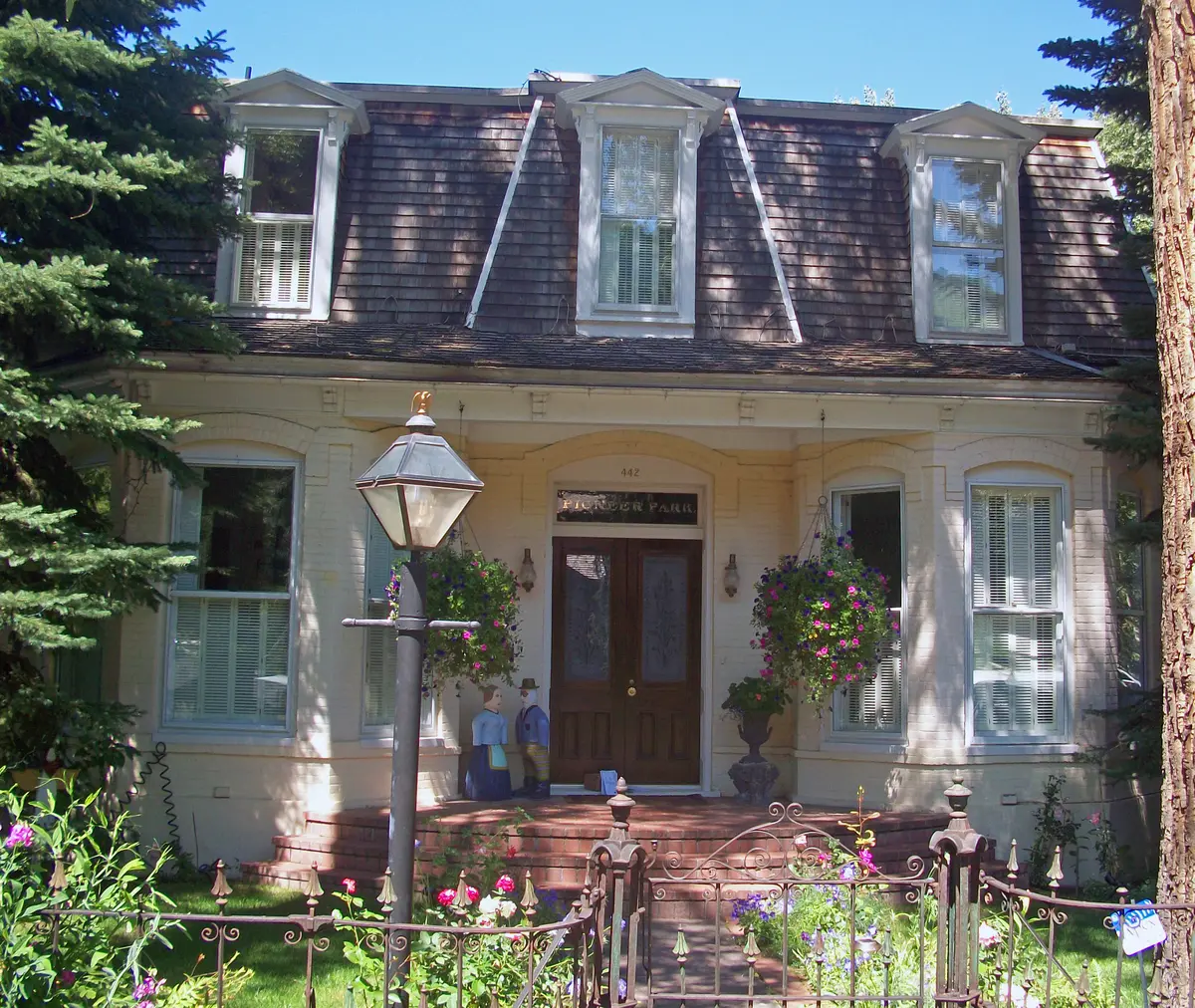
Pioneer Park, the Henry Webber House, is a Second Empire brick residence of 1885 at 442 West Bleeker Street in Aspen, Colorado, named by the shoe merchant who built it and listed on the National Register of Historic Places on 6 March 1987. Aspen says it is haunted by Harriet Webber, his first wife, who died of strychnine poisoning on 29 May 1881 after a coroner's jury heard lengthy testimony and ruled the overdose accidental. Her dying words, 'Henry will know', kept the rumours of suicide and murder alive, because Webber married her niece Julia Nevitt four months later and built this house for the two of them. Harriet therefore died at least two years before the building she is said to walk existed, and never lived in it. The only phenomena on record are footsteps on the roof and windows that open by themselves, and the historian who reported them explained both. The house has always been a private home and is closed to visitors.
What is the history of Pioneer Park (Aspen, Colorado)?
Henry Webber reached Aspen in 1880, a year after the camp was founded, and the National Register nomination filed by the consultant Barbara Norgren in August 1986 records that his wife Harriet was "one of the thirteen hearty women who spent the winter of 1880-1881 in the camp". Webber bought a lot on Deane Street at Galena and opened Webber and Company in a log building stocked with boots, shoes and clothing. Norgren's statement of significance calls him a "pioneer shoe and boot merchant who came to Aspen in 1880 and became very wealthy through his mining investments".
Harriet lived seven months of that prosperity. The same nomination states: "On May 29, 1881, Mrs. Webber died of strychnine poisoning, reported as accidental, but rumored to be suicide over her husband's affair with his niece, Julia Nevitt, whom Webber married four months later." Larry Fredrick, the Aspen historian who has read the inquest file, retold the case in the Aspen Times in 2005: "A jurors inquest was demanded and after lengthy testimony it was determined that Harriet Webber died of an accidental overdose of strychnine." The town argued for years over what she had meant by her dying words, "Henry will know".
Webber became city treasurer in 1883 and was elected mayor in 1888. Fredrick records the accusation that surfaced during that campaign: "it was discovered that Henry apparently abandoned a wife and children back East before bringing Harriet to Aspen". In 1891 Webber put up the business block at 210 South Galena that Aspen now calls the Elks Building, rivalled in size and cost only by the Wheeler Opera House and the Jerome Hotel; his name is still on the facade of the restored Isis Theatre. He sold the shoe business in 1889 and died in Aspen in 1911.
The house at 442 West Bleeker Street belongs to the second marriage. Norgren's form gives the specific date as 1885 and opens with "The 1885 Henry Webber House, which Webber named Pioneer Park, is one of the most architecturally and historically significant houses in Aspen". The Aspen Times of 30 October 2003 dated it later, saying Webber "built a home for Nevitt and himself at 442 Bleeker St., six years after his wife's death", and William R. Batson's Intermountain Histories entry gives 1883. The three dates disagree by four years and all of them fall after 29 May 1881.
Norgren calls it "the only Second Empire Revival style house in Aspen which retains its original exterior integrity", brick below and a mansard of wood shingle above, with three pedimented dormers, two polygonal bays flanking the entrance and "Pioneer Park" painted across the transom glass. Batson adds a feature that has gone: "It appears Webber originally built a small tower above the center of the entryway, along with ornamental cast-iron fencing, called cresting, which lined the roof, removed at an unknown date." Inside, the black walnut runs through the doors, frames, baseboards and stairway, and reaches the second floor, where cheaper wood was the rule. The carved marble fireplace face in the living room is flagged in the nomination as "non-original".
After Webber's death the house passed out of the family and survived Aspen's collapse from more than 10,000 people to about 500 by 1930. Walter Paepcke, president of Container Corporation of America, and his wife Elizabeth bought it as a summer home; Norgren dates the purchase to their arrival "in 1945", Batson also writes 1945, and the Heritage Aspen walking-tour page cited by Wikipedia said 1944. The Paepckes painted the first story of house, carriage house and garage "Paepcke Pink", "a shade of pink which was used on a number of buildings in the 1940s", added the two-storey kitchen wing and the octagonal summer house, and remodelled the carriage house.
That carriage house is why the property is remembered outside Aspen. In 1949 the Paepckes and Robert Maynard Hutchins, chancellor of the University of Chicago, staged the Goethe Bicentennial Convocation and Music Festival under a tent "designed by noted architect, Eero Saarinen for a gathering of some 2,000 people". Albert Schweitzer came from West Africa to give the keynote, and the nomination is explicit about where he slept: "he stayed with the Paepckes in the carriage house at the Webber House. It became known as the Schweitzer Cottage." Harold "Shorty" Pabst bought the house in the early 1960s and added the swimming pool and the alley garage; Mary Weaver and her son Jeff bought it in 1969 and still owned it when the nomination was written. The City of Aspen had already made it a local landmark by Ordinance 7-1982, and it was listed on the National Register on 6 March 1987 under reference number 87000189, for architecture and for commerce.
Timeline: the documented record of Pioneer Park (Aspen, Colorado)
- 1880 Henry Webber and his wife Harriet arrive in Aspen and open Webber and Company, a log store on Deane Street at Galena selling boots, shoes and clothing. Norgren's nomination records Harriet as one of thirteen women who wintered in the camp in 1880-1881.
- 29 May 1881 Harriet Webber dies of strychnine poisoning. A coroner's jury is convened and rules the overdose accidental; the town circulates her dying words, 'Henry will know', as evidence of suicide or murder.
- September 1881 Four months after the death, Webber marries Julia Nevitt, Harriet's niece and the woman named in the rumours of the affair.
- 1883 Webber becomes city treasurer of Aspen. Batson's Intermountain Histories entry dates the building of the house to this year, four years earlier than the National Register form.
- 1885 Date given on the nomination form for the Second Empire Revival house at 442 West Bleeker Street, which Webber named Pioneer Park. He built it for himself and Julia Nevitt.
- 1888 Webber is elected mayor. Larry Fredrick records that during the campaign it emerged that he had abandoned a wife and children in the East before bringing Harriet to Aspen.
- 1891 Webber builds the business block at 210 South Galena, later the Elks Building, rivalled in size and cost only by the Wheeler Opera House and the Jerome Hotel. He had sold the shoe business two years earlier.
- 1911 Henry Webber dies in Aspen. The nomination records his death in that year; the house passes out of the family during the town's long decline.
- 1945 Walter and Elizabeth Paepcke buy the house as a summer home and paint it 'Paepcke Pink'. Norgren and Batson both give 1945; the Heritage Aspen walking tour gave 1944.
- 1949 Albert Schweitzer gives the keynote of the Goethe Bicentennial Convocation under a tent designed by Eero Saarinen for some 2,000 people, and stays in the carriage house of the property, since called Schweitzer Cottage.
- 1982 The City of Aspen designates the property a local historic landmark by Ordinance 7-1982, five years before the federal listing. Ordinance 41-1993 follows.
- 6 March 1987 Pioneer Park is listed on the National Register of Historic Places under reference 87000189, within the Historic Resources of Aspen multiple resource area, for architecture and commerce.
- 30 October 2003 The Aspen Times publishes 'The ghost of Mrs. Webber', the fullest account of the tradition in print. It reports footsteps on the roof and windows opening by themselves, and gives Larry Fredrick's physical explanations for both.
- 26 October 2005 Larry Fredrick's 'People of the Times' summarises the inquest and the 1888 scandal, and confines the haunting to a single parenthesis at the end of the paragraph.
Is there a rational explanation for Pioneer Park (Aspen, Colorado)?
The arithmetic settles the story before any explanation is needed. Harriet Webber died on 29 May 1881; the earliest date anyone gives for the house is 1883 and the National Register form gives 1885. She never crossed its threshold, and the building she is said to walk was raised for the woman her husband married four months after the funeral. Even the ghost-listing site COHauntedHouses.com, which has carried the property since a listing last edited on 30 December 2015, prints the point plainly: "Harriet reportedly died in 1881, interestingly enough four years before the house was built, of accidental strychnine poisoning."
The death itself is documented rather than mysterious. A coroner's jury sat, and Larry Fredrick has read the file: the Aspen Times of 30 October 2003 reports that he "has read the inquest into Webber's wife's death, and he believes the overdose was truly an accident". Fredrick's reading of the evidence was that "Strychnia was an over-the-counter drug back then", that Harriet took it for her nerves, and that "It appears that Henry also took some because he was ill, but not fatally."
The phenomena on record are narrow and both have a mechanism attached. Fredrick reported what the neighbours said: "footsteps on the roof, and that the windows would open and close randomly". He then explained the first by "the lead lining in the roof creaks like footsteps when it expands and contracts in the sunlight" and the second by "movement of air in the house when a door is open can pop open windows that aren't latched", and closed with the line that dates the whole tradition to storytelling: "But never let fact get in the way of a good story."
An earlier version of this entry, published here until September 2026, added a woman's figure at the upper windows, the scent of perfume in empty rooms and cold spots on the staircase. None of those appears in any source about this house. Two of them belong to a stock inventory: "cold spots" turns up in twenty-seven other files of this catalogue. That version also blamed Harriet's death on the family's ruin after the 1893 repeal of the Sherman Silver Purchase Act, twelve years after she died, and it deleted Julia Nevitt entirely.
The silence of the record is worth measuring. Norgren's 25 KB nomination contains zero occurrences of ghost, haunt, spirit or apparition, against 33 of Webber, 13 of Paepcke, 8 of Schweitzer, one of strychnine and one of rumored. Batson's Intermountain Histories entry names no ghost and no Harriet at all. The only published assertion of a haunting comes from the Aspen Times, and Fredrick set it in a parenthesis in 2005: "(It is said to be haunted by the ghost of Harriet)." Nobody sells tickets to the house, since it has been a private home throughout, so there is no gate receipt behind the tradition and nothing inside that an outsider could examine.
Can you visit Pioneer Park (Aspen, Colorado)?
Pioneer Park stands at 442 West Bleeker Street, Aspen, Colorado 81611, on the north side of the street in the West End. It is a private home and has been one since Webber built it. Norgren's 1986 form ticks "occupied" and "private residence" on the classification page, and Batson's entry states that the house "remains private property and is not open to the public". There are no interior tours and no scheduled openings. The house number 442 is painted above the door and the transom below it carries the words "Pioneer Park", which makes identification from the pavement straightforward.
From the public sidewalk the whole nominated elevation is legible: the shingled mansard with its three pedimented dormers, the two polygonal bays, the brackets under the cornice, the low brick steps and the original iron fence along the frontage. The carriage house that Albert Schweitzer slept in, now Schweitzer Cottage, faces North Fourth Street at the alley and is the only outbuilding the National Register counts as contributing; the swimming pool, garage and summer house are listed as non-contributing.
Anyone searching for "Pioneer Park, Aspen" on a map will most likely be sent to a different place with the same name a short walk east. The City of Aspen runs a public park called Pioneer Park at Bleeker and Third streets, described by its parks department as "A peaceful neighborhood park in Aspen, Pioneer Park features mature trees, shaded benches and a beautiful sculpture", with benches, picnic tables and a gazebo, a maximum of fifty people, and the standing rule that "Parks are open from dawn to dusk". The parks office answers on (970) 920-5120 and [email protected], weekdays from 8.00 to 16.30. Jeanne McGovern reported its origin in the Aspen Times on 27 July 2004: "Pioneer Park, at Bleeker and 3rd streets, was once part of the Stromberg family's back yard; a shady gazebo remains on the property." Whether that ground was ever part of the Webber lot is something this entry has been unable to establish.
The file is easier to reach than the building. The full nomination, five pages plus the 1909, 1940s and 1960s photographs, downloads free from the National Park Service asset server under reference 87000189, and it is the source of every measurement above. The City of Aspen's inventory of designated properties lists the entry as "442 W. Bleeker (Pioneer Park) (National Register), Ord. 7-1982, Ord. 41- 1993", which is where the local landmark status can be checked. Aspen's evening ghost walks cover the town's "Ghosts, Murder & Mayhem" from 1879 onward in about sixty minutes, though the operator's own page names no stop at this address.
Sources consulted
- Barbara Norgren, «National Register of Historic Places Inventory-Nomination Form: Henry Webber House / Pioneer Park (Historic Resources of Aspen MRA), ref. 87000189» — U.S. Department of the Interior, National Park Service, 1986 archive
- unsigned staff report, quoting the historian Larry Fredrick, «The ghost of Mrs. Webber» — The Aspen Times, 2003 newspaper archive
- Larry Fredrick, «People of the Times» — The Aspen Times, 2005 newspaper archive
- City of Aspen, «The Aspen Inventory of Historic Landmark Sites and Structures» — City of Aspen Community Development Department, 2020 report
- William R. Batson, Northern Arizona University, «Henry Webber House» — Intermountain Histories, 2022 web
- City of Aspen Parks and Recreation, «Pioneer Park» — aspenrecreation.com, 2026 web
- Jeanne McGovern, «Parks aplenty» — The Aspen Times, 2004 newspaper archive
- COHauntedHouses.com, «Pioneer Park - Henry Webber House (real haunt listing, last edited 30 December 2015)» — COHauntedHouses.com, 2015 web
Reviewed by V. Serrano on 2026-09-09 · How we verify our content
💬 Field testimonies (0)
No testimonies yet. Add the first.
Add your testimony
🔒 Log in to add a testimony