👻 HAUNTED PLACE · EXP. Nº1190
ACTIVE
Rimsky-Korsakoffee House
Rimsky-Korsakoffee House is a location reputed to be haunted in Portland, Oregon, US. Its reputation comes from reported apparitions, unexplained phenomena and eyewitness accounts gathered over time.
Where is Rimsky-Korsakoffee House?
- Location
- Portland, Oregon, US
- Type
- House / mansion
- Coordinates
- 45.518, -122.654
- Testimonies
- 0
- Last updated
LOCATION
Why is Rimsky-Korsakoffee House said to be haunted?
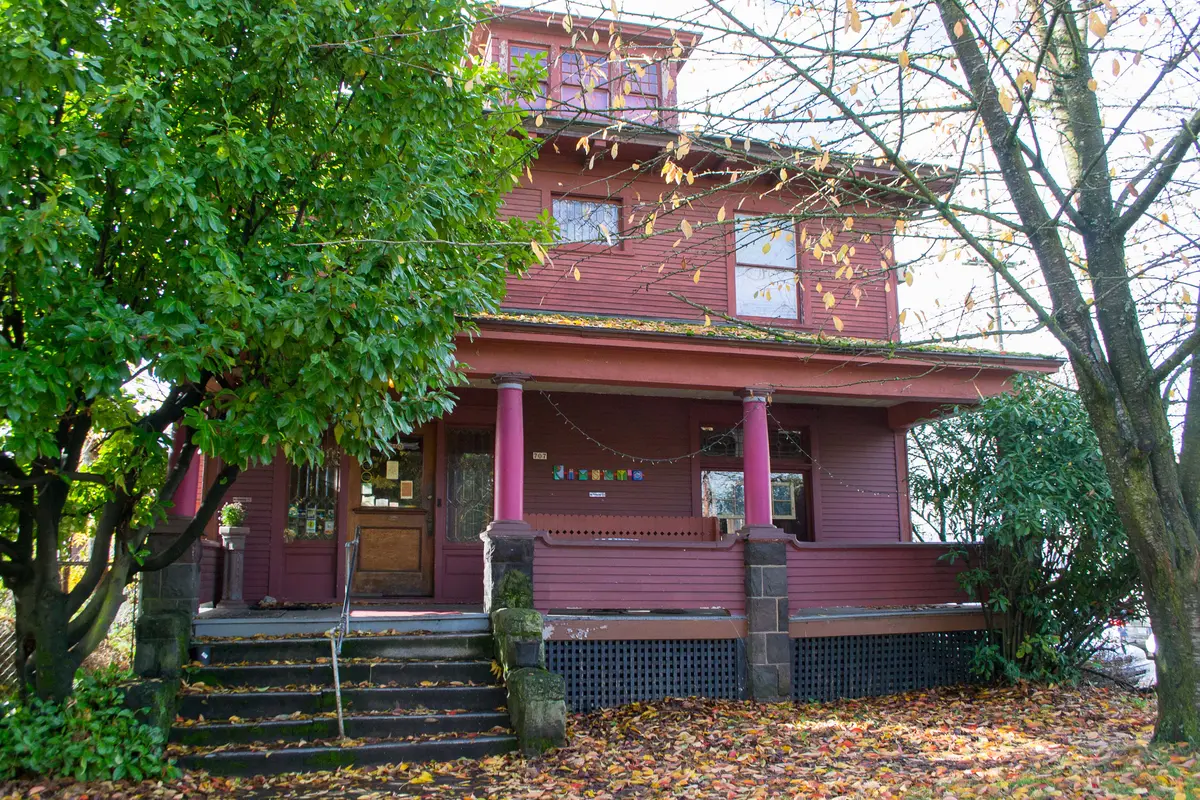
Rimsky-Korsakoffee House has poured coffee and served dessert since 1980 from the front rooms of a 1902 Craftsman house at 707 Southeast 12th Avenue, in Portland's Buckman neighbourhood. Goody Cable opened it after years of classical-music parties in her own living room, and told the Portland Business Journal in 2001 that the reason was domestic: “I opened the coffeehouse to stop cleaning my house for music parties.” Asked in the same interview about buying a sign, she answered “Never”, and the building still carries none. Every table is named for a composer and several of them move: Willamette Week listed “animated furniture and an under-the-sea bathroom” among the attractions in 2006, and Eater Portland described “the craftsman-turned-cafe with the moving tables” in 2020. The ghosts arrived alongside the machinery. A server of twelve years, Mikey See, told Eyes + Edge in 2012 that “the original owner comes by regularly (even after death)”, while the one historian to name the household, Michael Munk, records the address as “the home of the Eva and Norma Graves”.
What is the history of Rimsky-Korsakoffee House?
The house at 707 Southeast 12th Avenue, on the corner of Southeast Alder Street in Portland's Buckman neighbourhood, was built in 1902 and spent most of its first eighty years as somebody's home. One text names the household. Writing about how John Reed and Louise Bryant came to meet, the Portland historian Michael Munk records that the biographer Mary Dearborn “uncritically insists they met in 1914, relying on Ms. Brownell Frasier's account that they were formally introduced at the home of the Eva and Norma Graves, which still stands at 707 SE 12th Avenue.” Munk rejects the claim, and points out that Bryant's first biographer, Virginia Gardner, quotes the same informant differently: “It was at Clara Wold's house that Miss Frasier poured tea when Louise met John Reed.” He set out the documentary case at length in Oregon Historical Quarterly in 2008, in an article titled “Oregon Voices: The Romance of John Reed and Louise Bryant: New Documents Clarify How They Met.” What survives his argument is the address and the names Eva and Norma Graves. Munk does not say how the two women were related, or whether they were the first owners.
Goody Cable opened the coffeehouse in the front rooms in 1980. She had been holding classical-music parties in her own house for years, and the business began as a way out of the housework. “I opened the coffeehouse to stop cleaning my house for music parties,” she told Gail Dana of the Portland Business Journal in a profile published on 18 November 2001; three small children had made the parties impractical, since “with three little kids, it was just too hard to do that.” Dana describes the plan Cable had in mind: a homelike restaurant where people would drink dark brews, eat cake and listen to Beethoven sonatas or Stravinsky discords. The menu would carry neither tuna sandwiches nor milk nor liquor, and the building would show “no sign indicating anyone was at a place of business.” The sign never came. Asked in 2001 whether buying one was negotiable, Cable answered “Never.” In the same interview she gave the address as Southeast 12th and Alder, said she had put 150,000 miles on her car commuting between the coffeehouse and the Sylvia Beach Hotel in Newport, which she had rebuilt with her childhood friend Sallie Ford, and reported holding exactly one staff meeting in twenty-one years: “I'd never do that again. Too many people had ideas.” Accounting went to people who enjoyed it more than she did, which Dana notes “includes everyone.”
Mikey See, a server who arrived around 2000, gave the Portland magazine Eyes + Edge a shorter version of the same arrangement in an interview published on 7 August 2012: “We have no manager (We have no manager).” Asked who had decorated the place, he answered that Cable “has the primary say but we all have pretty much added our own touches over the years,” that a colleague named Gillian “has painted animals everywhere,” and that the house had been “sort of been a repository for all the employees unwanted items for the last 3 decades.” He also credited the kitchen's paintwork to “the many food fights.”
Every table carries a composer's name, and some of them move. Willamette Week's capsule review, archived under the date 6 December 2006, put “animated furniture and an under-the-sea bathroom” among the reasons the house “screams 'only in Portland'”. Eyes + Edge called them “self-rotating tables” in 2012 and singled out the dessert named Rasputin's Vice. Blank journals lie around the rooms for guests to write in, and Vivian McInerny of The Oregonian, describing them on 15 November 2006, called them “kind of a low-tech MySpace or FaceBook.” Her piece was written to announce the fifth annual Riches at Rimsky's craft sale, held for one day only on Sunday 26 November 2006 from 11 a.m. to 4 p.m., with coffee and cookies thrown in.
The pandemic nearly ended it. On 7 December 2020 Brooke Jackson-Glidden reported in Eater Portland that customers and staff were trying to raise 20,000 dollars to keep the cafe alive, after a year of “significant financial hardships”. The campaign page she quoted argued the case in the first person plural: “Rimsky's is more than just a business — for many of us, it's our second home. Portland wouldn't be the same without it, and neither would we.” At the time she filed, the total stood above 17,000 dollars.
Timeline: the documented record of Rimsky-Korsakoffee House
- 1902 The Craftsman house at 707 Southeast 12th Avenue is built in Buckman, southeast Portland.
- 1914 (claimed) Brownell Frasier's account, used by the biographer Mary Dearborn, places the formal introduction of John Reed and Louise Bryant at the home of Eva and Norma Graves at this address; Michael Munk rejects it and quotes Frasier placing the meeting at Clara Wold's house instead.
- 1980 Goody Cable opens Rimsky-Korsakoffee in the front rooms of the house after years of classical-music parties in her own home.
- 18 November 2001 Gail Dana profiles Cable in the Portland Business Journal: the coffeehouse opened “to stop cleaning my house for music parties”, buying a sign is answered with “Never”, and one staff meeting has been held in twenty-one years.
- 15 November 2006 Vivian McInerny prints in The Oregonian both the claim that Louise Bryant lived in the house and the joke that “a couple tables are haunted”, and announces the fifth Riches at Rimsky's craft sale for Sunday 26 November.
- 6 December 2006 Willamette Week's capsule review lists “animated furniture and an under-the-sea bathroom” among the attractions of a coffeehouse that “screams 'only in Portland'”.
- Autumn 2008 Michael Munk publishes the documentary case on how Reed and Bryant met in Oregon Historical Quarterly, volume 109, number 3.
- 7 August 2012 Eyes + Edge publishes an interview with the server Mikey See, who dates his own encounter to “about 9 years ago” and attributes it to “the original owner”.
- 7 November 2013 Visitor7 photographs the house for Wikimedia Commons: dark red, no commercial sign, the number 707 on the porch beam.
- 7 December 2020 Eater Portland reports a customer and staff crowdfunding campaign for 20,000 dollars against the pandemic's “significant financial hardships”; more than 17,000 had been raised by publication.
- 28 June 2026 The domain rimskykorsakoffeehouse.com is registered; the site publishes hours, a menu and the ghost of “two sisters who reportedly never left”, and has no captures in the Wayback Machine.
Is there a rational explanation for Rimsky-Korsakoffee House?
This address has already produced one famous story that turned out to be wrong, and the sequence is on record. On 15 November 2006 Vivian McInerny wrote in The Oregonian that “Supposedly, it was the home of writer Louise Bryant who, along with main squeeze John Reed, documented the Russian revolution.” Michael Munk, who had gone through the sources for his account of the couple's Portland years, gives the house a different and duller history and treats the Reed and Bryant connection as an error passed between biographers. His 2008 article in Oregon Historical Quarterly is titled after the point at issue: “New Documents Clarify How They Met.”
The moving tables are machinery, and the local press has always filed them under attractions. Willamette Week listed “animated furniture and an under-the-sea bathroom” beside the live music and the table service; Eyes + Edge wrote of “self-rotating tables” in the same breath as the desserts; and Brooke Jackson-Glidden's line in Eater Portland runs “the craftsman-turned-cafe with the moving tables and servers delivering deadpan puns somehow avoids coming across as gimmicky.” A website at rimskykorsakoffeehouse.com says it outright, calling a handful of the tables rigged “to rock, rise, or rotate mid-conversation.” The English Wikipedia article, citing Harriet Baskas's Oregon Curiosities (2010), goes further and describes the mechanism: one table rising eighteen inches every forty-five minutes, the Rachmaninoff table shaking when a button in the kitchen is pressed, the Sondheim table vanishing through a slit in the wall. Those pages of Baskas were beyond reach on 7 September 2026 — the Google Books preview served no text and the Google Books API answered 429, quota exhausted, to the search term and to a positive control alike — so the button stays attributed to Wikipedia and to Baskas rather than confirmed here.
Neither the owner nor the historian of the house talks about ghosts. Gail Dana's 1,783-word profile of Goody Cable contains no instance of ghost, haunt, spirit or spook, against five of coffee and four of music. Munk's 8,705-word account of Reed and Bryant in Portland mentions this address once, contains no ghost at all, and uses the word haunts a single time for Reed's adolescent haunts in Chinatown and Goose Hollow. The paranormal reputation is carried by the staff and by the press.
The one first-hand account traceable to a named person is Mikey See's, published on 7 August 2012 and dated by him to “about 9 years ago and a stormy winter's night”, which places it around 2003. He was alone upstairs minding a craft bazaar, reading the Weekly. He describes “the clicking of heels on the wooden floor” and “a strong whiff of Gardenia perfume”, a chair that moved beside him, and an earring stand “swaying to and fro as if someone had examined the jewelry and suddenly let them go”. He recognised the perfume, he says, because his grandmother had worn it. He also supplies the attribution: “Apparently the original owner comes by regularly (even after death).” No source consulted here names that owner. The site at rimskykorsakoffeehouse.com identifies the presence as “two sisters who reportedly never left — at least according to the staff”, which is the only place the pair appears; Munk names Eva and Norma Graves and says nothing about sisters, and nothing about anyone staying on.
That website deserves its own caution. Its domain was registered on 28 June 2026, and a Wayback Machine index query on 7 September 2026 returned no captures for it at all, against captures from 2002 onward for a control domain queried in the same minute. The English Wikipedia article leaves its website field empty, and the coffeehouse's own founder promised in 2001 never to advertise. Its phone number matches the one The Oregonian printed in 2006.
Can you visit Rimsky-Korsakoffee House?
Rimsky-Korsakoffee House stands at 707 Southeast 12th Avenue, Portland, Oregon 97214, at the corner of Southeast Alder Street. The telephone number The Oregonian printed on 15 November 2006, 503-232-2640, is the same one published today. There is no sign: the only marking on the building is the number 707 painted on the porch beam, visible in Visitor7's photograph of 7 November 2013, which also shows the house half-buried in the foliage that David Stabler and The Portland Mercury described as leaving it “nearly hidden from view”.
Two listings consulted on 7 September 2026 disagree about the days. Portland Monthly gives “Sun - Thurs: 7pm - 12am Fri - Sat: 7pm - 1am” and characterises the house by “a 7 p.m. opening time, cash or check only, and not a laptop in sight”. The site at rimskykorsakoffeehouse.com gives “Wednesday – Sunday: 7:00 PM – Midnight”, “Closed Monday & Tuesday”, says cash and cards are both accepted, and bans laptops under the heading “No Wi-Fi”, explaining that “Rimsky's is for conversation, journaling, and dessert — not spreadsheets.” The provenance of that second site is discussed in the sceptical section. Both agree on a 7 p.m. opening and on the address, and the English Wikipedia infobox records that the house takes no reservations.
The building is a private business inside a house rather than a museum, and it has the access limits of a dwelling built in 1902. A flight of stone-faced steps climbs to the porch in the 2013 photograph, fitted with a handrail and without a ramp. Eyes + Edge places the celebrated bathroom “on the upper level of the business”, reached by stairs and a creaky door, and its server warned in 2012 that “there's always a line.” Parking is on-street in a residential grid. The coffeehouse serves coffee and desserts only, among them the ice cream sundae called Rasputin's Vice.
Sources consulted
- Michael Munk, «The Portland Years of John Reed & Louise Bryant (Jack Reed & Louise Bryant: Search for the Sites)» — Marxists Internet Archive, 2001 archive
- Gail Dana, «Ideas, conversation and dreams fuel the creations of Portlander Goody Cable» — Portland Business Journal, 2001 newspaper archive
- Vivian McInerny, «Oldie but Goody» — The Oregonian / OregonLive, 2006 newspaper archive
- Willamette Week, «Dish Review: Rimsky-Korsakoffee House» — Willamette Week, 2006 newspaper archive
- Eyes + Edge, «Coffee and Coffins (interview with Mikey See, server at Rimsky-Korsakoffee House)» — Eyes + Edge, 2012 interview
- Brooke Jackson-Glidden, «Without To-Go Cocktail Legalization or an Open Indoor Dining, Cocktail Bar Palomar Goes on a Winter Hiatus» — Eater Portland, 2020 newspaper archive
- Michael Munk, «Oregon Voices: The Romance of John Reed and Louise Bryant: New Documents Clarify How They Met» — Oregon Historical Quarterly 109 (3), pp. 461-477, 2008 academic
- Wikipedia contributors, «Rimsky-Korsakoffee House» — English Wikipedia, 2026 web
- rimskykorsakoffeehouse.com, «Rimsky-Korsakoffee House (website; domain registered 28 June 2026)» — rimskykorsakoffeehouse.com, 2026 web
- Portland Monthly, «Rimsky-Korsakoffee House (business listing)» — Portland Monthly, 2026 web
- Visitor7, «File:Rimsky-Korsakoffee House-1.jpg (photograph taken 7 November 2013)» — Wikimedia Commons, 2013 archive
Reviewed by V. Serrano on 2026-09-07 · How we verify our content
💬 Field testimonies (0)
No testimonies yet. Add the first.
Add your testimony
🔒 Log in to add a testimony