👻 HAUNTED PLACE · EXP. Nº1189
ACTIVE
Tai Tung (restaurant)
Tai Tung (restaurant) is a location reputed to be haunted in Seattle, Washington, US. Its reputation comes from reported apparitions, unexplained phenomena and eyewitness accounts gathered over time.
Where is Tai Tung (restaurant)?
- Location
- Seattle, Washington, US
- Type
- Public building
- Coordinates
- 47.598, -122.325
- Testimonies
- 0
- Last updated
LOCATION
Why is Tai Tung (restaurant) said to be haunted?
Tai Tung has cooked Cantonese food at 655 South King Street since 1935, which makes it the oldest Chinese restaurant still trading in Seattle's Chinatown-International District. Harry Chan, the founder's grandson, has worked there since 1968, and the booth at the back where Bruce Lee ate beef with oyster sauce is still in use. The haunting attached to the address rests on a single printed sentence. In an anthology of 1995, Margaret Read MacDonald wrote that kuei, the restless dead of Chinese belief, are "said to hang about the basement of the Tai Tung restaurant and to haunt the alley behind the Wah Mee Club where thirteen men were murdered in 1983". Her source note credits a Seattle Weekly feature by Kathryn Robinson from October 1987, and the chapter that holds the sentence is about the Wing Luke Museum rather than about the restaurant. Nothing the house has published about itself in thirty years mentions a ghost. The alley is real, the massacre is documented to the hour, and the club where it happened was demolished in 2015.
What is the history of Tai Tung (restaurant)?
Tai Tung occupies the ground floor of the Rex Hotel, a brick building at the corner of South King Street and Maynard Avenue South. The federal nomination that turned this neighbourhood into a historic district catalogues the building as inventory item 39, "REX HOTEL, 651-665 South King Street, 1909, F.H. Perkins, Architect"; the same entry describes it as a "Four-story hotel building with masonry bearing walls on concrete foundation". The same form, stamped "received OCT 9 1986", fixes the district's period of significance at 1907-1936 and opens its historical section with a sentence that sets the terms for everything on this block: the neighbourhood's history is "characterized by alternating periods of immigration and deportation, cultural florescence and racial discrimination". A later passage of the same document explains a hole in the street plan a few hundred metres north: "after the internment of Japanese-Americans during World War II, much of Japantown was demolished to make way for the Yesler Terrace housing project".
The restaurant opened in 1935, inside that period of significance. Its own website names the founder only by the name the family uses: "Established in 1935 by Grandpa Quan, Tai Tung has remained in the family for over 91 years and has been passed down from generation to generation." The About page it ran until at least 2020 put the same claim in the kitchen: "Since Grandpa Quan started Tai Tung in 1935 he had always insisted on using the freshest ingredients available so that the quality of our Chinese food is second to none." Harry Chan, the founder's grandson and third-generation owner, has worked there since 1968. When Sarah Stuteville came to write about the restaurant for The Seattle Times in February 2017, Chan listed what his grandfather used to serve: "They ate pig feet and pig tails, ox tails, salmon head, peashoot vegetables steamed with pork, preserved pimento."
That 2017 article was pegged to A Taste of Home, a documentary about the district's oldest Chinese kitchens made by the Singaporean film-makers Siang Hui Tay and Val Tan, funded in part by 4Culture and the city's Office of Arts and Culture. Tay measured the place by its door: "The door that you just walked through, that swinging door? That door is 80-some years old." Asked whether the restaurant would reach its hundredth year, Chan answered "We'll see". The film also covered the Tsue Chong noodle factory and Fortuna Cafe, and two businesses that had already closed: Mon Hei Bakery and the Yick Fung grocery.
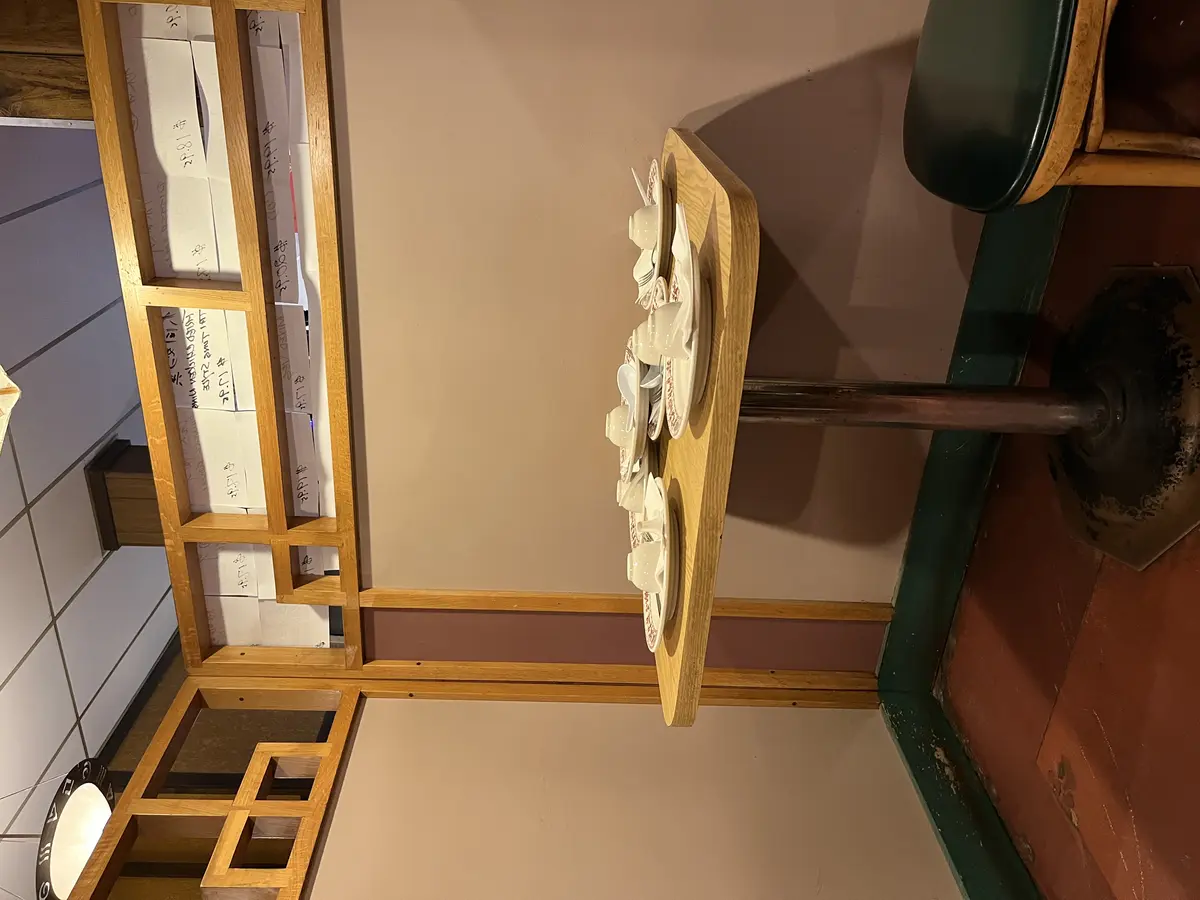
Bethany Jean Clement described the room for the same paper on 26 December 2018: an L-shaped counter, celebrity photographs along the wall, and a fish tank in the front window holding, as she put it, "pets" and no dinner. A regular picking up a takeaway order remembered the restaurant staying open until four in the morning for the Pioneer Square crowd; Clement recorded the correction from behind the counter: "'3:45,' Chan corrects with a smile." Bruce Lee, who lived in Seattle at the end of the 1950s and the start of the 1960s, ate in the back. The restaurant's own site keeps his order on the front page: "A Tai Tung regular, Bruce Lee would always sit at the same back table and order his two favorite dishes: Oyster Sauce Beef and Garlic Shrimp." Harry Chan told KING 5 in May 2019 why the table was that one: Lee liked sitting at the back so that nobody would be behind him. The booth is now dressed with photographs and a cardboard cut-out. In 2021, when the Grand Illusion cinema reopened with a screening of Bao Tran's kung-fu comedy The Paper Tigers, MyNorthwest listed the Seattle locations the film had used; Tai Tung and the Wing Luke Museum were among them.
Timeline: the documented record of Tai Tung (restaurant)
- 1909 The Rex Hotel is built at the corner of South King Street and Maynard Avenue South to a design by the architect F. H. Perkins. Its ground-floor storefronts are the ones Tai Tung would later occupy.
- 1935 Tai Tung opens on South King Street. The family credits the founder as 'Grandpa Quan'; Harry Chan, his grandson, later describes the pig feet, ox tails and salmon head his grandfather served.
- 1968 Harry Chan starts working at the restaurant. He is still answering the telephone and greeting customers at the door when KING 5 profiles him in 2019.
- 18-19 February 1983 Three men bind and shoot fourteen people in the Wah Mee gambling club, in the basement of the Louisa Hotel on the same block. Thirteen die; the pai gow dealer Wai Yok Chin survives and testifies at the trials.
- 9 October 1986 The National Register nomination for the Seattle Chinatown Historic District is stamped as received. Its inventory lists the Rex Hotel as item 39 and sets the district's period of significance at 1907-1936.
- 28 October - 3 November 1987 Kathryn Robinson publishes 'Seattle Spirits' in Seattle Weekly. MacDonald's source note credits this article, at page 33, for the Wing Luke chapter that carries the only printed mention of a ghost at Tai Tung.
- 1995 August House publishes Margaret Read MacDonald's Ghost Stories from the Pacific Northwest. Page 98 says the kuei 'hang about the basement of the Tai Tung restaurant'; page 232 indexes it as 'Ghost haunts cellar'.
- 1 April 2015 A partial demolition of the fire-damaged Louisa Hotel removes the former Wah Mee Club, the shop beside it, the floors above and the basement below. The alley of the ghost story remains; the room does not.
- 12 February 2018 The Louisa Hotel redevelopment breaks ground with a procession of community members, developers and Buddhist monks who offer a blessing and cleansing ceremony on the site.
- 26 December 2018 Bethany Jean Clement writes up the restaurant for The Seattle Times, recording the L-shaped counter, the fish tank of pets in the window and Chan's correction about the old closing time: '3:45'.
- 23 December 2021 The editor Bri creates the English Wikipedia article at 16:48 UTC, adds the MacDonald citation at 17:36 and, at 17:39, the sentence about the haunted cellar together with the 'Reportedly haunted locations' category.
- 7 September 2026 The restaurant's website advertises 'Open Daily 11:00 am - 7:30 pm' and describes itself as having been in the family 'for over 91 years'. Nothing on it mentions a ghost.
Is there a rational explanation for Tai Tung (restaurant)?
The whole haunting rests on one sentence, and the sentence is not about Tai Tung. It appears on page 98 of Ghost Stories from the Pacific Northwest, the anthology Margaret Read MacDonald published with August House in 1995, inside a chapter titled "Uneasy Spirits at the Wing Luke Museum". The chapter opens on the museum, then explains a distinction: the Chinese dead include "both a good spirit, Shin, and an evil spirit, Kuei. If the body does not receive proper burial, the Kuei can be left to wander. These spirits are to be avoided." The restaurant enters in the following clause, and leaves again immediately: "Such Kuei are said to hang about the basement of the Tai Tung restaurant and to haunt the alley behind the Wah Mee Club where thirteen men were murdered in 1983. Their pitiful howls are heard night after night." That is the entire printed record. The book's own motif index files it in two words at page 232, "Ghost haunts cellar. Seattle, Wa.: Tai Tung Restaurant", under the number E338.1.(g).
MacDonald did not collect the line herself. Her source note on page 207 credits "'Seattle Spirits' by Kathryn Robinson, Seattle Weekly, (Seattle, Wa.) Oct. 28 - Nov. 3, 1987", giving page 33; the acknowledgements page of the same book cites the article at page 32. So the earliest datable printing of a ghost at this address is an alternative-weekly feature from the autumn of 1987, four years after the massacre it names in the same breath, and written the same year the Wing Luke Museum moved into its 7th Avenue building. I have not been able to read Robinson's article itself, which is not digitised anywhere I could reach; what is verified here is MacDonald's summary of it.
The massacre is documented to the hour. On the night of 18-19 February 1983, three men bound and shot fourteen people in the Wah Mee gambling club, in the basement of the Louisa Hotel at 665 South King Street, entered from Maynard Alley South. Thirteen died. Kathleen Moles, writing for HistoryLink in April 2018, records that "the plan was to leave no witnesses, but the multiple homicide count was 13, as one victim survived". That survivor, the pai gow dealer Wai Yok Chin, testified at the three trials. The alley of the folk story runs behind the same block as Tai Tung's kitchen; the club itself no longer exists, because on 1 April 2015 a partial demolition of the fire-damaged Louisa took down "a section of the Louisa Hotel along the west wall, including the former Wah Mee Club, pet shop, floors above, and basement below". When the rebuilt hotel broke ground on 12 February 2018, the procession included "community members, developers, and Buddhist monks, who offered a blessing and cleansing ceremony". That is the neighbourhood's own recorded answer to its dead, dated and attributed, and it is on the public record.
Tai Tung has never sold any of this. Six captures of the restaurant's website between 2015 and 2026, checked for the words ghost, haunt, spirit and kuei, return zero occurrences of all four, against ten to nineteen occurrences of the control term "Tai Tung" in the same files. None of the six advertises a ghost tour, a basement visit or a Halloween event. The Seattle Times pieces of 2017 and 2018 and the KING 5 item of 2019 describe the counter, the food, the photographs and the Bruce Lee booth without a single supernatural word between them. The trail into this catalogue runs through Wikipedia instead: the editor Bri created the article on 23 December 2021, added the MacDonald citation at 17:36 UTC and, three minutes later, the sentence "The restaurant's cellar is said to be haunted by kuei (ghosts)" together with the category "Reportedly haunted locations in Washington (state)". Everything else that has circulated about this address, the lady in white on the cellar stairs, the cold spots, the smuggling tunnel under the floor, the named former owner who watches over the room, has no source at all.
Can you visit Tai Tung (restaurant)?
Tai Tung is open and trading. Its website on 7 September 2026 gives the address as "655 South King Street, Seattle, WA 98104", two telephone numbers, "Phone 1: (206)-622-7372 Phone 2: (206)-622-7714", and the hours as "Open Daily 11:00 am - 7:30 pm". Those hours are shorter than they were: the same site advertised "Monday-Thursday 11:00 am -10:30 pm, Friday-Saturday 11:00 am - Midnight, Sunday 11:00 am - 10:00 pm" in its captures of 2015, 2017 and April 2020, and "Open Daily 11:00 am - 8:00 pm" in April 2023. The house has also published three different street numbers for itself over the years: 659 South King Street in the 2015 and 2017 captures, 655 in the header since 2017, and 665 in the footer of the 2023 menu page. The federal inventory catalogues the whole Rex Hotel as "651-665 South King Street", which is where the spread comes from. Christmas Day is the busiest of the year, because most of the city is shut.
The house runs no ghost tour and no paranormal event, and the cellar is closed to the public: the building is private property and the basement is working kitchen space. The room worth crossing town for is the back one. Harry Chan told KING 5 that the restaurant validates parking for customers who park behind the building and write down the space number. The nearest station is International District/Chinatown on the Link light rail, and the Wing Luke Museum, the institution the 1995 ghost chapter is actually about, stands at 719 South King Street, in the East Kong Yick Building of 1910, a few doors east on the same street. The alley named in the folk story is Maynard Alley South, which runs behind the Louisa Hotel at 665 South King Street. It is an ordinary service alley in a busy urban district, and the club that gave it the story was demolished in 2015; the rebuilt Louisa now holds flats and ground-floor shops. Anyone reading about the massacre on the spot should remember that its survivor and the families of its thirteen dead are alive and identifiable, and that the site is not a memorial.
Sources consulted
- United States Department of the Interior, National Park Service, «National Register of Historic Places Inventory-Nomination Form: Seattle Chinatown Historic District (ref. 86003153), item 39 'Rex Hotel, 651-665 South King Street'» — National Register of Historic Places, 1986 report
- Margaret Read MacDonald (comp.); the note credits Kathryn Robinson, 'Seattle Spirits', Seattle Weekly, 28 Oct - 3 Nov 1987, «Ghost Stories from the Pacific Northwest, chapter 'Uneasy Spirits at the Wing Luke Museum', pp. 98-99, source note p. 207, motif index p. 232» — August House, Little Rock, 1995 book
- Kathleen Moles, «Discovery of Prohibition-era murals in Seattle building with long and varied history is reported on February 6, 2018 (HistoryLink Essay 20550)» — HistoryLink.org, 2018 report
- Sarah Stuteville, «A trip through time to Seattle's oldest Chinese restaurants» — The Seattle Times, 2017 newspaper archive
- Bethany Jean Clement, «Seattle restaurant classics: Why you need to go to Tai Tung» — The Seattle Times, 2018 newspaper archive
- Michelle Li, «5 facts about Bruce Lee's favorite Seattle restaurant Tai Tung» — KING 5 News, Seattle, 2019 newspaper archive
- Dalton Day, «'Cinema is back', as is Seattle's iconic Grand Illusion theater (lists the Seattle locations used by The Paper Tigers)» — MyNorthwest / KIRO Radio, 2021 newspaper archive
- Tai Tung Chinese Restaurant, «Tai Tung Chinese Restaurant, official website (address, telephones, hours and the Bruce Lee table), consulted 7 September 2026» — taitungrestaurant.com, 2026 web
- Internet Archive, «Wayback Machine captures of taitungrestaurant.com, 2014-2026, including the About page of 26 April 2020 and the menu page of 24 April 2023» — Wayback Machine, 2026 archive
- English Wikipedia contributors, «Revision history of the article 'Tai Tung (restaurant)', English Wikipedia, showing the haunting sentence and the category added on 23 December 2021» — Wikimedia Foundation, 2021 archive
Reviewed by V. Serrano on 2026-09-07 · How we verify our content
💬 Field testimonies (0)
No testimonies yet. Add the first.
Add your testimony
🔒 Log in to add a testimony