👻 HAUNTED PLACE · EXP. Nº0482
ACTIVE
Waldo Hall
Waldo Hall is a location reputed to be haunted in Oregon, US. Its reputation comes from reported apparitions, unexplained phenomena and eyewitness accounts gathered over time.
Where is Waldo Hall?
- Location
- Oregon, US
- Type
- School / university
- Coordinates
- 44.564, -123.277
- Testimonies
- 0
- Last updated
LOCATION
Why is Waldo Hall said to be haunted?
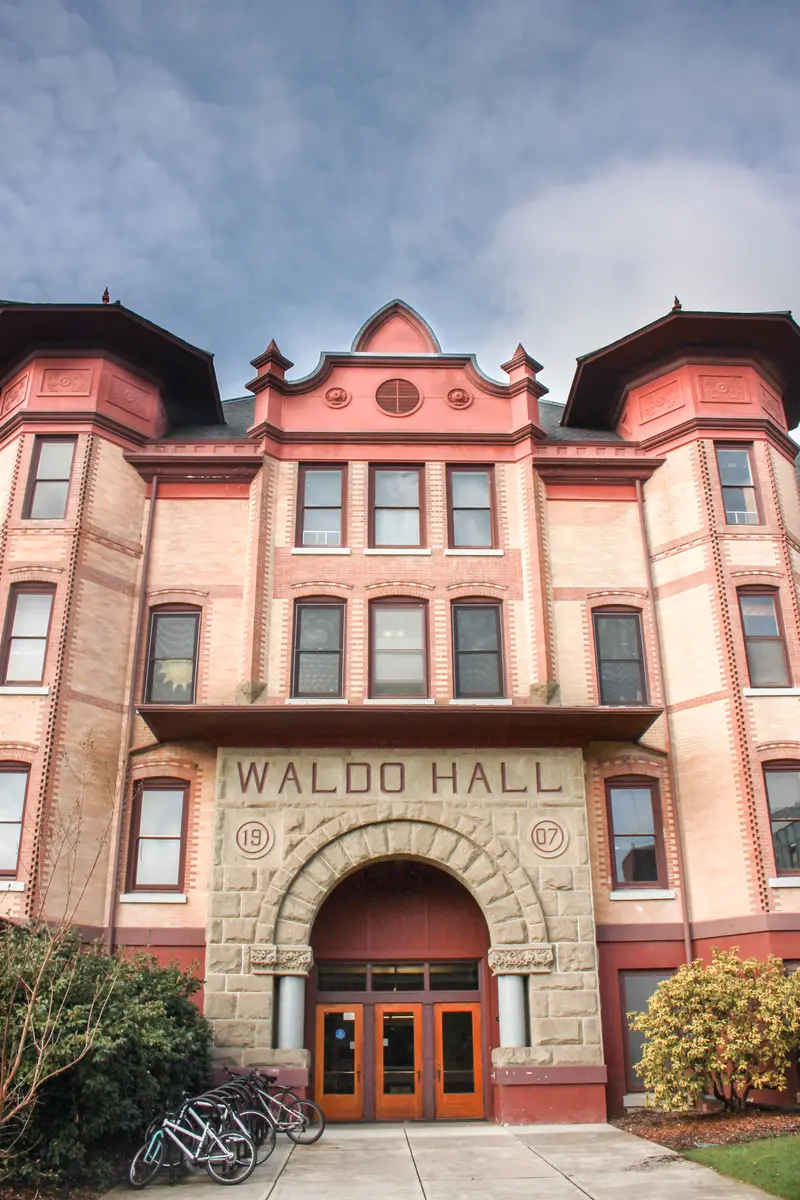
A 1907 brick building on the Oregon State University campus in Corvallis, built by the Albany architect Charles H. Burggraff as a women's dormitory of 115 rooms and turned into offices and classrooms in 1965. It is named for Clara Humason Waldo, who sat on the board of regents from 1905 to 1919 — but the ghost is somebody else. Ida Kidder came to librarianship in her late forties, was hired in 1908 as the first professional librarian of what was then Oregon Agricultural College, and lived in this dormitory; the students called her Mother Kidder, and when she died in February 1920 the college held her funeral in the library she had spent a decade demanding. The story puts her on the fourth floor, which stood abandoned from the 1960s until a renovation in 2012. What makes it worth reading is that the university's own archive collected the accounts with names and dates attached — including the anthropology professor whose wiggling elk skull turned out to hide a cockroach.
What is the history of Waldo Hall?
Waldo Hall is a brick building at 2250 SW Jefferson Way on the Oregon State University campus in Corvallis, and its ghost story is one of the few in this catalogue that the institution's own archive has taken the trouble to write down.
The building went up in 1907 to a design by Charles H. Burggraff, an architect from Albany, Oregon, and opened that autumn as a women's dormitory: 115 rooms, faculty living quarters, and space for the domestic science department. A renovation in 1965 turned it into departmental and faculty offices and classrooms, which is what it still is. It is named for Clara Humason Waldo (1858-1933), wife of the pioneer and Oregon supreme court judge John B. Waldo and a considerable figure on her own account: she sat on the board of regents from 1905 to 1919 — the first woman in Oregon appointed to the governing board of a state institution of higher education, and by some accounts the first in the United States — was the first woman to address an Oregon State graduating class, and took an honorary doctorate of science from the college in 1923.
The ghost is not Clara Waldo. It is Ida Angeline Kidder, and she is the reason the story can be checked at all.
Kidder came late to the work that made her name. Born in Auburn, New York, in 1857, she taught primary school, and only graduated from the University of Illinois Library School in 1906, in her late forties. After a first post organising state documents at the Washington State Library in Olympia, she was hired in 1908 as the first professional librarian of Oregon Agricultural College, as the university was then called. She took a room in the women's dormitory, and living among the students is what turned a middle-aged librarian into "Mother Kidder".
She inventoried and reorganised a collection that had never been properly catalogued, extended the opening hours, scavenged extra rooms for shelving, and campaigned for a library building of its own until the state legislature approved one in 1917. A heart attack in November 1919 took away her mobility; engineering students built her an electric wicker cart so she could still cross the campus. She died in Corvallis on 29 February 1920, and the college held her funeral in the library she had fought for. In 1927 the regents put her name on a building.
The haunting is attached to the fourth floor of Waldo Hall, which KVAL reported in 2014 had stood abandoned from the 1960s until a renovation in 2012. The reports collected by OSU's Special Collections and Archives Research Center are unusually specific and unusually attributed: a woman seen disappearing along a second-floor corridor; the sense of a presence in an office with nobody in it; a door slamming on a windless day; furniture being moved on the empty floor above; footsteps in high heels. They come with names — Elizabeth Thomas, who works in the building; Julie Hamby, a student advisor; Nikkie Pastre, an admissions specialist with a third-floor office — and with dates: accounts from 2002, 2006 and 2008. Students add that when the bathroom was closed for refurbishment the activity moved to the classrooms, cupboards swinging open and doors shutting while people sat at their desks.
Waldo Hall is a contributing building in the Oregon State University Historic District, added to the National Register on 25 June 2008. It has never been listed in its own right, though in 1996 two graduate students in the anthropology department prepared a nomination for it as a class project. It was never submitted.
Timeline: the documented record of Waldo Hall
- 1907 Waldo Hall is built to a design by the Albany architect Charles H. Burggraff and opens that autumn as a women's dormitory of 115 rooms, with faculty quarters and the domestic science department.
- 1908 Ida Kidder is hired as the first professional librarian of Oregon Agricultural College and takes a room in the women's dormitory. The students come to call her Mother Kidder.
- 1917 The state legislature approves the library building Kidder had campaigned for since her arrival.
- 29 February 1920 Kidder dies in Corvallis. The college holds her funeral in the library she had fought for.
- 1927 The regents name a campus building after her: Kidder Hall.
- 1965 A renovation converts the dormitory into departmental and faculty offices and classrooms. The fourth floor, the one the ghost story is set on, is left empty; KVAL reported in 2014 that it stayed abandoned until a renovation in 2012.
- 1996 Two anthropology graduate students prepare a National Register nomination for Waldo Hall as a class project. It is never submitted.
- 25 June 2008 Waldo Hall enters the National Register as a contributing building in the Oregon State University Historic District, never having been listed in its own right.
- 2002, 2006 and 2008 The years of the attributed accounts gathered by OSU's archive: Elizabeth Thomas, Julie Hamby and Nikkie Pastre on the figure, the presence and the slamming door — and Dave Brauner, whose wiggling elk skull turned out to hide a cockroach.
Is there a rational explanation for Waldo Hall?
The most useful sceptical remark about Waldo Hall was made by somebody who worked there.
Dave Brauner, a professor in the anthropology department, told the Corvallis Gazette-Times in October 2002 that after talking with numerous alumni who used to live in Waldo he had never heard one firsthand ghost account. His own fright had a plain cause: at about 1 a.m. a partial elk skull on a shelf in his office began to wiggle, and when he lifted it "this great big cockroach came out". OSU's Special Collections and Archives Research Center reprints that report on the "Haunted Waldo?" page of its exhibit, beside a 2006 Daily Barometer article with the attributed sightings, a 2008 admissions blog post and a 2009 paranormal blog that thought the building "may contain the residual psychic energy of Kidder", each with its own citation.
The life underneath the story holds up in the university's own records. Ida Kidder was appointed in July 1908 as the college's first professionally trained librarian, according to a 2009 post by the OSU archives; the students called her Mother Kidder; she lived in Waldo Hall until her death in February 1920. The sources disagree about where in the building she lived: the archive exhibit says she haunts the fourth floor, "where she lived until her death", while KVAL reported in 2014 that she lived on the second. What the story adds to the record is a claim about what happened after 1920.
The fourth floor was empty for most of the period the stories come from. KVAL reported that it had been abandoned from the 1960s until a renovation in 2012, and Brauner told the station that "things would happen on the 4th floor when it was abandoned", with people outside seeing figures at the windows of a floor that "was locked up pretty tight". The same report says that when the bathroom was closed for renovation the activity moved to the classrooms, a sequence that also tracks the building works. An office manager in Waldo told the student paper Beaver's Digest in 2023 that she first put the clanking and knocking in the walls down to the steam heating system, and then heard it with the heat off as well.
The footsteps in high heels are the one detail that points to a woman of a particular period. "If the facilities people are up there, they're not wearing high heels," said Nikkie Pastre, an admissions specialist, in 2006. What reaches an office below is a sequence of footfalls; the heels are an identification made by listeners who already know that the building housed Mother Kidder.
None of that shows that nothing happened. The reports here are attributed and dated, which is more than most hauntings offer, and they describe the noises of an old building in a place with a well-loved dead woman available to explain them.
Can you visit Waldo Hall?
Waldo Hall is at 2250 SW Jefferson Way, on the Oregon State University campus in Corvallis, Benton County, Oregon. It is an academic building in daily use — departmental and faculty offices and classrooms since the 1965 renovation — and it is open during university hours to anyone with business there. There is no tour, no admission and no ghost programme.
The fourth floor, where the story is set, is closed to the public. It is not an exhibit and there is nothing to see; asking staff to be let up puts them in an awkward position over a floor they do not control.
The rewarding visit here is the documentary one, and it can be done from anywhere. OSU's Special Collections and Archives Research Center publishes the online exhibit Where's Waldo? Exploring Waldo Hall History, which is where the named, dated accounts of the haunting come from, and it holds the papers of Ida Kidder's library. Kidder is remembered on the campus itself in Kidder Hall, named for her by the regents in 1927, and the whole of this part of the campus is a National Register historic district, which makes the walk between the two buildings worth doing on its own terms.
Sources consulted
- Oregon State Historic Preservation Office, «Waldo Hall (Clara Humason Hall), 2250 SW Jefferson Way, Corvallis — site record 647389» — Oregon Historic Sites Database, 2008 archive
- Special Collections and Archives Research Center, «Where's Waldo? Exploring Waldo Hall History — «Haunted»» — Oregon State University Libraries, 2026 archive
- Special Collections and Archives Research Center, «Waldo Hall — OSU building histories» — Oregon State University Libraries, LibGuides, 2026 archive
- Special Collections and Archives Research Center, «Thanks Mrs. Kidder!» — OSU Libraries blog, 27 March 2009, 2009 archive
- Beaver's Digest, «Alleged ghost of Ida Kidder haunts Waldo Hall» — Orange Media Network, Oregon State University, 2023 newspaper archive
- KVAL, «'I truly believe that she is still here watching over her kids'» — KVAL 13, Eugene (Oregon), 2014 newspaper archive
- Oregon Digital, «Waldo Hall, Oregon State University (Corvallis, Oregon)» — Oregon Digital, item df67qz298, 2026 archive
Reviewed by V. Serrano on 2026-09-04 · How we verify our content
📎 Source: Wikipedia (CC BY-SA)
💬 Field testimonies (0)
No testimonies yet. Add the first.
Add your testimony
🔒 Log in to add a testimony