🛸 UFO CASE · EXP. Nº5673
ACTIVE
The Washington National Airport radar sightings (July 1952)
Shortly before midnight on Saturday 19 July 1952, the long-range radar of the Civil Aeronautics Administration at Washington National Airport began to show slow, unidentified targets near Andrews Air Force Base, south-east of the city.
The Washington National Airport radar sightings (July 1952): where and when did it happen?
- Location
- Virginia, United States
- Date of the event
- What was reported
- Radar and visual
- What the evidence says
- Probable explanation According to: Scientific Study of Unidentified Flying Objects, vol. 1
- Coordinates
- 38.852, -77.038
- Last updated
LOCATION
What is known about the Washington National Airport radar sightings (July 1952)?
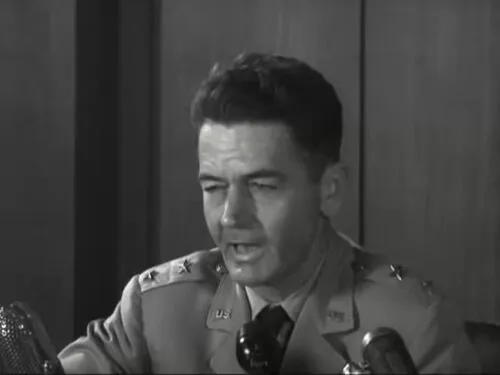
Over the night the airport tower and Andrews Air Force Base reported targets too, airline crews and tower staff described lights, and a jet interceptor arrived only at daybreak, when the returns were gone. A week later, on the night of 26 July, the targets came back and F-94 fighters were sent in twice without catching anything. The story pushed the Democratic convention off the front pages and reached President Truman's office. On 29 July the Air Force's director of intelligence, Major General John A. Samford, gave a press conference at which temperature inversions were offered as the likely cause. The head of Project Blue Book, Edward Ruppelt, still called the two nights unknowns in 1956. The University of Colorado study of 1969 concluded that the radar returns were most likely anomalous propagation and that the lights were mostly meteors and twinkling stars.
What is the history of the Washington National Airport radar sightings (July 1952)?
Washington National Airport, on the Virginia bank of the Potomac about three miles south of the centre of the city, had two radars in 1952. Edward J. Ruppelt, the Air Force captain who ran Project Blue Book at Wright-Patterson Air Force Base, describes them in his 1956 book: a long-range set in the Air Route Traffic Control centre, with a 100-mile range, and a shorter-range set in the control tower. Andrews Air Force Base, ten miles further east, had its own short-range radar, and the three stations were linked by intercom.
The summer had been busy before the airport saw anything. Ruppelt lists airline reports near Quantico on 10 July, sixty miles south-west of Washington on 13 July and near Newport News on 14 July. The University of Colorado report of 1969 later described what followed in Washington as a "flap": "Such a concentration of reports in a small region in a short time is called a "flap.""
According to Ruppelt, the first night started "according to the CAA's logbook at the airport, at 11:40P.M. on the night of July 19 when two radars at National Airport picked up eight unidentified targets east and south of Andrews AFB." The targets moved at 100 to 130 miles an hour and then, he writes, accelerated to "fantastically high speeds". In the same chapter, retelling the briefing he heard on Monday 21 July from the intelligence officer of Bolling Air Force Base, he gives the opening group as seven targets. A technician checked the set and found it working. The tower radar and Andrews, Ruppelt's account continues, also reported targets. A Capital Airlines pilot leaving National shortly after midnight, asked by the controllers to watch for lights, called out "There's one--off to the right--and there it goes." In the small hours the controllers told the Andrews tower they had a target over the Andrews radio range station, and the tower operators saw what Ruppelt quotes as a "huge fiery-orange sphere". Interceptors had been requested early in the night; "just about daylight, an F-94 arrived, but by that time the targets were gone."
The press had the story before Air Force Intelligence did. On 22 July The Daily Reflector of Greenville, North Carolina, printed a United Press dispatch from Washington saying that radar operators at National Airport had reported "tracing eight unidentified" objects on their screens around midnight on Saturday, and that an Air Force spokesman "had no comment" when asked whether they were flying saucers. Ruppelt himself had flown in from Dayton that Monday morning and read about it in a newspaper bought in the airport terminal. He tried to stay and investigate, but he was refused a staff car and the extra travel allowance, and went back to Dayton the same evening.
The second night was Saturday 26 July. Ruppelt dates it "About 10:30P.M. on July 26"; the radio propagation specialist Gordon D. Thayer, writing for the Colorado study, says the targets "began appearing at 2050 LST on 26 July and continued until after midnight." This time the targets were spread "in an arc around Washington from Herndon, Virginia, to Andrews AFB". Reporters were sent out of the radar room, and "by midnight two F-94's from New Castle County AFB were airborne". The targets left the scopes as the jets arrived and returned after they had gone. A second pair of F-94s was sent. Ruppelt quotes the pilot, Lieutenant William Patterson, as telling the press: "I was at my maximum speed, but even then I had no closing speed." Watching in the radar room were Major Dewey Fournet of Air Force Intelligence, the Navy electronics officer Lieutenant Holcomb and the Air Force press officer Al Chop. Fournet told Ruppelt by telephone that "everybody in the radar room was convinced that the targets were very probably caused by solid metallic objects."
The White House asked. On the morning of 29 July, Ruppelt writes, President Truman's air aide, Brigadier General Landry, called intelligence, and "I told General Landry that the radar target could have been caused by weather but that we had no proof." That afternoon's Evening Star of Washington ran a front-page item headed "Those Flying Things May Prove To Be Only Weather Balloons", in which Captain Lawrence Berry of Camp Detrick, Maryland, "thinks the balloons may be the answer to Washington's "flying saucer" puzzle."
At 4 p.m. on 29 July Major General John A. Samford, the Air Force director of intelligence, held what Ruppelt calls "the largest and longest the Air Force had held since World War II". Ruppelt says the radar questions were handed to Captain Roy James of the Air Technical Intelligence Center, who had arrived that morning, and that Fournet and Holcomb, who had been in the radar room, were not there. The United Press account printed the next day in The Daily Reflector put the inversion in Samford's own mouth: of the radar objects of the previous ten days he said "my own mind is satisfied" that they resulted from temperature inversion, while James and Dr. B. L. Griffing explained the mechanism. The same dispatch says he announced that the investigation would "take a new, scientific turn", with instruments that would give scientists "manageable material". The National Archives holds a filmed statement by Samford on flying saucers whose catalogue record gives a production date of 31 July 1952.
The Central Intelligence Agency was watching as well. On 29 July Ralph L. Clark, acting assistant director for scientific intelligence, told the Agency's deputy director for intelligence that "In the past several weeks a number of radar and visual sightings of unidentified aerial objects have been reported", and that a special study group had been formed. Three days later Edward Tauss, acting chief of the Weapons and Equipment Division, asked that "no indication of CIA interest or concern reach the press or public". A briefing of 14 August by the Office of Scientific Intelligence recorded that requests for information had poured in on the Air Force, "including an official query from the White House", and summed up Samford's conference in softer words than United Press had used: he had said that the recent Washington sightings were possibly due to "temperature inversions". The same briefing gave the scale of the summer: "During this July alone, official reports totalled 250."
The Civil Aeronautics Administration sent two engineers from its Technical Development and Evaluation Center at Indianapolis, Richard C. Borden and Tirey K. Vickers, to watch the Washington radar themselves. Their report, Technical Development Report No. 180, appeared in May 1953.
Timeline: the documented record of the Washington National Airport radar sightings (July 1952)
- 10–14 July 1952 Airline crews report lights near Quantico, south-west of Washington and near Newport News, according to Ruppelt's later list of the build-up.
- 19 July 1952, 23:40 The CAA log at Washington National records unidentified targets on two airport radars east and south of Andrews Air Force Base, as quoted by Ruppelt.
- 20 July 1952, 02:00–03:00 EST A USAF captain at the Andrews radar centre watches a colour-changing light east of the field and, after a second look an hour later, concludes it was a star (statement reprinted by the Colorado study).
- 22 July 1952 A United Press dispatch printed in The Daily Reflector reports eight unidentified objects traced on airport radar about midnight on Saturday; an Air Force spokesman declines to comment.
- 26–27 July 1952 Targets return over Washington; two pairs of F-94 interceptors are sent in and find nothing they can close on (Ruppelt). Thayer dates the first targets to 20:50 local time, Ruppelt to about 22:30.
- 29 July 1952 The Evening Star prints on its front page the weather-balloon theory of Captain Lawrence Berry of Camp Detrick.
- 29 July 1952 Ralph L. Clark, acting assistant director for scientific intelligence at the CIA, tells the deputy director for intelligence that radar and visual sightings have been reported in the past several weeks and that a special study group has been formed, with a report due about 15 August.
- 29 July 1952, 16:00 Major General John A. Samford holds a press conference at the Pentagon; United Press reports him as satisfied that the radar objects came from temperature inversion.
- 31 July 1952 Production date given by the National Archives catalogue for the filmed statement of Samford on flying saucers.
- 1 August 1952 Edward Tauss writes that, of 1,000 to 2,000 reports received by the Air Technical Intelligence Center, fewer than 100 credible ones remain unexplainable, and urges that no sign of CIA interest reach the press or the public.
- 13–16 August 1952 Borden and Vickers of the CAA watch the Washington early-warning radar and plot similar targets appearing as a temperature inversion sets in.
- 14 August 1952 A CIA Office of Scientific Intelligence briefing sums up Samford's press conference, including that the recent Washington sightings were possibly due to temperature inversions, and counts 250 official reports in July 1952 alone.
- 20 August 1952 Start date, given in a later undated CIA memorandum, of the Office of Scientific Intelligence task force working on the subject with the Air Force at the request of the Director of Central Intelligence; the same memorandum proposes an ad hoc panel of top-level scientists.
- 13 October 1952 James Q. Reber of the CIA writes that the Office of Scientific Intelligence's review does not lead to the conclusion that the saucers are Soviet-made or Soviet-controlled.
- May 1953 The CAA publishes Technical Development Report No. 180, linking such targets to temperature inversions.
- 1956 Ruppelt's book says the two nights are still carried as unknowns.
- December 1966 The University of Colorado project attempts an on-site re-investigation of the case and finds little or nothing new.
- 1 April 1968 The meteorologist Loren W. Crow dates his summary of the weather on both nights for the Colorado study.
- 1969 The Colorado report concludes that the radar returns were most likely anomalous propagation and the lights mostly meteors and scintillating stars.
- 1997 The CIA historian Gerald K. Haines writes that a CAA investigation confirmed the temperature-inversion explanation.
Is there a rational explanation for the Washington National Airport radar sightings (July 1952)?
Ruppelt is the source most often quoted for the mystery, and he also wrote down the doubts. The Andrews tower operators who had seen the orange sphere, he says, "completely changed their story and said that what they saw was merely a star", explaining that they "had been excited". He added in brackets that the star charts showed no exceptionally bright star there and that he had heard the men had been "persuaded". He also records that the F-94 pilot who had told the press of chasing lights wrote in an official report that "all he saw was a ground light reflecting off a layer of haze." One airline pilot who had been steered towards a target several times told him months later that "the only object we could see where the radar had a target turned out to be the Wilson Lines moonlight steamboat trip to Mount Vernon". And although the radars at National and Andrews overlapped, "only once did the three radars simultaneously pick up a target."
The case for the targets, in Ruppelt's account, rested on the controllers' experience and on the weather. He checked the inversions and wrote that "it was never strong enough to affect the radar the way inversions normally do", but also that "hardly a night passed in June, July, and August in 1952 that there wasn't an inversion in Washington". His verdict, in 1956: "So the Washington National Airport Sightings are still unknowns."
The engineers of the Civil Aeronautics Administration took the other side. Borden and Vickers tabulated every report in the logs of the Washington control centre and found that "a surface temperature inversion was almost always noted when such targets appeared on the radar." They then sat at the Washington early-warning radar themselves on the nights of 13-14 and 15-16 August 1952. On the first night, at about 19:57, a band of stationary ground returns spread between Washington and Baltimore, which they read as "evidence of the beginning of a temperature inversion", and within a minute four moving targets appeared. Tracking 80 of them, they concluded that many were secondary reflections from patches of air moving with the wind, and that such targets "do not represent new phenomena; nor are they peculiar to the Washington area." Their numbered conclusion is about the August nights they watched; for the summer as a whole they said only that the local weather had been "exceptionally conducive to the formation of these phenomena."
The University of Colorado study, directed by Edward Condon, reached the same place by another road. Gordon Thayer reprinted statements from Andrews. A control-tower operator watched an airman describe a star moving up and down and wrote: "Such is the power of suggestion." A USAF captain who had gone outside at 02:00 saw a light changing colour, went out again at 03:00 and found that it had climbed with the stars: "On the basis of the second observation, I believe the unidentified object was a star." Thayer added that "In most instances visual observers, especially in scrambled aircraft, were unable to see targets indicated on ground radar, or to make airborne radar contact." On the weather, he pointed out that the 1952 soundings were launched from Silver Hill, Maryland, 88 metres above sea level, while the airport stands at 13, and that "The intervening 75 m. is precisely that part of the atmosphere in which some of the most spectacular super-refractive and ducting layers would be expected to develop." The profile for 26 July showed an elevated duct strong enough, he wrote, to produce such effects. His summary is the source of the verdict printed on this case: the radar returns "were most likely the result of anomalous propagation (AP)", and the visual objects were, "with one or two possible exceptions, identifiable as most probably meteors and scintillating stars." He called Borden and Vickers's report "an excellent analysis of the probable radar situation". The meteorologist Loren W. Crow, in a summary for the same study dated 1 April 1968, wrote that "Anomolous propagation could have been observed on weather radar units during both nights at both locations."
The CIA's own review that summer leaned the same way without examining the Washington nights. On 1 August Tauss counted among the explained reports many that were "undoubtedly of natural phenomena (meteorites, clouds, aberration of light caused by thermal inversion or reflections, etc.)", and wrote that fewer than 100 "reasonably credible reports remain "unexplainable" at this time". The briefing of 14 August added, about radar reports in general, that there was "no report of a track from station to station. The blip, in almost every case, passed through the center of the scope." On 13 October James Q. Reber, assistant director for intelligence coordination, wrote that the Office of Scientific Intelligence's review of existing information "does not lead to the conclusion that the saucers are USSR created or controlled."
Two cautions apply to the explanation. Thayer's word is "most likely", and he worked from incomplete soundings; the Colorado team's own attempt at an on-site re-investigation in December 1966 "brought little or no new information to light." And the later official summaries go further than the CAA report did. Gerald K. Haines, the CIA historian, wrote in 1997 that "a Civil Aeronautics Administration investigation confirmed that such radar blips were quite common and were caused by temperature inversions." Borden and Vickers wrote "It is believed", and about August.
Sources consulted
- Edward U. Condon (scientific director); Gordon D. Thayer, «Scientific Study of Unidentified Flying Objects, vol. 1 — Section III, Chapter 5 (G. D. Thayer), the Washington D.C. cases of 19-20 and 26-27 July 1952, pp. 227-236, with the radar and visual conclusions; and the December 1966 re-investigation, p. 73» — University of Colorado / Defense Technical Information Center (AD 680975), 1969 report
- Edward J. Ruppelt, «The Report on Unidentified Flying Objects — chapter 12, "The Washington Merry-Go-Round" (Project Gutenberg text of the expanded edition)» — Doubleday, 1956 book
- Richard C. Borden and Tirey K. Vickers, «A Preliminary Study of Unidentified Targets Observed on Air Traffic Control Radars — Technical Development Report No. 180 (scan hosted by The Black Vault)» — Civil Aeronautics Administration, Technical Development and Evaluation Center, Indianapolis, 1953 report
- Loren W. Crow, «Weather conditions and radar echoes near Washington, D.C., and Norfolk, Va., on 19-20 and 26-27 July 1952 — Appendix L of the Condon report, vol. 3» — University of Colorado / Defense Technical Information Center (AD 680977), 1968 report
- United Press, «Air Force Adds To Stories Of Flying Saucers — United Press dispatch from Washington, front page» — The Daily Reflector (Greenville, N.C.), 22 July 1952, 1952 newspaper archive
- The Evening Star, «Those Flying Things May Prove To Be Only Weather Balloons — front page, with a pointer to new objects on the airport radar» — The Evening Star (Washington, D.C.), 29 July 1952 (Chronicling America), 1952 newspaper archive
- United Press, «United Press dispatch on the Samford press conference of 29 July 1952, front page» — The Daily Reflector (Greenville, N.C.), 30 July 1952, 1952 newspaper archive
- Gerald K. Haines, «CIA's Role in the Study of UFOs, 1947-90 — the July 1952 Washington radar sightings and the CAA investigation» — Studies in Intelligence (CIA), vol. 1, no. 1 (copy hosted by the Federation of American Scientists), 1997 report
- The Black Vault, citing the National Archives and Records Administration, «Maj. Gen. John A. Samford and Maj. Donald Keyhoe's Statement on "Flying Saucers", Pentagon — National Archives film record (NAID 25738, production date 07/31/1952), as reproduced by The Black Vault» — theblackvault.com, 1952 archive
- Ralph L. Clark (Acting Assistant Director, Scientific Intelligence); Edward Tauss (Acting Chief, Weapons & Equipment Division), «Recent Sightings of Unexplained Objects (memorandum of 29 July 1952) and "Flying Saucers" (memorandum of 1 August 1952), CIA-UAP-D026» — U.S. Department of War, PURSUE UAP archive, release 08 (CIA-UAP-D026), published 20 November 2026, 1952 archive
- Central Intelligence Agency, Office of Scientific Intelligence, «Flying Saucers — Office of Scientific Intelligence briefing of 14 August 1952, CIA-UAP-D027» — U.S. Department of War, PURSUE UAP archive, release 08 (CIA-UAP-D027), published 20 November 2026, 1952 archive
- H. Marshall Chadwell (Assistant Director, Scientific Intelligence), «Approval in Principle — External Research Project Concerned with Unidentified Flying Objects (undated memorandum, late 1952), CIA-UAP-D024» — U.S. Department of War, PURSUE UAP archive, release 08 (CIA-UAP-D024), published 20 November 2026, 1952 archive
- James Q. Reber (Assistant Director, Intelligence Coordination), «Flying Saucers — memorandum for the Deputy Director (Intelligence), 13 October 1952, CIA-UAP-D028» — U.S. Department of War, PURSUE UAP archive, release 08 (CIA-UAP-D028), published 20 November 2026, 1952 archive
Reviewed by V. Serrano on 2026-11-20 · How we verify our content
💬 Field testimonies (0)
No testimonies yet. Add the first.
Add your testimony
🔒 Log in to add a testimony